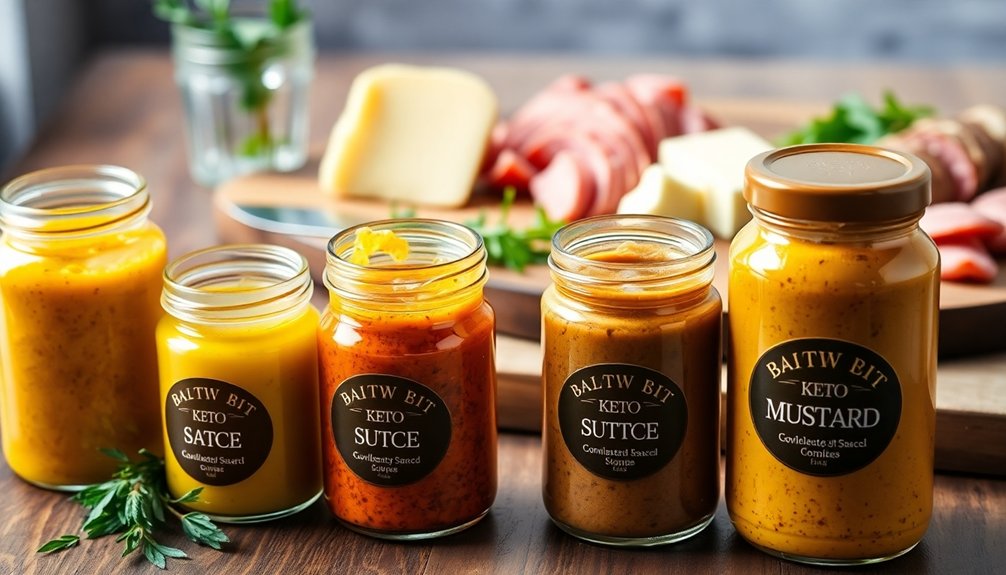
Yes, mustard is keto-friendly! It’s low in calories and carbs, making it a great addition to your meals. Most varieties like yellow, Dijon, and deli mustard contain minimal carbohydrates, usually under 2 grams per tablespoon. Just steer clear of honey and sweet mustards that can pack on the carbs. You can easily incorporate mustard into marinades, salad dressings, or as a dip for veggies. Stick around to discover even more ways to spice up your keto meals!
What Are Keto-Friendly Foods?
Keto-friendly foods focus on high-fat, low-carbohydrate, and moderate-protein options, which make up the foundation of a successful ketogenic diet.
For keto dieters, the ideal plate includes healthy fats like avocados and olive oil, alongside high-fat meats, fish, and sugar-free dairy products. Non-starchy vegetables, nuts, and seeds are excellent choices as they’re low in carbs yet packed with essential nutrients.
The perfect keto meal features healthy fats, high-fat proteins, and nutrient-rich, non-starchy vegetables for optimal nutrition.
Aim for foods with less than 5g of carbohydrates per serving, avoiding sugars and gluten-containing products. When baking or cooking, consider substitutes like almond, coconut, or flaxseed flour to maintain your low carb goals. Incorporating mustard can add flavor while staying keto-friendly, providing a tasty way to enhance your meals without compromising your diet. Additionally, incorporating healthy oils and fats like olive oil can further support your overall health and enhance the flavor of your dishes.
A Nutritional Breakdown Of Mustard
Mustard is a surprisingly versatile condiment that fits perfectly into your ketogenic diet. With just 10.2 calories per tablespoon, it’s low in carbohydrates, making it an ideal keto-friendly choice.
Most types of mustard offer net carbs ranging from 0.1 to 1.8 grams per serving, so you can enjoy the flavor without worrying about kicking yourself out of ketosis. While honey mustard and sweet mustard have high sugar content, options like yellow, Dijon, and deli mustard are low-calorie and low-carb.
Plus, mustard is packed with essential vitamins and minerals like sodium, potassium, and magnesium, enhancing its nutritional value. If you prefer, homemade mustard lets you control ingredients, ensuring it remains delicious and keto-compliant. Additionally, mustard can enhance meal enjoyment by adding flavor without extra calories.
Mustard Types That May Not Be Suitable For A Keto Diet
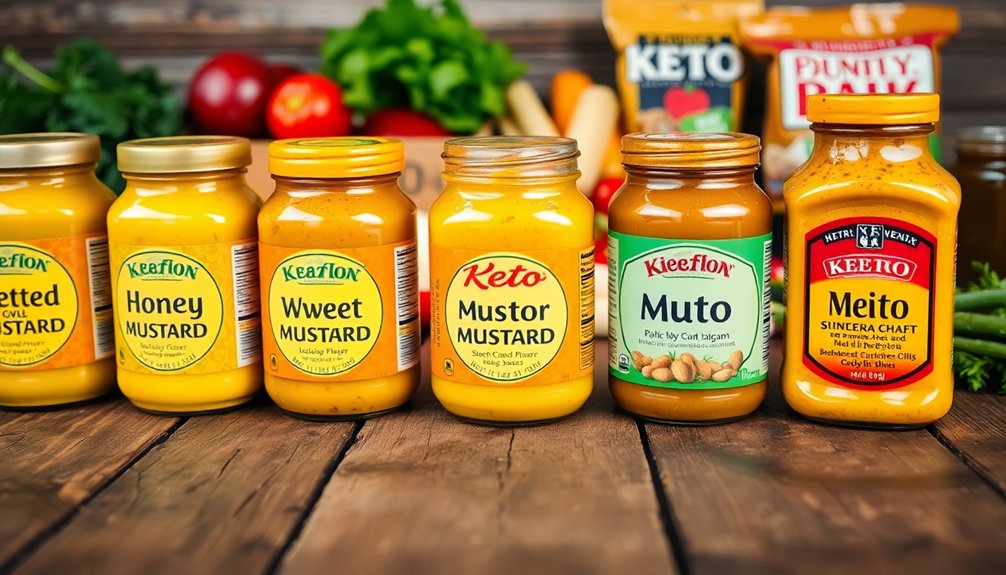
While many mustard varieties can complement your ketogenic meals, some types can derail your efforts with their high sugar content.
To help you stay on track with your keto diet, here are mustard types to avoid:
To stay on track with your keto diet, be mindful of which mustard varieties to avoid.
- Honey mustard: Contains 5-7 grams of carbohydrates per tablespoon due to added sugars.
- Sweet mustard: Often has up to 4 grams of carbohydrates per tablespoon from added sugars.
- Fruit-flavored mustard: Usually includes significant added sugars, contributing 3 grams of carbohydrates per tablespoon.
- Commercial mustards: May have hidden sugars or fillers that increase carb counts.
To maintain ketosis, focus on mustards with simple ingredients and check ingredient lists carefully to avoid unwanted carbohydrates. Additionally, consider using low-carb sweeteners like erythritol as an alternative for sweetening your dishes without compromising your diet.
Tips For Reading Mustard Labels Correctly
When you’re scanning mustard labels, it’s essential to focus on the carbohydrate content to guarantee you’re sticking to your keto goals.
Look for mustards with fewer than 1 gram of total carbohydrates per serving. Avoid those with added sugars or high-carb ingredients like honey, which can spike your carb intake.
Pay attention to ingredient names; steer clear of high fructose corn syrup and cane sugar, as they’re not keto-friendly.
Be mindful of serving sizes, since even low-carb mustards can add up—one tablespoon may contain around 1.8 grams of carbohydrates.
Consider making homemade mustard to control the ingredients and customize sweetness levels using sugar substitutes like stevia or monk fruit for a truly keto-friendly option. Additionally, it’s important to remember that many store-bought ketchups can be high in sugar and carbs, making keto-friendly options a better choice for those on a low-carb diet.
How To Incorporate Mustard Into Your Keto Meal Plan
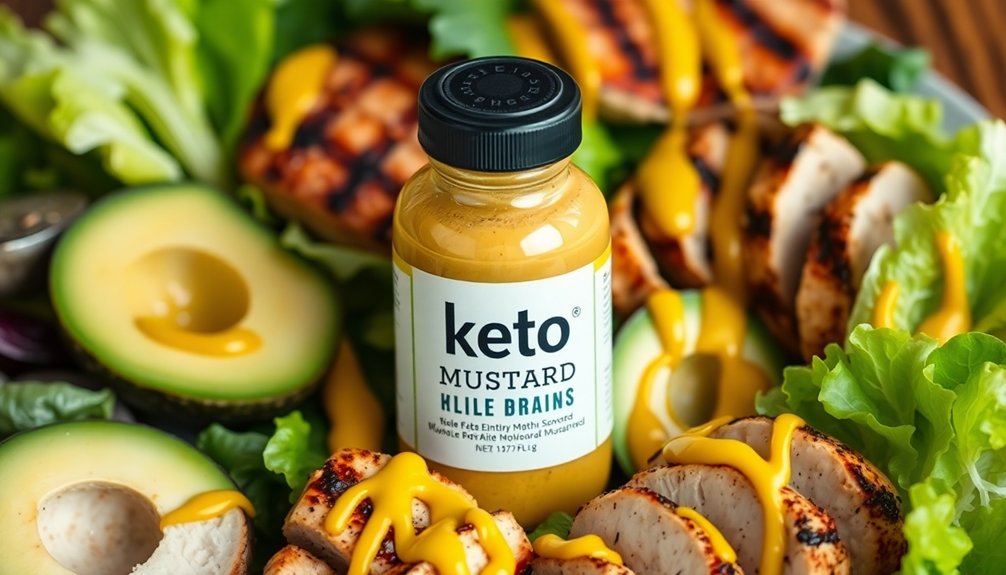
Incorporating mustard into your keto meal plan can add vibrant flavor without the extra carbs. Mustard is a great, keto-friendly condiment that’s low in calories and contains only 0.1 grams of net carbs per teaspoon.
Enhance your keto meals with mustard, a low-calorie condiment with just 0.1 grams of net carbs per teaspoon.
Here are some tasty ways to enjoy it:
- Use mustard as a marinade for meats like grilled chicken or salmon.
- Add mustard to homemade salad dressings for an elevated flavor.
- Incorporate mustard into sauces or vinaigrettes for versatile dishes.
- Serve as a dip for low-carb vegetables for a tangy kick.
Mixing mustard with mayonnaise also creates a creamy spread for lettuce wraps, adding flavor and healthy fats to your meals. Additionally, mustard is a key ingredient in tangy mustard marinades that offer a distinctive taste and health benefits for your keto dishes.
Enjoy the benefits of mustard on a low-carb diet!
Conclusion
Incorporating mustard into your keto meals can be a game-changer, adding a zesty kick to your dishes without the carbs. Picture the tangy brightness of yellow mustard on a grilled sausage, contrasting with the rich, savory flavor of your favorite keto-friendly protein. As you explore different mustard varieties, you’ll find a world of tastes that elevate your meals. So, don’t shy away—embrace mustard as your flavorful ally on the keto journey, turning ordinary dishes into extraordinary delights.