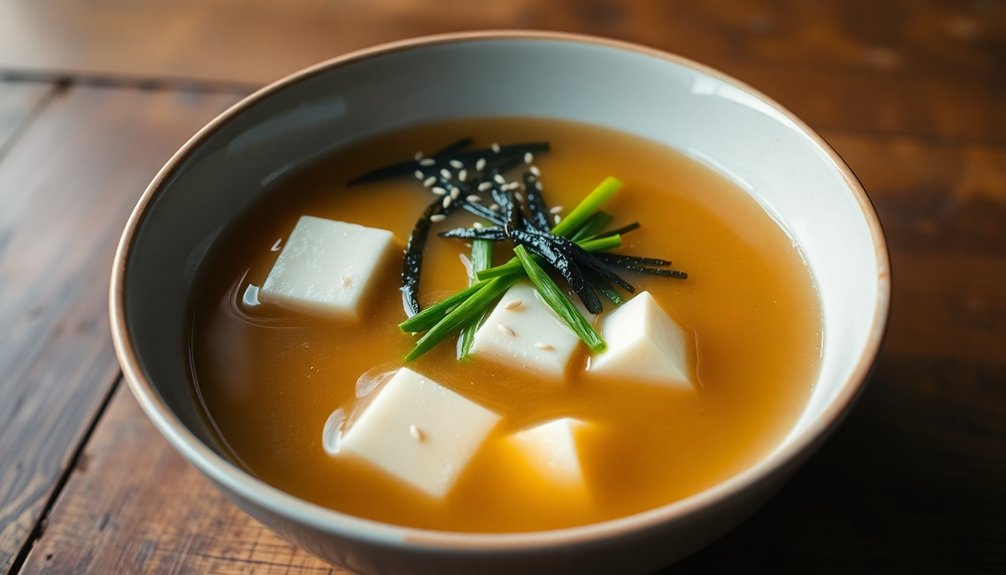
Yes, miso soup is keto-friendly! With only 2-4 grams of net carbs per serving, it fits well into your low-carb diet. The key ingredients like miso paste, tofu, and seaweed keep it nutritious and flavorful. By controlling the amount of miso paste and choosing low-carb veggies, you can enjoy this savory dish without worrying about your carb limits. Plus, there are many ways to enhance your miso soup experience. Discover more tips and recipes to elevate your meals!
Understanding Miso Soup and Its Ingredients
Miso soup is a delightful and nutritious dish that’s easy to enjoy, especially for those on a keto diet. It primarily features miso paste, fermented from soybeans, which contributes a low carb count of about 2-4 grams of net carbs per cup.
When you explore miso soup recipes, you’ll find that it often includes ingredients like tofu, seaweed, and green onions, all enriching its protein content and nutritional profile. Each tablespoon of miso paste adds about 2.18 grams of protein, making it a great addition to your meals.
The broth can vary, with options like dashi or chicken broth, enhancing flavor and nutrients. Overall, miso soup is a fantastic choice for a healthy, low-carb experience. Additionally, the high protein and healthy fats in miso soup can help promote feelings of fullness and satiety, making it easier to adhere to your keto diet.
Carbohydrate Content in Miso Soup
How do the carbohydrates in miso soup fit into a ketogenic diet? Miso soup typically contains about 2-4 grams of net carbs per serving, making it a viable option for your keto diet when enjoyed in moderation.
The carbohydrate content can vary, usually ranging from 3 to 7 grams of net carbs per cup, depending on the ingredients. A tablespoon of miso paste adds around 3-4 grams of carbs, so it’s essential to track how much you’re using.
For instance, wakame seaweed miso soup averages 5.86 grams of carbs per bowl. When you prepare miso soup without high-carb additions, it can easily align with your daily carb limits, allowing you to savor its rich flavors while staying on track. Additionally, improved insulin sensitivity from a ketogenic diet can enhance your body’s ability to manage carbohydrates, making miso soup an even better choice.
Is Miso Soup Suitable for a Keto Diet?
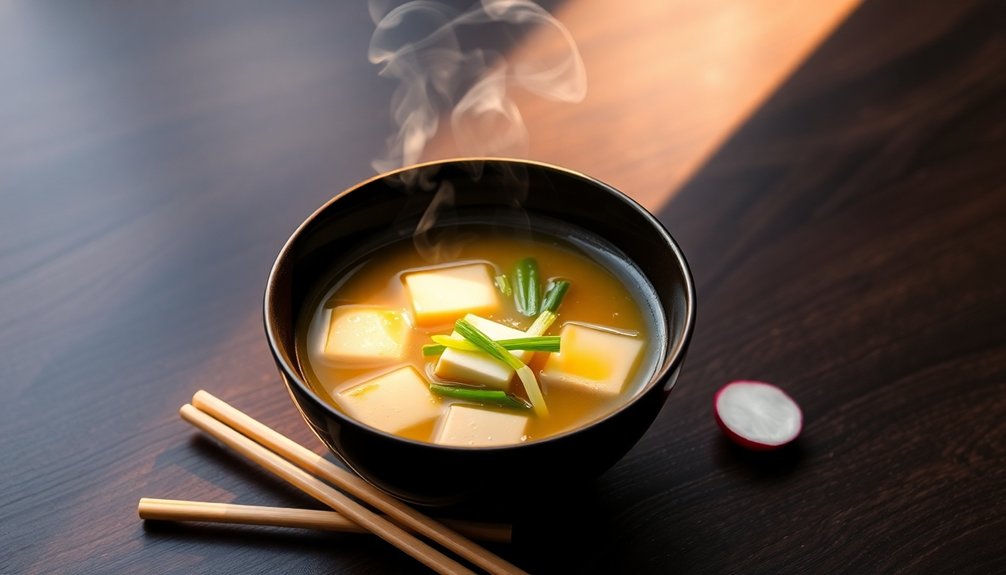
When considering options for a ketogenic diet, miso soup stands out as a favorable choice due to its low net carb content. Typically, a serving contains around 2-4 grams of net carbs, fitting well within the daily carb limits of keto.
The primary ingredient, miso paste, contributes about 3-4 grams of carbs per tablespoon, so portion control is essential to maintain ketosis. You can also enhance your miso soup with keto-friendly ingredients like tofu and healthy fats, adding flavor and protein without greatly raising carb levels.
Plus, regular consumption of miso soup may support gut health thanks to its probiotic properties, making it a nutritious and satisfying option for anyone following a keto lifestyle. Additionally, the reduced carbohydrate intake associated with miso soup can further aid in improving insulin sensitivity, contributing to overall metabolic health.
Types of Miso and Their Nutritional Profiles
When it comes to miso, each type brings something unique to the table. White miso’s light sweetness works well in many dishes, while red miso‘s robust flavor adds depth to heartier meals. Yellow miso strikes a balance, making it a versatile option for various recipes. Additionally, incorporating miso into your diet can contribute to gut health benefits, as it positively alters gut microbiota composition.
White Miso Characteristics
White miso, or shiro miso, stands out for its light color and sweet, mild flavor, which results from a shorter fermentation process.
This fermented soybean paste is made from soybeans and rice, making it a popular choice for those following a low-carb diet. With approximately 4 grams of carbohydrates per tablespoon, it’s a lower-carb option compared to darker miso varieties.
White miso is also rich in vitamins and minerals, including B vitamins, zinc, copper, and magnesium, enhancing its health benefits.
Its subtle flavor lends itself well to soups, dressings, and marinades, allowing you to enjoy a flavorful umami boost without noticeably affecting your overall carbohydrate intake on a ketogenic meal plan.
Red Miso Benefits
Red miso, known for its bold and salty flavor, offers a robust alternative to milder miso varieties. This Aka Miso undergoes a longer fermentation process, resulting in a richer taste and a moderate carb content—about 4 grams per tablespoon, which fits into your keto diet.
It’s packed with essential nutrients, providing a good source of protein, dietary fiber, and important vitamins like B vitamins, zinc, and copper. The fermentation of red miso also introduces probiotics, which support gut health and enhance digestion.
Incorporating red miso into your meals can deliver added health benefits, such as improved immune function and reduced inflammation. Embrace its versatility to elevate your keto-friendly dishes!
Yellow Miso Flavor Profile
Yellow miso, also known as Shinshu miso, offers a delightful balance between the sweetness of white miso and the saltiness of red miso. This milder flavor makes yellow miso versatile for various dishes.
Typically made from fermented soybeans and barley or rice, it boasts a nuanced taste and nutritional profile. A tablespoon of yellow miso contains about 4 grams of carbohydrates and 2 grams of protein, making it a great choice for moderate carb diets.
Rich in essential nutrients like manganese, zinc, and B vitamins, yellow miso also supports digestion and immune health thanks to its probiotic content. The fermentation process enhances its umami flavor, allowing you to elevate soups, marinades, and salad dressings in your keto-friendly meals.
Health Benefits of Miso Soup
Miso soup offers a range of health benefits that can enhance your overall well-being. Packed with probiotics, miso supports gut health by promoting friendly bacteria, which can reduce the risk of inflammatory bowel disease and boost your immune response.
It’s also a great source of essential vitamins and minerals like B vitamins, zinc, copper, and magnesium. When combined with tofu and other ingredients, miso provides about 8 grams of protein per serving, making it a satisfying choice.
Regularly enjoying miso soup may help protect against certain cancers, thanks to its antioxidant properties. Plus, the fermented nature of miso can reduce inflammation and further strengthen your immune system, making it a beneficial addition to your diet. Additionally, miso soup may aid in reducing inflammation due to its content of anti-inflammatory properties, which aligns with the benefits of a ketogenic diet.
Keto-Friendly Miso Soup Recipes
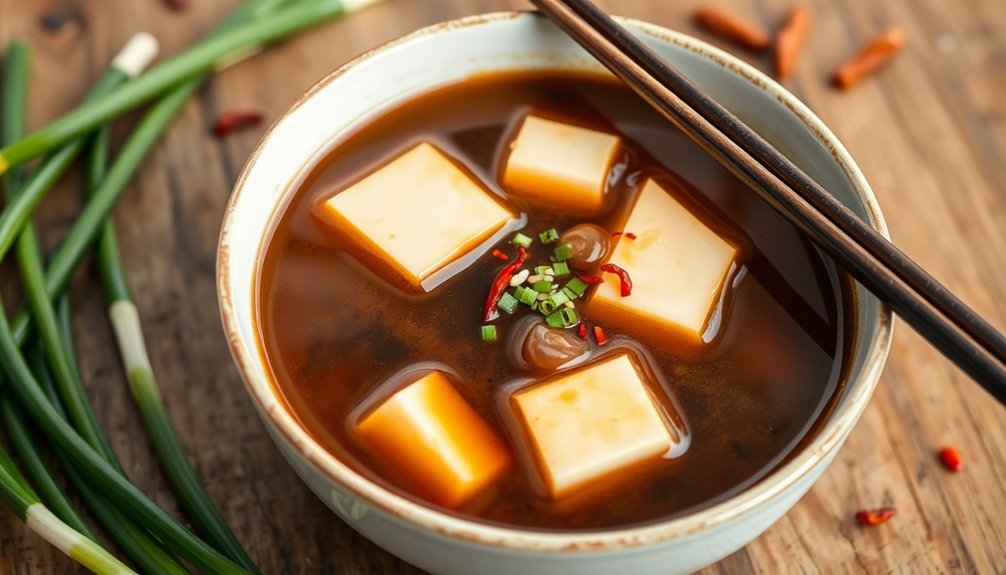
If you’re looking to enjoy a delicious and nourishing soup while sticking to your keto diet, keto-friendly miso soup recipes are a fantastic option.
These recipes typically include low-carb ingredients that keep your net carbs low, around 2-4 grams per serving. Here are four tasty ideas to try:
Keto-friendly miso soup recipes are packed with low-carb ingredients, keeping net carbs around 2-4 grams per serving.
- Classic Miso Soup: Use miso paste with tofu and seaweed for a traditional flavor.
- Chicken Miso Soup: Add chicken to your miso soup for extra protein and heartiness.
- Tofu Miso Soup: Combine miso paste with cubed tofu for a comforting vegetarian option.
- Shirataki Noodle Soup: Incorporate shirataki noodles to replace traditional noodles, keeping it low-carb.
Enjoy these keto soups while benefiting from their probiotic content! Including low-carb ingredients in your meals helps maintain your daily carb limits for effective keto adherence.
How to Use Miso in Your Keto Meal Plan
You can easily incorporate miso into your keto meal plan by experimenting with miso soup variations and creating miso-based dressings. These options not only enhance flavor but also keep your carb count in check. Let’s explore how you can make the most of miso while sticking to your ketogenic goals. Additionally, miso can be a great source of probiotics for gut health, which can further support your overall wellness on a keto diet.
Miso Soup Variations
While exploring variations of miso soup for your keto meal plan, consider incorporating a mix of low-carb ingredients that enhance flavor and nutrition.
Here are some delicious options to try:
- Tofu – Add cubed tofu for protein and texture while keeping carbs low.
- Seaweed – Incorporate dried seaweed for added minerals and a unique flavor.
- Shirataki Noodles – Use these low-carb noodles to maintain that comforting texture without the carbs.
- Tamari Sauce – Swap soy sauce for tamari to reduce sodium and enhance the umami flavor.
Miso-Based Dressings
Miso-based dressings offer a delicious way to elevate your keto meal plan, adding depth and flavor without the extra carbs. By whisking miso paste with olive oil, vinegar, and sesame oil, you create a flavorful, low-carb addition to salads and grilled dishes.
With only about 4 grams of carbohydrates per serving, miso paste fits nicely into your keto diet when used in moderation. These dressings enhance the taste of grilled vegetables, chicken, or salads, providing a rich umami flavor while keeping your meals keto-friendly.
Plus, incorporating miso infuses beneficial probiotics and essential nutrients like zinc and copper. Pair miso dressings with low-carb veggies like cucumber and bell peppers for a satisfying and nutritious side dish.
Tips for Making Miso Soup Keto-Compatible
To create a keto-compatible miso soup, start with a low-carb base by using chicken broth or homemade dashi instead of traditional higher-carb options.
Here are some tips to keep your soup in line with your keto goals:
- Limit Miso Paste: Use one or two tablespoons since each contains about 3-4 grams of carbs.
- Incorporate Tofu: Add tofu for protein; it has just 1.82 grams of net carbs per serving.
- Choose Low-Carb Vegetables: Toss in spinach or zucchini for flavor and nutrients without raising the carb count.
- Use Tamari: Replace high-sodium soy sauce with tamari to enhance umami flavor while staying keto-friendly.
Additionally, keeping track of your macronutrient content will help ensure you remain in ketosis while enjoying your delicious, low-carb miso soup!
Conclusion
Incorporating miso soup into your keto diet is definitely possible with a few tweaks. While some might worry about its carbohydrate content, you can easily adjust the ingredients to keep it low-carb. By choosing the right type of miso and adding keto-friendly vegetables and proteins, you’ll enjoy a delicious, nutritious bowl that fits your lifestyle. So, don’t shy away from those rich Asian flavors—embrace them in your keto meal plan!