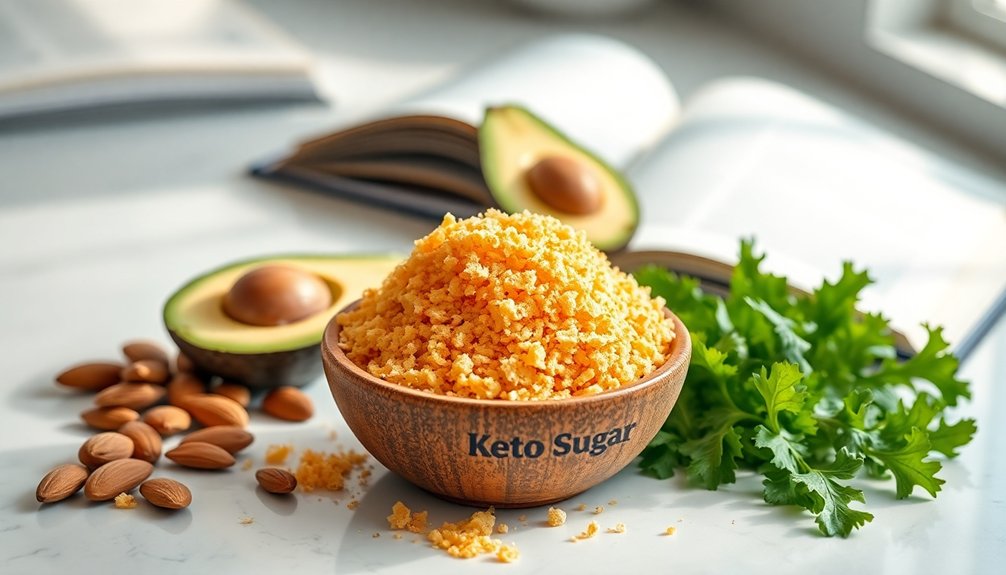
Coconut sugar isn’t keto-friendly. Each teaspoon packs about 4 grams of carbs, which can spike your blood sugar and disrupt ketosis. It’s high in simple sugars like sucrose, making it a poor choice for your low-carb lifestyle. You’ll want to avoid other sweeteners too, like honey and maple syrup, which also affect insulin sensitivity. If you’re curious about better alternatives that fit your keto goals, stick around to explore your options.
What Is Coconut Sugar?
Coconut sugar is a natural sweetener made from the sap of coconut palm trees. It’s created by collecting sap and heating it to evaporate water, resulting in granulated sugar that resembles brown sugar.
With a low glycemic index of around 35, coconut sugar may seem like a better option than refined sugar, which has a glycemic index of 58. However, it still has a high carbohydrate content, containing about 15 calories and 4 grams of carbs per teaspoon.
While it includes small amounts of micronutrients like iron and potassium, its nutritional profile is limited compared to its sugar content. Consequently, if you’re in a metabolic state known as ketosis, coconut sugar is unsuitable for a keto-friendly diet. Additionally, consuming high-carb sweeteners like coconut sugar can disrupt blood sugar regulation, making it challenging to maintain ketosis.
Is Coconut Sugar Keto?
Is Coconut Sugar Keto?
When considering sweeteners for a ketogenic diet, it’s important to evaluate their carbohydrate content and overall impact on ketosis.
Coconut sugar isn’t suitable for a keto lifestyle, as it contains about 4 grams of carbohydrates per teaspoon. Although it has a lower glycemic index than regular sugar, it still raises blood sugar levels, which can disrupt your ketosis goals.
The high fructose and sucrose content in coconut sugar resembles that of regular table sugar, offering minimal nutritional benefits for those on a low-carb diet. Additionally, improving insulin sensitivity is crucial for maintaining stable blood sugar levels while on keto.
Instead, opt for keto-friendly alternatives like monk fruit or stevia, which help with blood sugar control without compromising your carbohydrate limits and keeping you in fat-burning mode.
Carbs in Coconut Sugar
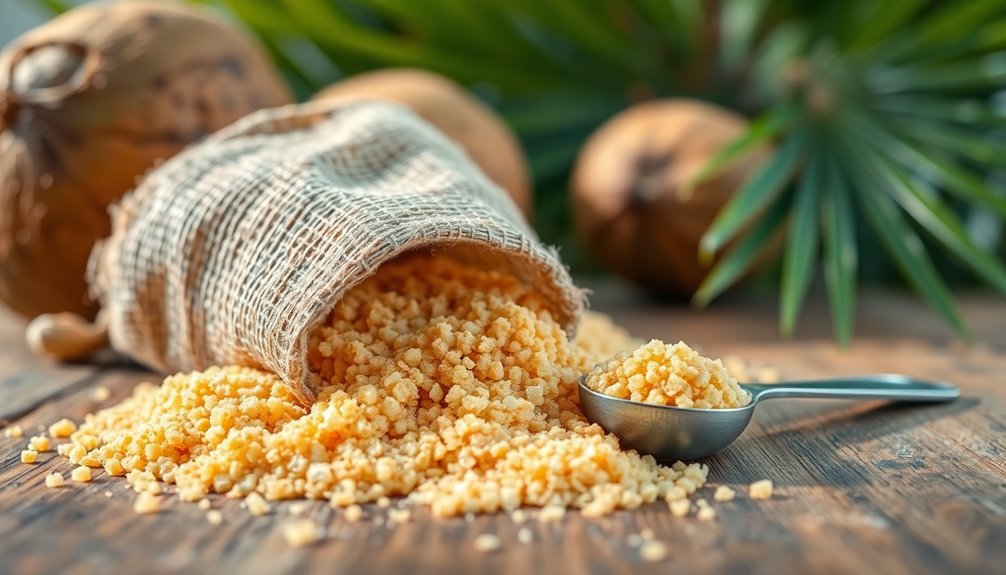
When it comes to coconut sugar, understanding its carb content is essential for your diet.
One teaspoon packs about 4 grams of net carbs, primarily from simple sugars, which can quickly add up. Additionally, compared to low-carb sugar substitutes, coconut sugar is not an ideal choice for those following a keto diet.
Nutritional Profile Overview
While many people seek alternatives to refined sugars, it’s important to understand the nutritional profile of coconut sugar, particularly its carbohydrate content.
One teaspoon contains about 4 grams of net carbohydrates, primarily from simple sugars like sucrose, fructose, and glucose. This means that, although coconut sugar has a lower glycemic index of around 35 compared to regular sugar, it still impacts your blood sugar levels considerably.
With approximately 15 calories per serving, it lacks the fiber, protein, or fat that could help mitigate these effects. As a result, coconut sugar isn’t considered a keto-friendly sweetener, and its high carbohydrate content makes it unsuitable for those following low-carb diets seeking nutritional benefits without raising their sugar intake.
Carb Content Breakdown
Understanding the carbohydrate content in coconut sugar is essential for anyone monitoring their intake, especially on a keto diet.
Coconut sugar contains about 4 grams of net carbs per teaspoon, which means each teaspoon adds roughly 15 calories primarily from carbohydrates. Its carbohydrate composition includes sucrose, fructose, and glucose—simple sugars that can impact your daily limits.
If you’re following a strict 50-gram keto diet, consuming coconut sugar can use up about 16% of your daily carb allowance. This high in carbs option may make it challenging to maintain ketosis, as even small amounts can add up quickly.
When considering sweeteners, it’s vital to weigh these factors carefully to stay within your goals.
Keto-Friendly Substitute for Coconut Sugar
If you’re looking for keto-friendly substitutes for coconut sugar, several excellent options can satisfy your sweet tooth without derailing your diet.
The monk fruit sweetener is a fantastic choice; it’s 100-250 times sweeter than sugar and contains no calories or carbs.
Erythritol is another suitable substitute, boasting just 0.2 calories per gram and a low glycemic index, perfect for baking.
Allulose, a rare sugar, doesn’t raise blood sugar levels, making it ideal for your keto lifestyle.
Finally, xylitol can be used as a lower-carb alternative, though it’s wise to monitor your intake due to potential digestive issues.
These substitutes not only provide sweetness but also help maintain ketosis by preventing blood sugar spikes, allowing you to enjoy your favorite treats without guilt.
With these low carb sweeteners, you can enjoy sweetness without compromising your health goals!
Sweeteners to Avoid on a Low Carb Keto Diet
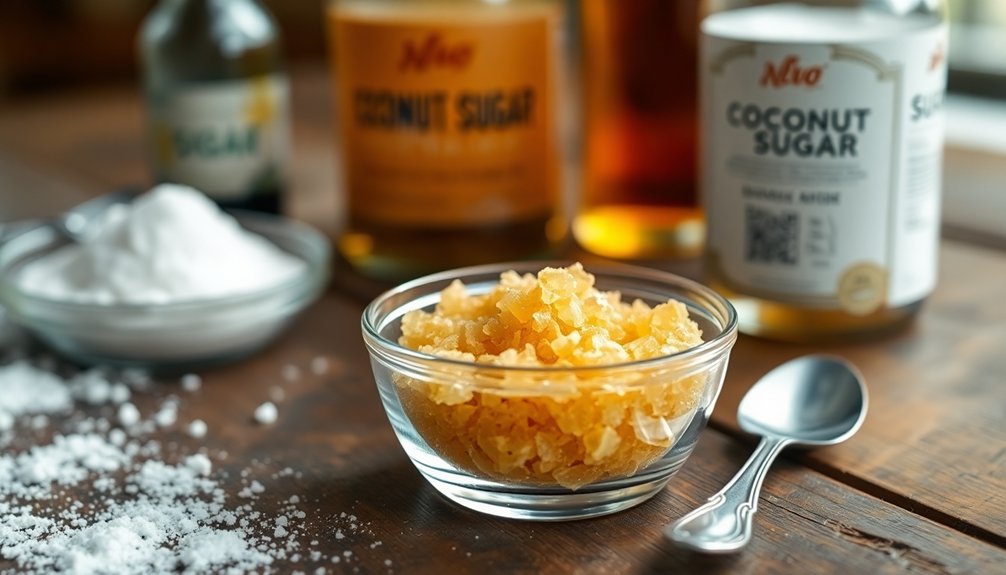
To maintain a successful low carb keto diet, it’s essential to steer clear of certain sweeteners that can sabotage your progress.
Coconut sugar, for instance, contains about 4 grams of carbohydrates per teaspoon, which can quickly add up and hinder your carbohydrate intake goals. Although it has a lower glycemic index than table sugar, it still impedes achieving ketosis.
Other sweeteners to avoid include maltodextrin and honey, both high in calories and carbohydrates. Maple syrup is also high in sugars, making it incompatible with a keto diet.
Finally, agave nectar, rich in fructose, can negatively impact insulin sensitivity. Staying away from these sweeteners will help you stay on track with your low carb lifestyle. Additionally, understanding the importance of keto-friendly sugar substitutes can provide you with healthier alternatives to satisfy your sweet tooth without derailing your diet.
The Bottom Line
While coconut sugar may seem like a more natural sweetener, it’s still not a good choice for your keto diet. With about 4 grams of carbohydrates per teaspoon, it can quickly eat into your daily carb limit of 20–50 grams.
Although its glycemic index is lower than that of table sugar, coconut sugar still contributes considerably to overall carbohydrate consumption, making it a sweetener to avoid.
To maintain ketosis, you need to steer clear of high-carb options like coconut sugar, maltodextrin, and honey. Instead, opt for low-carb sweeteners like stevia and monk fruit. These alternatives satisfy your sweet cravings without disrupting your ketogenic diet or impacting your carb limits. Additionally, understanding carb content in various foods is crucial for effective keto adherence.
Conclusion
To sum up, while coconut sugar may seem like a natural alternative, it’s not keto-friendly due to its high carb content—about 16 grams per tablespoon! Instead, consider using keto-approved sweeteners like erythritol or stevia to satisfy your sweet tooth without derailing your diet. Remember, staying informed about what you consume can make a significant difference; even small choices can impact your success on keto. Stay mindful, and enjoy your journey to better health!