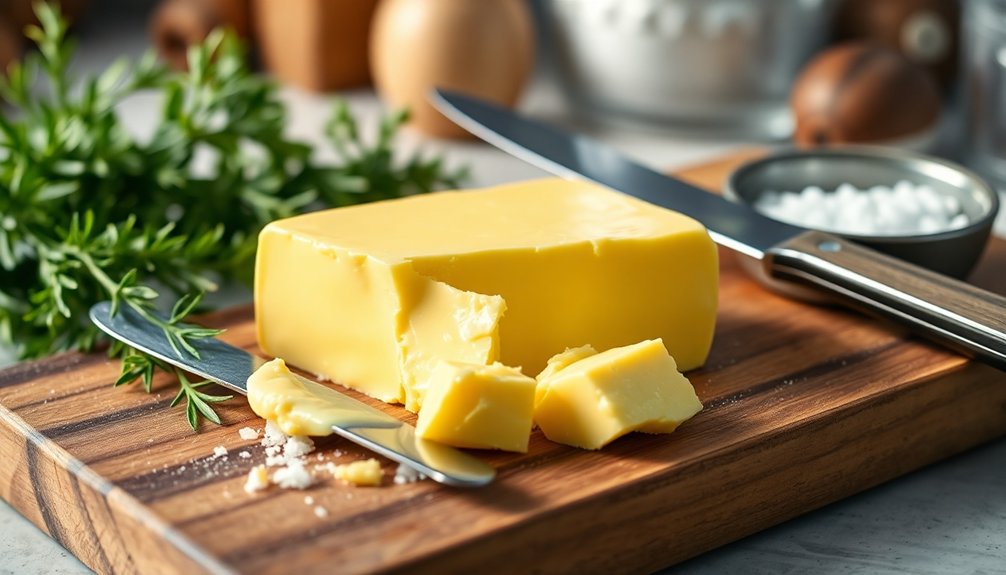
Butter’s a must-have in your ketogenic kitchen. Each tablespoon packs about 102 calories and 11.5 grams of fat, perfect for keeping you in ketosis. It’s rich in vitamins A, D, E, and K, plus healthy fats that help you feel full. Grass-fed butter even boosts omega-3 fatty acids. Whether you’re sautéing veggies or whipping up keto butter coffee, butter plays a versatile role. Discover more ways to incorporate this staple in your diet for peak health.
Nutrition of Butter
Butter is a nutrient powerhouse, packed with essential vitamins A, D, E, and K. As you embrace the keto diet, you’ll find butter to be a fantastic addition due to its high-fat, low-carb profile.
With about 102 calories and 11.5 grams of fat per tablespoon, it’s a rich source of healthy fats that fuels your body efficiently. Grass-fed butter stands out for its superior nutritional value, boasting higher omega-3 fatty acids than conventional butter.
Plus, it contains only around 30 milligrams of cholesterol per tablespoon, which is minimal compared to what your liver produces daily. Incorporating butter into your meals not only enhances flavor but also helps you stay aligned with your ketogenic goals while providing essential nutrients like vitamin K. Additionally, the anti-inflammatory properties of healthy fats, such as those found in butter, can contribute to better overall health during your keto journey.
How Much Butter Is OK on Keto?
When following a ketogenic diet, it’s important to know how much butter is appropriate for your daily intake. Aim for butter to be part of a fat intake that constitutes 70-80% of your daily calories.
Each tablespoon of unsalted butter provides about 102 calories and 11.5 grams of fat, which can quickly add up. Moderation is essential; while butter is keto-friendly, excessive consumption may hinder your weight loss goals.
Track your overall macronutrient intake to guarantee you’re not exceeding your limits. Opt for grass-fed butter for better health benefits, as it has a superior nutrient profile and higher omega-3 fatty acids. Additionally, incorporating healthy oils and fats into your diet can enhance your overall nutrition and support your ketogenic goals.
Finally, be mindful of sodium levels, especially when choosing between salted and unsalted varieties.
Benefits of Butter on Keto
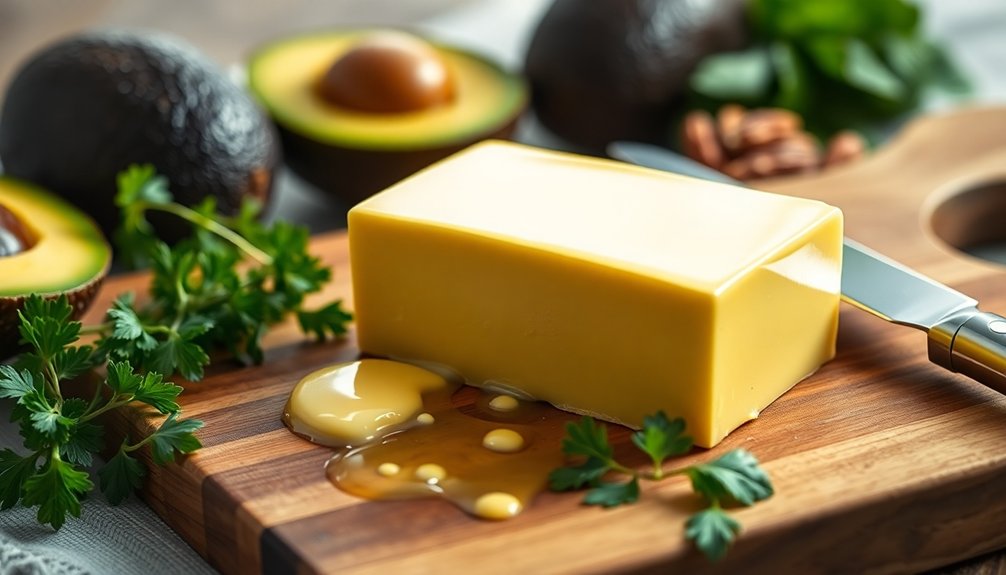
Including butter in your ketogenic diet offers a range of benefits that support your health and weight management goals.
Butter is high in fat and low in carbohydrates, helping you maintain ketosis while providing about 102 calories and 11.5 grams of fat per tablespoon.
It’s rich in essential vitamins A, D, E, and K, along with over 400 fatty acids that promote metabolic health.
By consuming butter, you can experience increased feelings of fullness, aiding in your weight management efforts and fat-burning capabilities.
Opting for grass-fed butter enhances these benefits, as it boasts a superior nutrient profile with higher omega-3 fatty acids.
Embracing butter can be a delicious and nutritious way to support your ketogenic lifestyle. Additionally, incorporating healthy fats like avocado oil and ghee can further enhance the flavor and nutritional value of your meals.
Best Types of Butter for Keto
Choosing the right type of butter can greatly enhance your ketogenic diet. Grass-fed butter is a top choice, packed with omega-3 fatty acids and fat-soluble vitamins, making it superior to grain-fed options.
Unsalted butter offers versatility in cooking and baking, allowing you to control sodium intake. Both salted and unsalted butter contain minimal carbohydrates—about 0.02 grams per tablespoon—making them perfect for maintaining ketosis.
One tablespoon of butter provides roughly 11.5 grams of fat, essential for meeting your high-fat requirements on this diet.
If you have lactose intolerance, ghee is an excellent alternative, as it contains no milk solids while still being keto-friendly. Additionally, incorporating grass-fed butter can provide higher omega-3s and vitamins A and K2, enhancing the nutritional value of your meals.
Embrace these butter options to elevate your culinary experience!
Ways to Use Butter on a Keto Diet
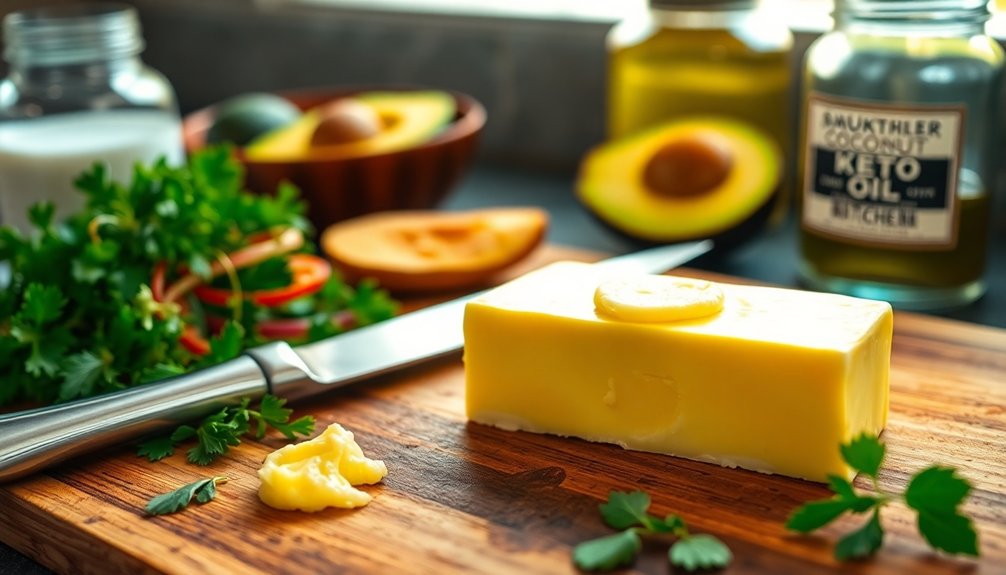
Butter’s versatility makes it an invaluable ingredient on a keto diet, enhancing both flavor and nutritional value in your meals.
You can use butter as a cooking fat for sautéing non-starchy vegetables, keeping your dishes low in carbs while adding essential nutrients like vitamins A, D, E, and K.
Try incorporating butter into recipes like keto butter coffee to help promote ketosis and provide sustained energy with its high-fat content.
Additionally, whip up delicious keto fat bombs by mixing butter with other healthy fats and flavorings for a satisfying snack that supports fat intake and hunger management.
Opt for grass-fed butter to maximize health benefits, as it offers a superior nutrient profile, including higher omega-3 fatty acids. Moreover, using grass-fed butter provides butyrate, which is beneficial for gut health and has anti-inflammatory effects.
Conclusion
In the grand tapestry of your ketogenic kitchen, butter is the golden thread that weaves flavor and nutrition together. Embrace its richness, and don’t shy away from adding it to your meals. As you savor each creamy bite, remember that butter isn’t just a fat; it’s a key that opens the door to a world of delicious possibilities. So go ahead, let butter be your culinary compass on this flavorful keto journey!