You don’t have to stick to bacon on your keto diet! Instead, load up on high-protein, plant-based options like tofu, tempeh, and edamame. Nuts and seeds also pack a punch with healthy fats and protein while keeping carbs low. Incorporate avocados and leafy greens for added nutrients. This way, you can enjoy a satisfying and nutritious meal plan. Curious about more tasty ideas and tips for success? Keep exploring for delicious inspiration!
Understanding Plant-Based Keto
Plant-based keto combines the principles of the traditional ketogenic diet with a focus on vegetarian sources of nutrition, creating a unique approach that can be both satisfying and healthful.
This diet emphasizes low-carb, high-fat, and moderate protein intake, primarily sourced from plants. You’ll aim for macronutrient ratios of 60% to 75% fat, 15% to 30% protein, and 5% to 15% carbohydrates, focusing on healthy fats from avocados, coconuts, and olives.
Incorporating cage-free eggs and wild-caught seafood is an option for vegetarians or pescatarians.
Plant-based keto can support weight management and blood sugar control while providing essential nutrients. However, careful planning is vital to avoid deficiencies in vitamins B12 and D, iron, zinc, and omega-3 fatty acids. Moreover, a high-protein diet can enhance insulin sensitivity, crucial for blood sugar regulation.
Benefits of a Plant-Based Keto Diet
Embracing a plant-based keto diet offers numerous health benefits that go beyond just weight management. By focusing on high-protein, plant-derived sources, you can create a healthy keto diet that emphasizes essential nutrients.
Incorporating foods like avocados, nuts, and low-carb vegetables not only supports heart health but also aids in weight management. This diet promotes blood sugar control by emphasizing high-fiber, low-starch foods that stabilize insulin levels and curb cravings.
Research indicates that plant-based diets, including keto variations, lead to less weight gain and better long-term health outcomes compared to traditional high-carb diets. Additionally, a vegetarian high-protein keto diet promotes satiety through its high protein content, helping to reduce the urge to snack.
High-Protein Plant-Based Foods
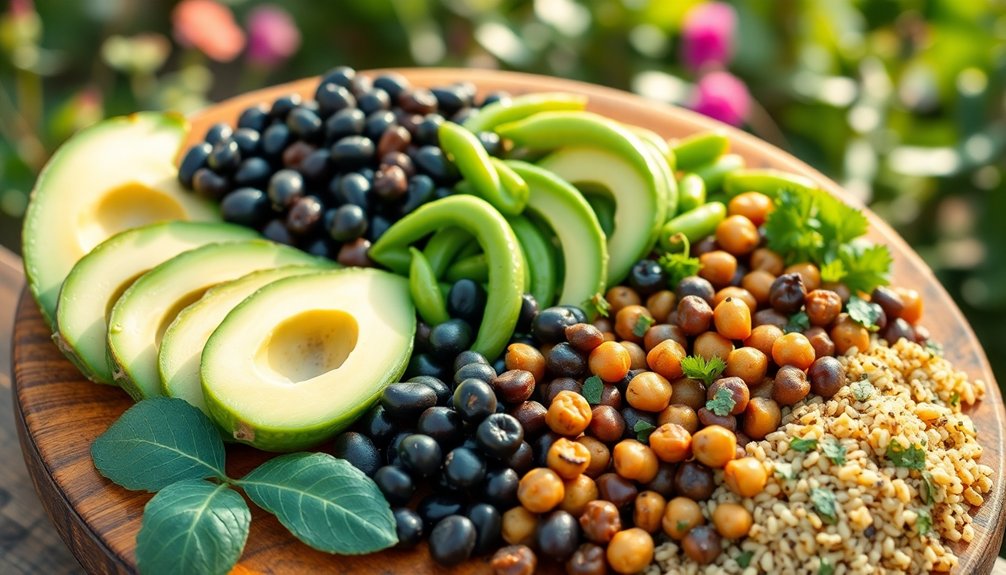
When you’re looking to boost your protein intake on a keto diet, high-protein plant-based foods can be a game changer. Tofu, seitan, and tempeh are fantastic sources, delivering essential amino acids while remaining low in carbs.
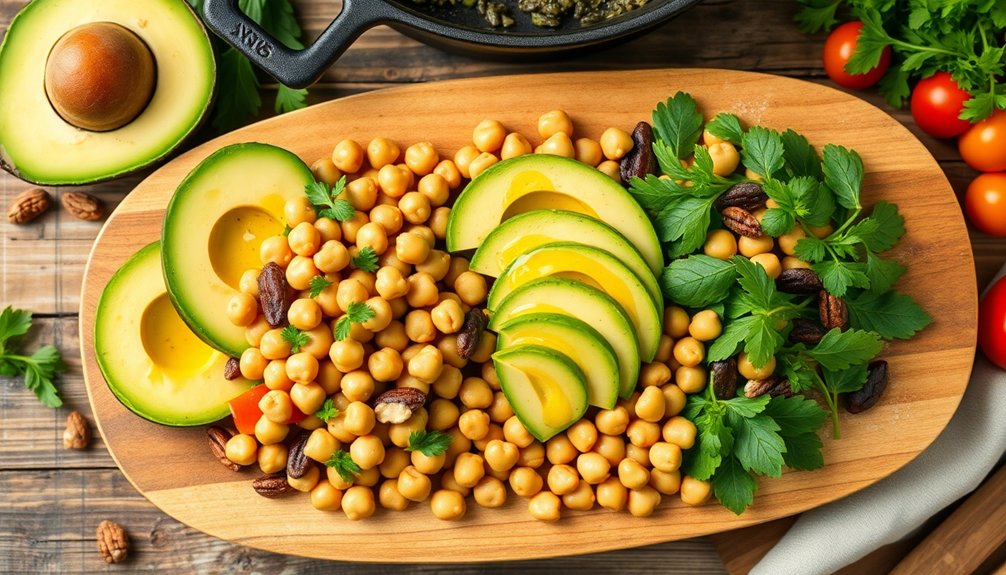
Nuts like pecans, macadamias, and pili nuts offer both high-protein content and healthy fats, helping you maintain ketosis effectively. Don’t overlook seeds, especially pumpkin and hemp seeds, which are rich in protein and fiber, supporting your overall health. Nuts and seeds are also packed with essential vitamins, minerals, and healthy fats.
Unsweetened soy products such as edamame and tempeh provide substantial protein with minimal net carbs, perfect for muscle maintenance.
Even green leafy vegetables like spinach and kale can add to your daily protein intake while supplying crucial vitamins and minerals.
Healthy Fats for Plant-Based Keto
Healthy fats play an essential role in a successful keto diet, making up 60% to 75% of your daily caloric intake. Incorporating these healthy fats helps you maintain low carb levels while supporting your overall health.
Healthy fats are crucial for a successful keto diet, comprising 60% to 75% of your daily calories while promoting overall health.
Here are some fantastic sources to take into account:
- Avocados and olives: Packed with healthy fats and fiber.
- Nuts and seeds: Macadamias, pecans, and chia seeds are high in fiber and plant-based protein.
- Coconut oil and ghee: Ideal for cooking due to their high smoke points.
- Fatty fish: Salmon and mackerel provide omega-3 fatty acids, promoting heart health.
Additionally, medium-chain triglycerides found in coconut oil can enhance energy levels and support ketosis.
Meal Ideas for Plant-Based Keto
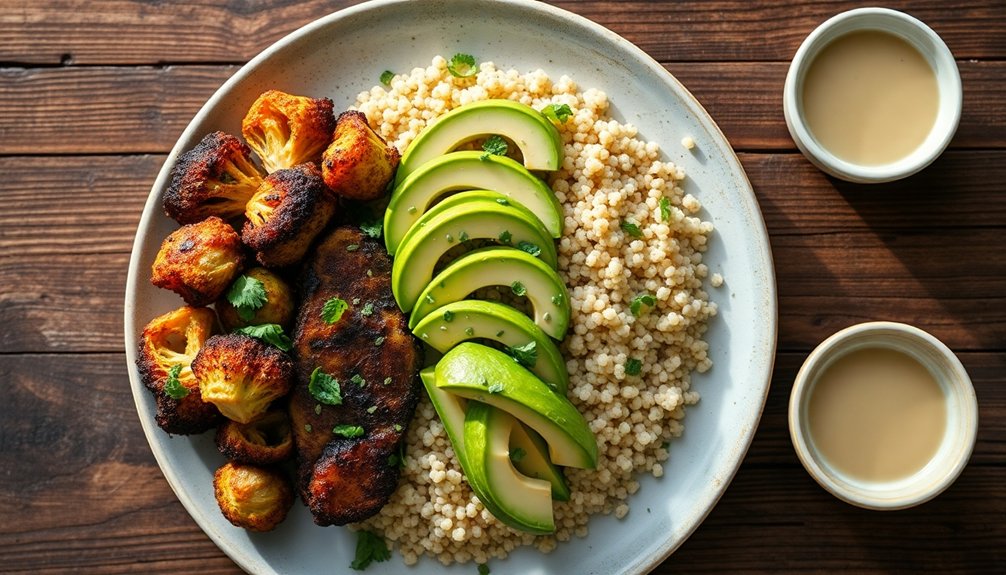
Finding delicious meal ideas for a plant-based keto diet can be both fun and satisfying.
Start your day with a tofu scramble loaded with avocado and spinach for a high-protein breakfast that’s low in carbs.
For lunch, whip up a stir-fry using seitan or tempeh, offering a meaty texture while sticking to your healthy lifestyle.
Dinner could be zucchini noodles drizzled with creamy avocado sauce and sprinkled with nutritional yeast, delivering healthy fats without the carbs.
Don’t forget snacks—macadamias and pecans are perfect for keeping your energy up.
Finally, indulge in keto-friendly chia seed pudding made with unsweetened almond milk and a few berries for dessert, ensuring you stay on track with your plant-based keto journey. Additionally, incorporating higher rates of protein synthesis can enhance muscle recovery and support your athletic performance.
Snacks to Satisfy Cravings
What do you reach for when those cravings hit on a plant-based keto diet? Satisfying your cravings with healthy, keto-friendly snacks can be easy.
Here are some delicious options:
- Nuts and Seeds: Packed with healthy fats and protein, they’re perfect for a low-carb snack. Including almond flour in your recipes can provide a versatile and nutritious alternative to traditional flours.
- Homemade Fat Bombs: These tasty treats can be customized to fit your flavor preferences while staying high-protein.
- BeyondChipz and BeyondTwistz: Crunchy, low-carb alternatives that satisfy your snack attacks without the guilt.
- Low-Carb Protein Bars: Convenient but check the ingredients to verify they align with your keto goals.
Potential Challenges and Side Effects
Shifting to a plant-based keto diet can bring some challenges, especially when it comes to nutrient deficiencies like B12 and iron. You might also experience symptoms of the “keto flu,” such as fatigue and irritability, as your body adapts. Being aware of these potential side effects is essential for managing your diet effectively. Additionally, the restrictive nature of the diet may make it difficult to maintain specific macronutrient ratios.
Nutrient Deficiencies Awareness
While embracing a vegetarian keto diet can lead to numerous health benefits, it’s essential to be aware of potential nutrient deficiencies that may arise.
The restrictive nature of a strict keto approach can limit your intake of critical nutrients. Here are some key areas to monitor:
- Vitamin B12: Often found in animal products, essential for nerve health.
- Iron: Plant-based sources may not be as easily absorbed.
- Omega-3 Fatty Acids: Important for heart health, often low in vegetarian diets.
- Calcium: Necessary for bone health, may need supplementation.
To avoid these nutrient deficiencies, focus on careful meal planning and regular monitoring of nutrient intake to maintain adequate protein intake and overall health while following the vegetarian keto diet.
Managing Keto Flu Symptoms
As you adjust to a vegetarian keto diet, you might encounter some challenges, particularly the so-called “keto flu.” This set of symptoms, which can include fatigue, irritability, nausea, and headaches, often appears within the first week as your body shifts from burning carbohydrates to utilizing fat for energy.
To ease these symptoms, focus on hydration; drinking plenty of water can help combat fatigue and headaches. Incorporate high-protein foods and low-starch vegetables to boost energy and fiber intake. Healthy fats are essential too, as they provide sustained energy.
Gradually reducing your carbohydrate intake can lessen the severity of the keto flu. Finally, keep an eye on your mental health, as concentration and sleep issues may arise during this shift.
Tips for Success on Plant-Based Keto
To succeed on a plant-based keto diet, meal prep is key.
You’ll want to focus on nutrient-dense food choices like avocados, leafy greens, and high-protein options like tofu and tempeh. Incorporating high-protein meat alternatives can further enhance your meals and support your dietary goals.
Planning ahead helps you stay on track and guarantees you get the vitamins and minerals you need.
Meal Prep Essentials
Meal prepping is a game changer when it comes to succeeding on a plant-based keto diet. To make your meal prep efficient and effective, follow these essential tips:
- Plan your meals around high-fat, low-carb foods like avocados, coconut oil, and nuts to meet your macronutrient ratios.
- Incorporate a variety of low-carb vegetables such as spinach and zucchini for added nutrients without spiking your carb intake.
- Use portion-controlled containers to prepare and store meals in advance, helping you manage calorie intake and stay on track.
- Experiment with plant-based proteins like tofu and tempeh, ensuring they align with keto guidelines for weight loss and blood sugar management.
Nutrient-Dense Food Choices
Nutrient-dense food choices are essential for thriving on a plant-based keto diet. Focus on high-fat plant-based options like avocados, olives, and nuts to provide healthy fats while maintaining low-carb levels.
Incorporate low-carb protein sources such as tofu, tempeh, seitan, and cage-free eggs if you’re vegetarian, ensuring you meet your protein needs. Add non-starchy vegetables like spinach, kale, and cauliflower to boost your nutrient intake without raising your carbohydrate count.
Be mindful of net carbs when selecting plant-based protein products, as some may contain hidden starches and sugars that can disrupt ketosis.
Regularly assess your nutrient intake to avoid deficiencies in vitamins B12, D, iron, and omega-3s, which are crucial for your overall health on this diet.
Conclusion
Incorporating high-protein, plant-based options into your keto diet can be a game changer for your health. You’ll not only feel more energized, but you’ll also enjoy a variety of delicious meals that keep your cravings in check. So, whether you’re a foodie or just looking to level up your nutrition, embracing this approach might just be the best decision since sliced bread. Immerse yourself in this journey and discover how tasty and fulfilling a plant-based keto lifestyle can be!