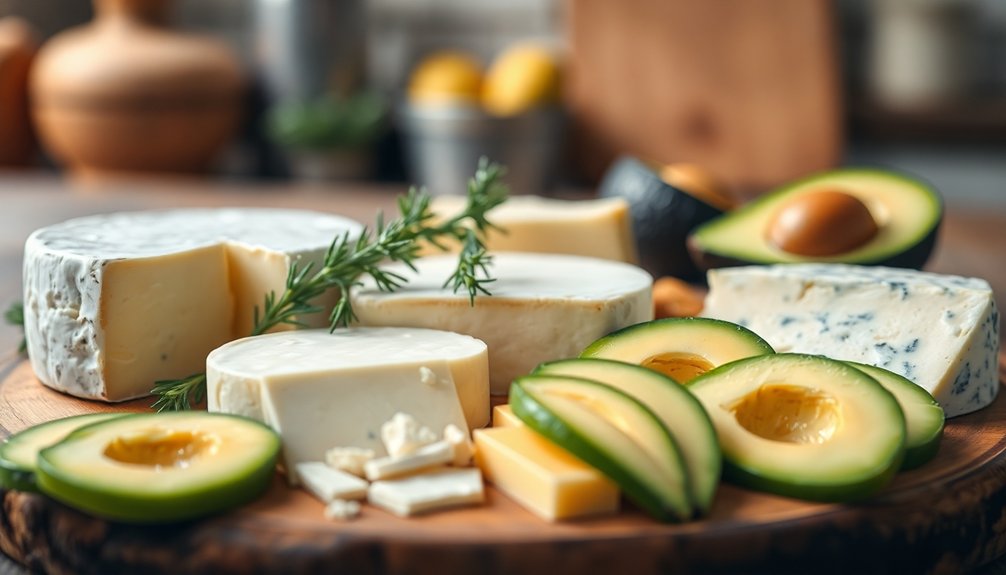
Yes, you can definitely eat cheese on a keto diet! Many cheese varieties, like cheddar, goat cheese, and blue cheese, are low in carbs and high in healthy fats, which help you maintain ketosis. Just be cautious with options like cottage or ricotta cheese, as they contain more carbs. Focus on full-fat cheese to reap the nutritional benefits. If you’re curious about the best ways to incorporate cheese into your keto meals, there’s more to explore!
Understanding the Keto Diet and Dairy’s Role
When you’re diving into the keto diet, understanding how dairy fits in is important for your success.
Dairy products, especially high-fat options like cheese, are essential for maintaining low carb content while providing significant nutrients. On a ketogenic diet, the goal is to promote ketosis, where your body burns fat for fuel.
Cheese is an excellent choice due to its low carb and high-fat profile, making it a keto-friendly dairy option. Varieties like cheddar, goat cheese, and blue cheese offer great flavor and health benefits, aiding in weight loss. Additionally, the keto diet’s ability to enhance insulin sensitivity can further support weight management and cholesterol improvements.
Cheese, with its low carb and high-fat profile, is a delicious and beneficial choice for keto dieters.
However, be cautious with processed cheeses and those high in lactose, as they can disrupt your ketosis. Monitor your body’s reaction to dairy to confirm you’re on track with your keto journey.
Best Cheeses to Enjoy on a Keto Diet
If you’re looking to enhance your keto diet with delicious cheese options, you’re in luck.
The best cheeses to enjoy on a keto diet include goat cheese, which is an excellent choice with 0 carbs and 8g of fat per ounce.
Blue cheese packs a punch with only 0.5g of carbs and 6g of fat, perfect for flavorful dishes.
Cream cheese is versatile, adding richness with just 1g of carbs and 8g of fat per ounce.
Parmesan cheese is also low in carbs at 0.7g per tablespoon, making it ideal for flavoring meals.
These cheeses aren’t only high in fat but also keto-friendly, ensuring you can indulge in dairy consumption without worrying about your carb intake. Additionally, aged cheeses have reduced lactose content, making them suitable for those with lactose intolerance.
Cheeses to Avoid When Following Keto

While cheese can be a tasty addition to your keto diet, some varieties should be avoided to stay on track.
Cheeses to avoid include cottage cheese and ricotta cheese, both higher in carbs, with cottage cheese containing about 5 grams per ½-cup serving and ricotta around 4 grams per ounce.
Low-fat cheese options aren’t ideal either, as they offer fewer healthy fats—only about 2 grams—making them unsuitable for the high-fat focus of the keto diet.
Additionally, processed cheeses like American cheese often contain fillers and are generally higher in carbs.
Mild cheddar cheese can also lead to excessive carb intake, as it typically has around 1 gram of carbs per ounce, requiring multiple slices to feel satisfied.
It’s essential to choose cheeses that align with your dietary goals to promote healthy fat intake, which is crucial for achieving the benefits of the Keto diet.
Nutritional Benefits of Dairy in a Ketogenic Lifestyle
Dairy products, particularly high-fat cheeses, play an essential role in a ketogenic lifestyle by offering important nutrients that support your health.
Full-fat cheese varieties, like cheddar and gouda, are low-carb dairy options that help you maintain ketosis. These high-fat dairy foods provide critical calcium and protein, benefiting bone health and muscle preservation.
Regular cheese consumption may also support weight management, as studies link higher dairy intake with a lower body mass index (BMI). Additionally, many cheeses contain healthy fats like conjugated linoleic acid (CLA), promoting fat loss and overall health.
Incorporating fat-soluble vitamins found in these cheeses can enhance your ketogenic diet and provide energy-dense fats that promote satiety and sustain ketosis. Including healthy fats in your diet, such as those found in cheese, can further support your nutritional goals on a ketogenic plan.
Tips for Incorporating Cheese Into Your Keto Meals
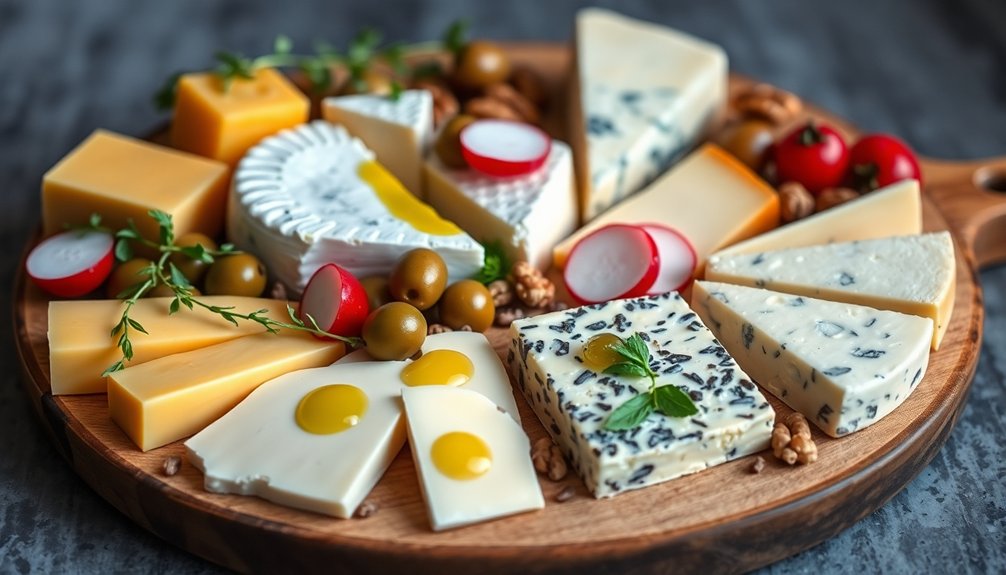
Incorporating cheese into your keto meals can be both delicious and satisfying, as it adds flavor and texture without loading up on carbs. Focus on high-fat cheeses like cheddar, gouda, and blue cheese, which are low in carbs, typically 0-1g per ounce.
Incorporate high-fat cheeses like cheddar and gouda into your keto meals for delicious, low-carb flavor and texture.
Cream cheese is another versatile option, offering 8g of fat and just 1g of carbs per ounce, perfect for sauces or dips. For snacks, try cheese crisps as a crunchy alternative to chips.
You can also experiment with cheese-based recipes, like keto pizza with a mozzarella crust. Just be mindful of your dairy consumption, as too much cheese can impact your weight loss goals due to its calorie density. Additionally, incorporating high-fat dairy products can enhance the overall flavor and texture of your meals while supporting your keto journey.
Enjoy your cheesy creations responsibly!
Conclusion
Incorporating cheese into your keto journey can feel like discovering the hidden treasures of a well-guarded dairy kingdom. By choosing the right cheeses, you’re not just satisfying your cravings; you’re fueling your body with essential nutrients. Just remember, moderation is key—too much of a good thing can lead you astray. So, embrace the richness of cheese while staying true to your keto goals, and let your culinary adventure unfold like a well-loved story.