

If you’re exploring Costco’s keto bread, it’s essential to check the ingredients. Many options contain gluten and chicory root fiber, which can lead to inflammation and digestive discomfort. Additionally, soybean oil, often found in these products, may increase inflammation due to its high omega-6 content. Understanding these factors will help you choose healthier alternatives that fit your keto lifestyle. Stick around to uncover tips for making informed choices and improving your keto experience!
Understanding Keto Bread and Its Popularity
As the demand for low-carb alternatives grows, keto bread has gained significant popularity, especially among those following ketogenic diets. This trend is largely driven by the desire for products that fit within the macronutrient ratios of the keto diet.
However, studies have demonstrated that many keto bread options, including those at Costco, may not be as healthy as they seem. Ingredients like gluten and modified wheat starch could promote inflammation, undermining the benefits of a ketogenic lifestyle. Additionally, chicory root fiber can cause digestive discomfort if you consume too much. Even more concerning are the potentially harmful oils, such as soybean oil, found in some of these products, raising questions about their overall healthfulness. The impact of cholesterol levels on heart health should also be considered when selecting food options within the keto framework.
The Role of Gluten in Keto Bread
While many people turn to keto bread for its low-carb appeal, it’s essential to contemplate the role of gluten in these products. Gluten, primarily found in wheat, can trigger inflammation, which may undermine the benefits of a ketogenic diet.
Here’s the thing: consuming gluten can lead to gaps in your intestinal lining, allowing larger protein fragments into your bloodstream and potentially provoking immune responses.
Many keto bread products, including those from Costco, often contain modified wheat starch and wheat gluten, which raises concerns for those strict about their keto protocols.
Removing gluten and grains is generally beneficial on a keto diet, as it helps minimize inflammation and digestive issues. Additionally, anti-inflammatory foods can further support your health and enhance the benefits of a gluten-free ketogenic diet.
Being aware of gluten’s effects empowers you to make informed dietary choices.
Impacts of Chicory Root Fiber

When you enjoy Costco’s keto bread, you might want to pay attention to the chicory root fiber it contains.
Consuming more than 10 grams of this ingredient can lead to digestive discomfort, like bloating.
It’s essential to be aware of how much fiber you’re getting to avoid any unpleasant side effects. Additionally, a well-balanced keto diet can contribute to improved insulin sensitivity, which may help mitigate some digestive issues by stabilizing blood sugar levels.
Digestive Discomfort Potential
Chicory root fiber, often included in keto bread, can lead to digestive discomfort for many people, especially if you consume more than 10 grams.
This fast-fermenting ingredient can trigger bloating factors and upset your digestive health. For instance, just two slices of keto bread might already exceed that recommended intake, increasing your risk of gastric distress.
If you have a sensitive digestive system, you may find that chicory root fiber causes increased gas and bloating, making it essential to monitor how much you eat.
Some brands have even removed chicory root from their products due to consumer feedback about discomfort.
Staying aware of chicory root fiber content is important in maintaining a positive low-carb experience.
Recommended Intake Limitations
Many people enjoy the convenience of keto bread, but it’s important to be mindful of how much chicory root fiber you consume. This fast-fermenting fiber can lead to bloating and discomfort if you exceed about 10 grams.
Some keto breads contain enough chicory root fiber in just two slices to trigger digestive issues like gas and cramping. To maintain digestive health, consider fiber intake strategies that limit chicory root fiber while incorporating keto fiber alternatives such as almond flour or psyllium husk.
Stay aware of ingredient labels and choose products that align with your body’s tolerance. By doing so, you can enjoy keto bread without the unwanted gastric distress that can accompany excessive chicory root fiber consumption.
Evaluating Soybean Oil as a Keto Ingredient
While soybean oil is a common ingredient in keto breads, its suitability for a ketogenic diet raises several concerns.
With over 50% polyunsaturated fat, primarily omega-6, soybean oil can trigger inflammatory effects in your body. Additionally, the extraction process often involves hexane, a neurotoxin, sparking sourcing concerns about its safety.
Oxidized soybean oil may further worsen inflammation due to lipid peroxidation. You might also encounter fully hydrogenated soybean oil, which contains trans fats that block anti-inflammatory prostaglandins, potentially undermining your keto efforts.
Given these drawbacks, considering soybean oil alternatives could be beneficial for maintaining a healthy ketogenic lifestyle. Opting for oils with lower inflammatory profiles may help guarantee you stay on track with your dietary goals. Incorporating healthy fats like avocado oil or coconut oil can provide better nutritional benefits and support your overall health.
Health Risks Associated With Soybean Oil
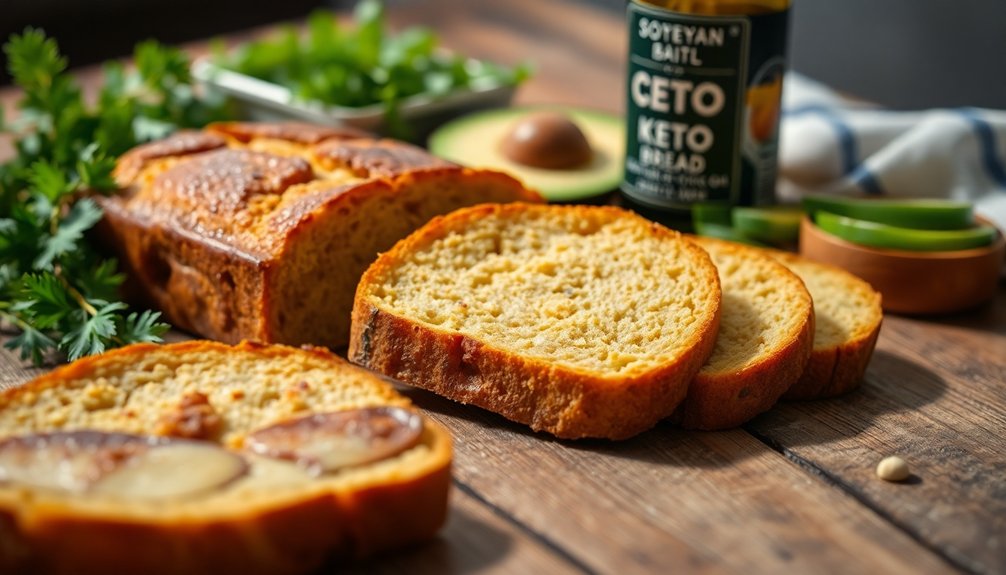
Although soybean oil is a common ingredient in many keto breads, its health risks can’t be ignored. Here are some concerns you should consider:
- Over 50% polyunsaturated fat, primarily omega-6, linked to inflammatory response
- Extraction often involves hexane, a neurotoxin, raising safety concerns
- Oxidized soybean oil can lead to lipid peroxidation upon ingestion
- Trans fats in fully hydrogenated soybean oil block anti-inflammatory prostaglandin production
- Increased omega-6 intake may worsen inflammation, counteracting ketogenic benefits
These health implications highlight the importance of being cautious with soybean oil consumption. Additionally, consuming healthy fats can enhance heart health and help manage cholesterol levels on the keto diet.
It’s crucial to weigh these risks, especially if you’re aiming for a balanced keto diet that supports your health and wellness goals.
The Dangers of Trans Fats in Keto Products
When you’re choosing keto products, you need to watch out for trans fats.
These fats can trigger an inflammatory response in your body, which goes against the anti-inflammatory goals of a ketogenic diet.
Understanding how trans fats impact your health is vital for making smart dietary choices. Additionally, avoiding trans fats is essential for maintaining hormonal balance, which can further support the anti-inflammatory effects of the ketogenic diet.
Inflammatory Response Mechanism
As you explore the world of keto products, it’s crucial to recognize the dangers posed by trans fats, especially those lurking in seemingly healthy options like bread. These fats can block the production of anti-inflammatory prostaglandins, increasing inflammatory markers in your body.
Consider the following:
- Fully hydrogenated soybean oil, a common ingredient
- Over 50% polyunsaturated fat content, primarily omega-6
- Provocation of heightened inflammatory responses
- Interference with your body’s reaction to dietary fats
- Undermining the weight loss benefits of a ketogenic lifestyle
Health Risks Explained
The dangers of trans fats in keto products can’t be overlooked, especially since they can negate the benefits of a low-carb diet.
Trans fats impact your body by blocking anti-inflammatory prostaglandins, leading to increased inflammation triggers. This undermines the anti-inflammatory benefits you aim for with a ketogenic lifestyle, potentially worsening health issues.
Ingredients like fully hydrogenated soybean oil, commonly found in keto bread, are high in polyunsaturated fats that can oxidize and increase the risk of lipid peroxidation.
To maintain the health benefits of your diet, it’s essential to be cautious about ingredient choices. Opt for healthy alternatives that avoid trans fats, ensuring you stay on track with your keto goals without compromising your well-being.
Prostaglandins and Inflammation: What to Know
Understanding prostaglandins and their role in inflammation is essential for maintaining overall health. These lipid compounds influence your body’s inflammatory responses and come in various types:
- Type 1 and 3: Anti-inflammatory effects that help reduce swelling.
- Type 2: Promotes inflammation, especially when in excess.
- Dietary Sources: Trans fats from processed foods inhibit types 1 and 3, worsening inflammation.
- Red Meat and Dairy: Can increase type 2 prostaglandin production, contributing to inflammation causes.
- Balance Matters: Achieving a healthy balance among prostaglandin types is vital for managing inflammation. Additionally, incorporating anti-inflammatory foods into your diet can help support the body’s natural inflammatory response.
Balancing Macronutrients and Health in a Keto Diet
While you focus on low carbohydrates, consider the quality of fats and fiber sources you consume. Not all keto products, like certain breads, are created equal; they may include inflammatory ingredients like gluten or polyunsaturated fats.
You should monitor your fiber intake, as excessive amounts from modified wheat starch or chicory root can lead to digestive issues.
Additionally, be wary of soybean oil due to its high omega-6 content, which can hurt your anti-inflammatory goals. Prioritizing fat quality and maintaining a proper nutrient balance will help you achieve the health benefits of a ketogenic lifestyle. Incorporating healthy fats into your diet can significantly enhance satiety and support metabolic health.
Making Informed Choices for a Healthier Keto Experience
How can you make informed choices when selecting keto bread? Understanding ingredient sourcing is essential. Pay attention to the following aspects to manage inflammation effectively:
Make informed choices when selecting keto bread by understanding ingredient sourcing and avoiding inflammatory components.
- Avoid gluten and chicory root fiber, which can cause digestive issues.
- Check for harmful oils like soybean oil, high in inflammatory omega-6 fatty acids.
- Look out for fully hydrogenated soybean oil, a trans fat that may block anti-inflammatory pathways.
- Moderation is vital; excessive chicory root fiber can lead to bloating.
- Explore keto bread alternatives that prioritize health over macronutrient ratios. Additionally, consider incorporating plant-based milk alternatives which can enhance your overall diet while maintaining a low carb intake.
Conclusion
In the wild world of keto bread, you’ve got the power to choose wisely! With every slice, you’re not just indulging; you’re starting on a low-carb adventure that could rival a superhero’s quest. By dodging gluten, steering through chicory root, and outsmarting soybean oil, you’re crafting a masterpiece of health on your plate. So go ahead, revel in your crunchy, guilt-free loaves and become the keto champion you were destined to be—your taste buds will thank you!