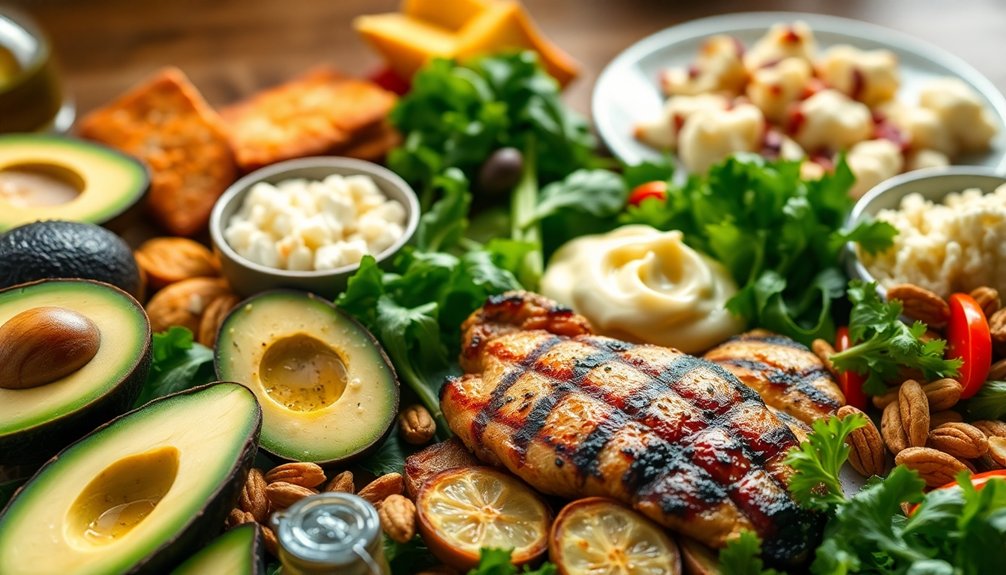
To thrive on a ketogenic diet, focus on incorporating fatty fish, non-starchy vegetables, nuts, and healthy fats like olive oil and avocados. Enjoy protein sources such as grass-fed beef, eggs, and poultry. Avoid sugary foods, starchy items like bread and pasta, high-sugar fruits, and processed low-carb products. Remember, choosing the right foods is key to staying in ketosis. There’s much more to discover about maximizing your keto journey, so keep exploring!
Top Keto Foods to Incorporate Into Your Diet
When you’re following a keto diet, it’s essential to choose foods that support your goals without sacrificing flavor. Incorporate fatty fish like wild salmon and sardines into your meals; they’re high in protein and omega-3 fatty acids, giving you about 21.6 g of protein per serving for salmon.
Pair these with non-starchy vegetables like spinach and cauliflower, which are low in carbs. You can also snack on nuts like macadamia nuts, which contain only 2 g of net carbs per ounce.
Don’t forget about full-fat dairy options like cheese and Greek yogurt, both high in protein and low in carbs. Use healthy fats, such as olive oil, to enhance your dishes while maintaining a healthy keto diet. Additionally, the ketogenic diet can promote increased fat burning, helping you achieve your weight loss goals more effectively.
Low-Carb Vegetables You Should Enjoy
Incorporating low-carb vegetables into your keto diet not only keeps your carbohydrate intake in check but also boosts your meals with essential nutrients.
Focus on non-starchy vegetables like broccoli, cauliflower, and spinach, which are high in nutrients and low in net carbs. For instance, a cup of cauliflower has just 3.2 g of net carbs, while broccoli contains around 3.7 g per cup.
You can also add zucchini and leafy greens like kale and arugula to your meals, ensuring you stay within your carb limits.
These vegetables not only provide fiber and vitamins but also enhance meal flavors and textures, making your ketogenic diet more enjoyable and satisfying. High-fiber low-carb vegetables are key to maintaining digestive health and promoting satiety.
Enjoy experimenting with these delicious options!
Protein Sources That Fit the Keto Lifestyle

As you embrace the keto lifestyle, finding the right protein sources is crucial for staying in ketosis and fueling your body. Here are three top choices:
- Fatty Fish: Options like salmon and sardines deliver high omega-3 fats and about 21.6 g of protein per 3-ounce serving, all with zero carbohydrates.
- Grass-Fed Beef: This nutrient-dense meat offers 16.5 g of protein per 85 grams and contains healthy fats without any carbs, making it ideal for your keto meal planning.
- Eggs: A versatile staple, two large eggs provide over 12 g of protein and are completely carb-free.
In addition, poultry and deli meats can be included, just verify they’re free from added sugars or starches for a convenient, carb-free protein source! Incorporating keto meat recipes into your meals can enhance flavor while keeping you aligned with your dietary goals.
Healthy Fats to Include in Your Meals
After securing your protein sources, it’s time to focus on healthy fats that will keep your meals satisfying and aligned with your keto goals.
Start with olive oil, a fantastic source of monounsaturated fat that supports heart health—just one tablespoon packs 13.5 g of fat.
Avocados are another great choice, offering 7.7 g of fat and 4.5 g of fiber in half a medium fruit, making them ideal for keto meals.
Don’t forget coconut oil, which contains 13.5 g of fat and enhances ketone production.
Nuts and seeds, like macadamia nuts, provide 21.5 g of fat with only 2 g of net carbs per ounce.
Finally, ghee is rich in fat-soluble vitamins, delivering 15 g of fat per tablespoon. Incorporating healthy oils like olive oil can further enhance your meals while supporting overall health.
Foods to Avoid on a Keto Diet
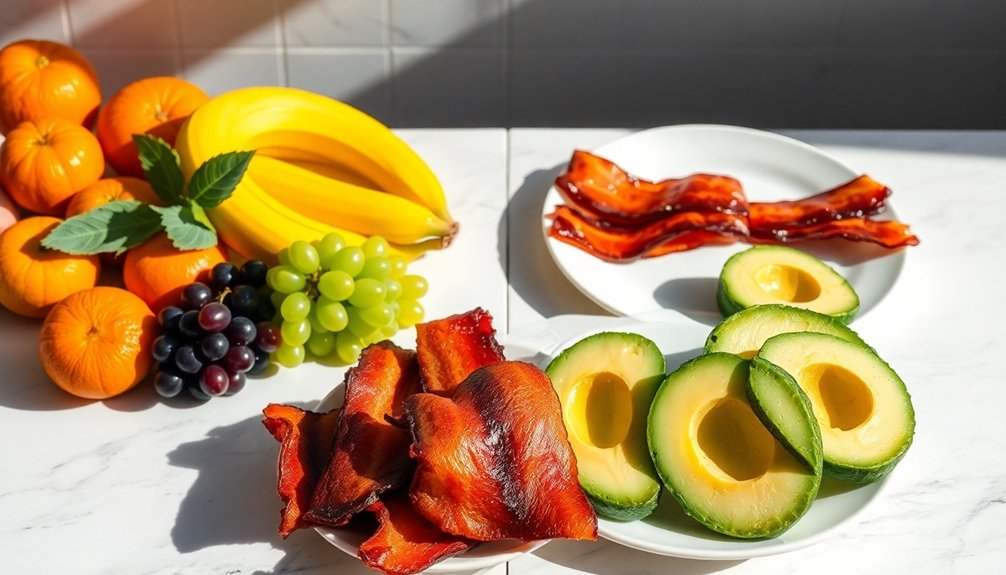
Here are some key foods to avoid on a keto diet:
- Sugary Foods: Avoid sodas, candy, and desserts, as they contain high levels of added sugars and are often high in carbohydrates.
- Starchy Foods: Stay away from bread, pasta, rice, and potatoes, which can derail your low carbohydrate goals.
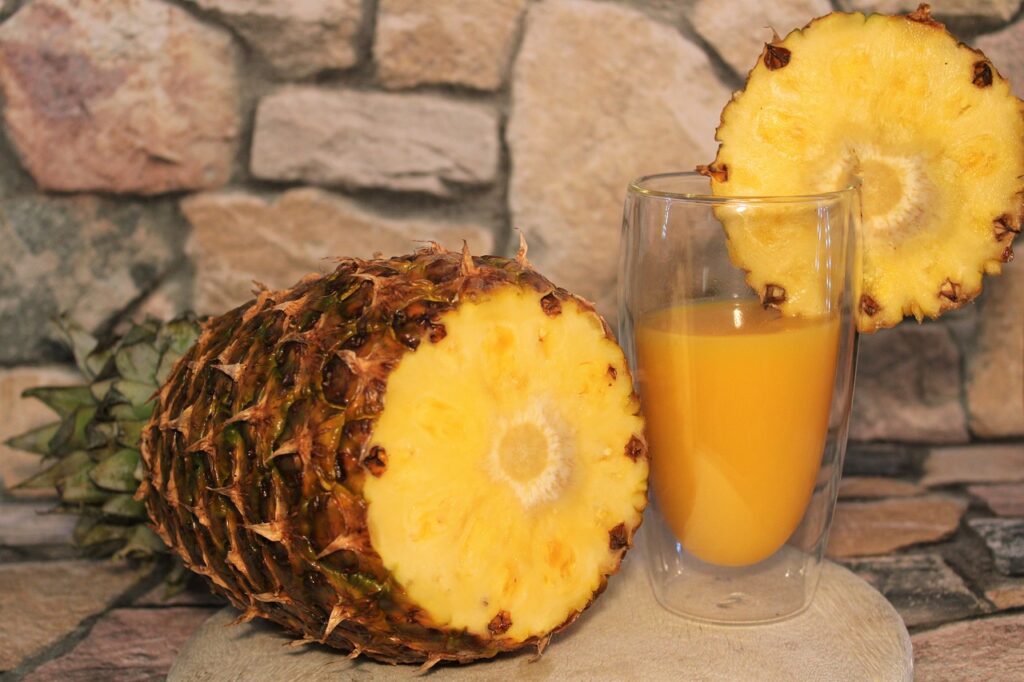
- High-Sugar Fruits: Limit fruits like mangoes, bananas, and grapes, as their sugar content can be detrimental to maintaining ketosis.
Additionally, watch out for processed low-carb products and certain dairy products that may have hidden sugars. Staying clear of these foods is important because they can negatively impact insulin sensitivity, which is crucial for effective glucose regulation.
Keeping these foods off your plate will help you stay on track!
Conclusion
Incorporating the right keto-friendly foods can make your journey enjoyable and fulfilling. Embrace the low-carb vegetables, savor the protein sources, and relish the healthy fats. By choosing wisely and avoiding the high-carb temptations, you’ll fuel your body and satisfy your cravings. Remember, it’s not just about what you eat; it’s about how you feel. So, eat the right foods, love your meals, and thrive on your keto journey. You’ve got this!