On a keto diet, focus on low-carb veggies like spinach, zucchini, and cauliflower. Avoid starchy ones like potatoes and corn that can disrupt ketosis. For fruits, embrace avocados and berries in moderation, while limiting high-carb options like bananas and grapes. Incorporate nutrient-dense choices for vitamins and antioxidants. Keep track of your carb intake to stay on course with your health goals. Want more tips on optimizing your keto journey? There’s plenty more to explore.
Low-Carb Vegetables to Embrace
When you’re following a keto diet, embracing low-carb vegetables is essential for staying on track without sacrificing flavor.
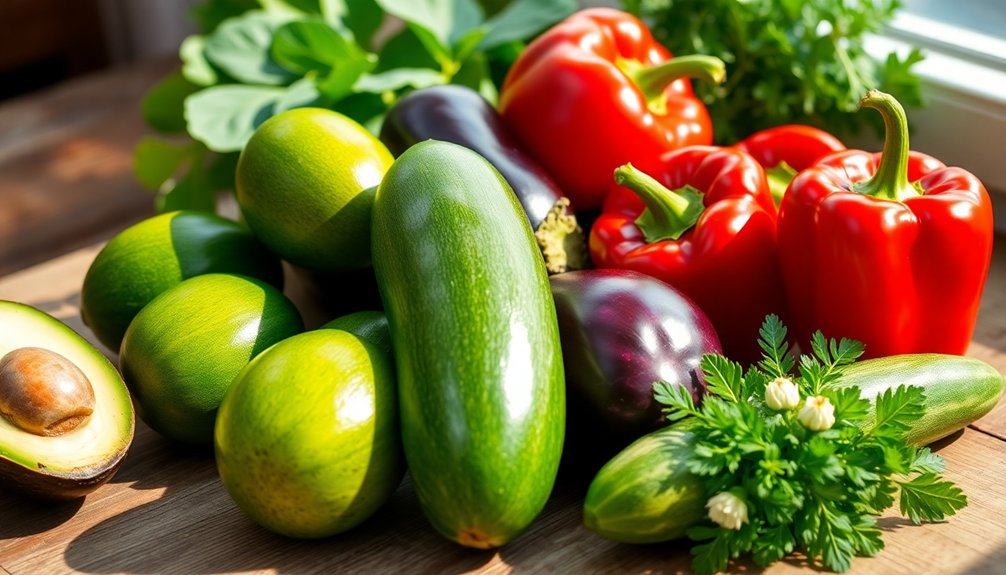
Nonstarchy vegetables like broccoli, which has 3.7 g of net carbs per cup, and zucchini, with just 2.6 g of net carbs, are fantastic choices.
Nonstarchy vegetables like broccoli and zucchini are excellent low-carb options for your keto diet.
Don’t overlook raw spinach, boasting only 0.4 g of net carbs per cup, or cauliflower, a versatile option containing just 2 g of net carbs per 100 grams.
Leafy greens, such as lettuce and kale, provide fresh alternatives for wraps, with iceberg lettuce at 3.37 g of carbs per 100 grams.
Finally, mushrooms, like white button mushrooms, are great with 4.08 g of carbs per 100 grams.
Incorporate these delicious veggies into your meals to enhance your keto journey! Additionally, these vegetables offer numerous health benefits that support overall well-being and weight management.
Starchy Vegetables to Avoid
When you’re on a keto diet, you need to steer clear of starchy vegetables that pack in the carbs.
For example, potatoes and corn can quickly push you over your carb limit, making it tough to stay in ketosis.
Instead, focus on low-carb alternatives to keep your meals satisfying and compliant. Incorporating nutrient-dense options like low-carb vegetables can enhance flavor and keep you within your carb limits.
High-Carb Vegetable Examples
If you’re aiming to maintain ketosis, it’s crucial to steer clear of high-carb vegetables that can sabotage your efforts.
Some notable vegetable examples to avoid on a keto diet include starchy vegetables like sweet potatoes, which have about 17.3 grams of carbohydrates per 100 grams.
Peas are another high-carb option, containing around 21 grams of carbohydrates per cup.
Additionally, sweet corn, with approximately 14.7 grams of carbohydrates per 100 grams, exceeds the carb limits necessary for ketosis.
While carrots may seem moderate with about 4.1 grams of net carbs per medium carrot, you should still consume them cautiously due to their higher carb content compared to non-starchy vegetables.
Stick to low-carb options for better results!
Impact on Ketosis
To maintain ketosis effectively, it’s vital to avoid starchy vegetables that can quickly push your carb intake beyond limits.
Vegetables like potatoes and corn are high in carbs, with a medium potato containing about 37 g, while corn has 27 g per cup. Sweet potatoes are another offender, offering around 20 g of carbs in a medium serving.
Even moderate portions of starchy vegetables can hinder your ability to sustain ketosis. Other starchy options, such as carrots and beets, also have higher carbohydrate content that can impact your daily carb intake.
Instead, focus on non-starchy, low-carb vegetables like spinach and zucchini, which provide essential nutrients without sabotaging your keto diet.
Low-Carb Alternatives Available
While many vegetables are healthy, starchy options can derail your keto journey. High-carb vegetables like potatoes, which contain about 37 g of carbs per medium potato, should be avoided.
Corn and sweet potatoes also pose challenges, with around 27 g and 20 g of carbs per cup and medium serving, respectively. Peas aren’t keto-friendly either, packing about 12 g of net carbs per cup.
Instead, focus on low-carb alternatives. Non-starchy vegetables like broccoli and zucchini are excellent choices, offering just 3.7 g and 2.6 g of carbs per cup.
Best Fruits for Keto Success
When you’re on a keto diet, choosing low-carb fruits can keep your carb count in check while satisfying your cravings.
It’s important to be mindful of portion sizes, as even low-carb fruits can add up quickly.
Let’s explore some of the best fruit options that align with your keto goals. Incorporating nutrient-rich superfoods like avocados and berries can enhance your diet while supporting weight loss efforts.
Low-Carb Fruit Options
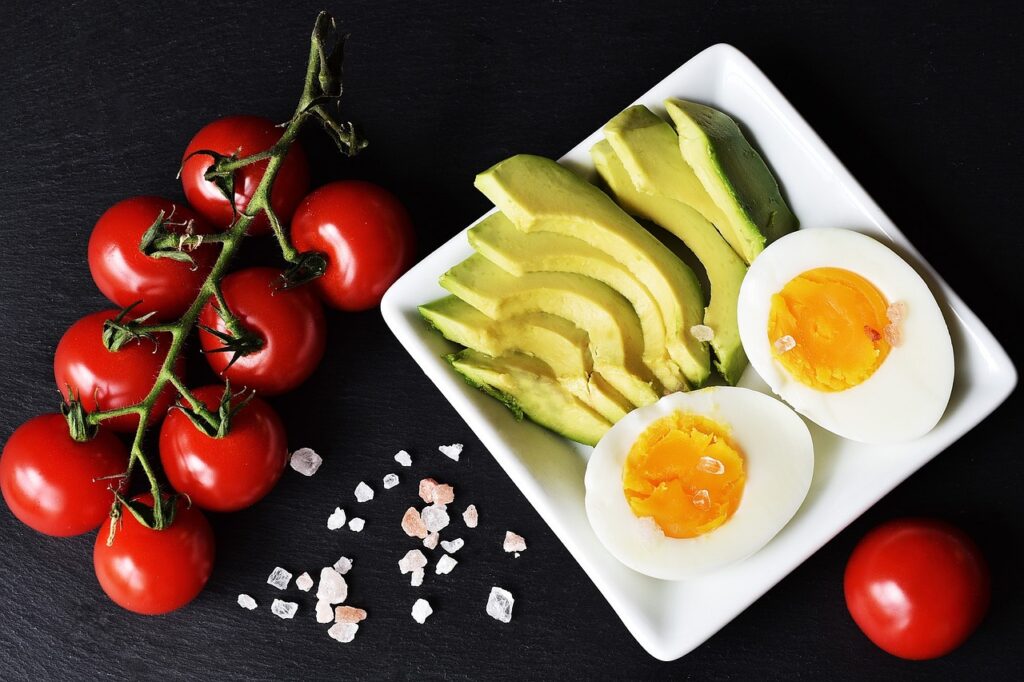
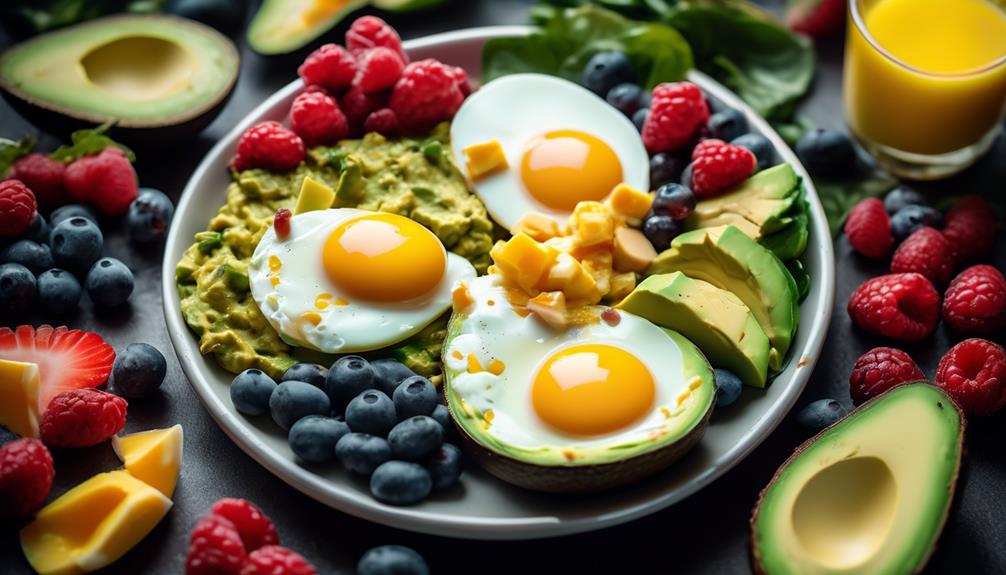
Choosing the right fruits can greatly enhance your success on a keto diet. Low-carb options like avocados are perfect, offering just 2 grams of net carbs per half fruit and packed with healthy fats.
Berries, such as raspberries and blackberries, are also excellent choices, with only 1.7 grams and 3.1 grams of net carbs per ¼ cup, respectively.
Olives provide about 2.7 grams of carbs for 10 large olives, while cherry tomatoes contain around 5.8 grams of net carbs per cup, adding versatility to your meals.
Cantaloupe, with approximately 8.2 grams of net carbs per 100-gram serving, can be enjoyed in moderation.
Focus on these low-carb fruits to stay on track with your keto diet!
Portion Control Strategies
Successfully managing your keto diet involves not just selecting the right low-carb fruits, but also practicing portion control to stay within your carbohydrate limits.
Keep an eye on serving sizes to guarantee you don’t exceed your daily carb allotment. For instance, raspberries offer only 1.7 grams of net carbs per ¼ cup, making them a perfect choice for sweet cravings.
Strawberries and watermelon can fit into your diet with moderate consumption, but remember to track servings closely—100 grams of strawberries contains 7.7 grams of carbs.
For a satisfying low-carb snack, consider olives, as 10 large ones only have 2.7 grams of carbs.
High-Carb Fruits to Limit
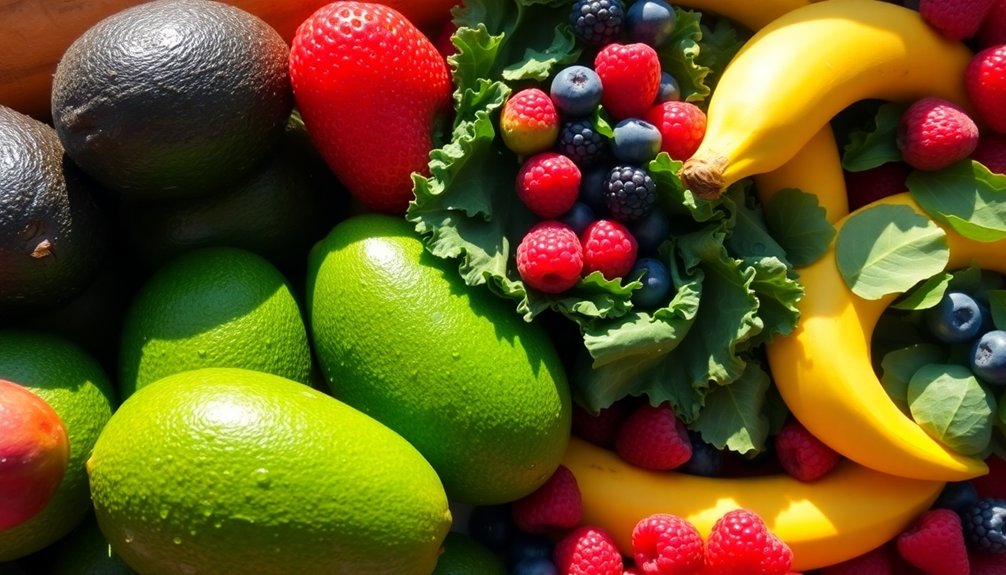
While embracing a keto lifestyle, it’s crucial to be mindful of high-carb fruits that can derail your progress.
Some of the highest offenders include bananas, with over 21 g of net carbs per medium fruit, and grapes, which boast about 27 g of net carbs per cup.
Bananas and grapes are high-carb fruits to avoid on keto, with 21 g and 27 g of net carbs, respectively.
Mangoes are another fruit to avoid on the keto diet, containing 22 g of net carbs per medium fruit.
Apples also fall into this category, offering around 25 g of net carbs each, which can quickly add up against your carb limits.
Don’t forget about dried fruit, like raisins, which pack approximately 21 g of carbs per 40 g serving.
Stay vigilant and limit high-carb fruits to maintain ketosis! Additionally, consider substituting with low-carb fruits like strawberries and blackberries, which offer essential nutrients while keeping your carb intake in check.
Nutrient-Dense Options: Spinach and Broccoli
Incorporating nutrient-dense vegetables like spinach and broccoli into your keto diet can greatly enhance your overall health without compromising your carb limits.
Spinach contains only 0.4 g of net carbs per cup, making it an excellent low-carb choice packed with vitamins A, C, K, iron, and antioxidants.
Broccoli, with 3.7 g of net carbs per cup, is rich in fiber and vitamin C, along with bioactive compounds that support metabolic health and reduce inflammation.
Both spinach and broccoli help you meet your daily vegetable servings, ensuring you get essential vitamins and minerals while keeping carb intake low.
Their high fiber content also aids weight loss, making these vegetables a perfect fit for your ketogenic diet. Additionally, incorporating these vegetables into your meals can help maintain stable blood sugar levels and enhance overall health.
The Benefits of Zucchini and Cauliflower

When you’re looking to add variety to your keto meals, zucchini and cauliflower offer fantastic benefits that align perfectly with your dietary goals.
Zucchini contains only 2.6 grams of net carbs per cup, making it an excellent low-carb vegetable choice. You can easily spiralize zucchini into zoodles, creating a delicious low-carb pasta alternative that pairs well with various sauces.
On the other hand, cauliflower provides just 5 grams of net carbs per cup and can be transformed into cauliflower rice or a low-carb pizza crust, allowing you to enjoy your favorite dishes guilt-free. Additionally, both vegetables are high in vitamins C and K, which support your immune system and overall health.
Both veggies are nutrient-dense, packed with vitamins C and K, and loaded with antioxidants that support your overall health.
Enjoy these versatile options on your keto diet!
How to Incorporate Berries in Moderation
Zucchini and cauliflower are great low-carb options, but you might be wondering how to satisfy your sweet tooth on a keto diet.
Berries, like raspberries, blackberries, and strawberries, are among the best low-carb fruits due to their lower carb content. Aim for about a ¼ cup serving to enjoy their deliciousness in moderation while keeping your carb intake in check.
Berries, such as raspberries and strawberries, offer a delicious low-carb treat—just keep your serving to about ¼ cup!
Not only are berries rich in antioxidants and fiber, but they also enhance your overall health without disrupting ketosis. Pair them with unsweetened Greek yogurt or whipped cream for a satisfying treat. Additionally, their low carbohydrate content makes them ideal for maintaining ketosis while enjoying a sweet snack.
Just remember to monitor portion sizes, as even these tasty berries can add up quickly if you indulge too much throughout the day.
The Role of Leafy Greens in a Keto Diet
Leafy greens are a powerhouse of nutrition, making them an essential component of a keto diet. These greens, like spinach and kale, are low in carbohydrates, with spinach containing just 2.64 grams of carbs per 100 grams.
They provide essential nutrients, including vitamins A, C, and K, which contribute to your overall health. Rich in antioxidants, leafy greens help reduce inflammation and protect against chronic diseases, vital for anyone on a ketogenic lifestyle.
By incorporating these greens into your meals, you can enhance your fiber intake, promoting digestive health and satiety without exceeding your daily carb limits.
Plus, their low calorie content lets you enjoy larger portions while staying within your carb goals. Additionally, leafy greens offer a variety of vitamins that support immune function and overall well-being.
Tips for Monitoring Your Carb Intake
To successfully maintain a ketogenic diet, it’s essential to monitor your carbohydrate intake closely. Aim to track your daily carbohydrate intake below 20 to 50 grams to stay in ketosis.
Utilize food tracking apps to log the carb count of low-carb fruits and non-starchy vegetables, which typically have less than 8 grams of net carbs per cup. Pay attention to portion sizes; even low-carb fruits like raspberries can add up quickly if you overindulge.
Choose berries like blackberries and strawberries over high-carb options like bananas. Finally, always read labels on packaged foods to avoid hidden sugars that can impact your overall carb count. Regularly monitoring blood sugar levels will help you achieve your health goals.
Conclusion
Incorporating the right fruits and veggies into your keto diet can make all the difference. By focusing on low-carb options like leafy greens and berries while avoiding starchy vegetables and high-carb fruits, you’ll stay on track with your goals. So, why not get creative in the kitchen and experiment with these nutrient-dense choices? With a little planning and awareness of your carb intake, you can enjoy delicious meals while reaping the benefits of a keto lifestyle.