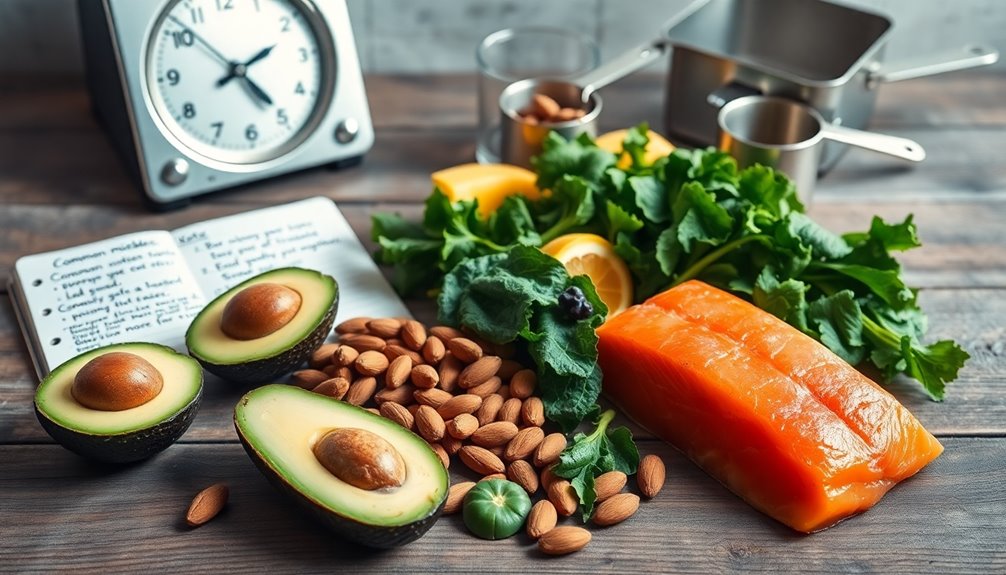
To start the keto diet successfully, focus on avoiding common mistakes. Master the basics by prioritizing high fats, moderating proteins, and tracking hidden carbs in sauces and snacks. Don’t skimp on meal planning or electrolytes to avoid fatigue. Make sure you’re getting enough protein and listen to your body’s hunger signals. Finally, set realistic expectations for weight loss; quick results are often misleading. There’s plenty more to learn about steering clear of these pitfalls.
Understanding the Keto Basics: What You Need to Know

When you’re diving into the keto diet, it’s essential to grasp the basics to get the most out of this low-carb lifestyle. A keto macronutrients overview focuses on high fats, moderate proteins, and very low carbs.
You’ll want to aim for about 70-75% of your daily calories from fats, 20-25% from proteins, and only 5-10% from carbs. Understanding these ratios helps you maintain ketosis, where your body burns fat for fuel.
Additionally, keto meal timing can make a difference. Spacing your meals to prevent spikes in insulin can enhance fat burning. Weight loss occurs when calorie intake is less than calories burned, so try to eat within a specific window to support your goals. By mastering these fundamentals, you’re setting yourself up for success on your keto journey.
Overlooking Hidden Carbs: Where They Lurk
When you’re on a keto diet, it’s easy to overlook hidden carbs lurking in common food sources.
Many products, even those labeled as “healthy,” can pack in more carbs than you expect. Always read nutrition labels carefully to stay on track and avoid surprises. Additionally, be aware of sweeteners like erythritol that can have hidden carbs in certain products.
Common Food Sources
Although the keto diet emphasizes low-carb eating, hidden carbs can sneak into your meals from unexpected sources. When grocery shopping, watch out for sauces, dressings, and even some “healthy” snacks that can pack in sugar.
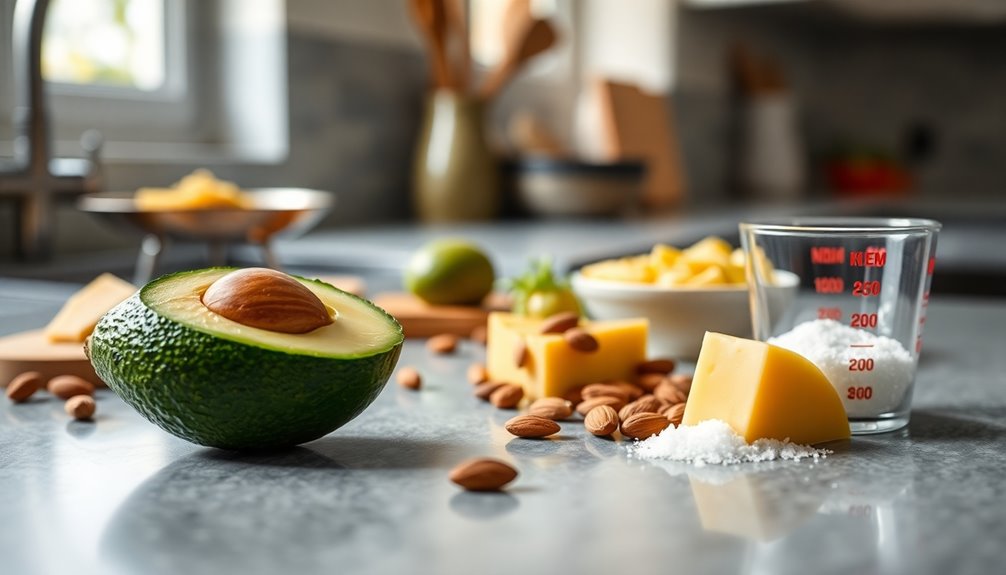
During meal prep, consider ingredient alternatives like cauliflower rice instead of regular rice. For low carb snacks, opt for nuts or cheese instead of granola bars.
Dining out? Choose grilled meats and veggies, but ask about sauces on the side. Use food swaps in recipes, like zucchini noodles for pasta, to keep carbs low.
Read Nutrition Labels
Reading nutrition labels is essential for anyone on the keto diet, as hidden carbs can easily derail your progress. Here are some nutrition tips to help you with label reading:
- Check Serving Sizes: Always compare the serving size to what you actually eat.
- Ingredient Lists: Look for common additives and hidden sugars that can spike your carb intake.
- Understanding Macros: Focus on total carbs, but also pay attention to dietary fiber, as it can offset net carbs.
- Beware of Hidden Carbs: Products labeled as “low-carb” may still contain sneaky carbs, so scrutinize every label.
Neglecting Electrolyte Balance: Why It Matters
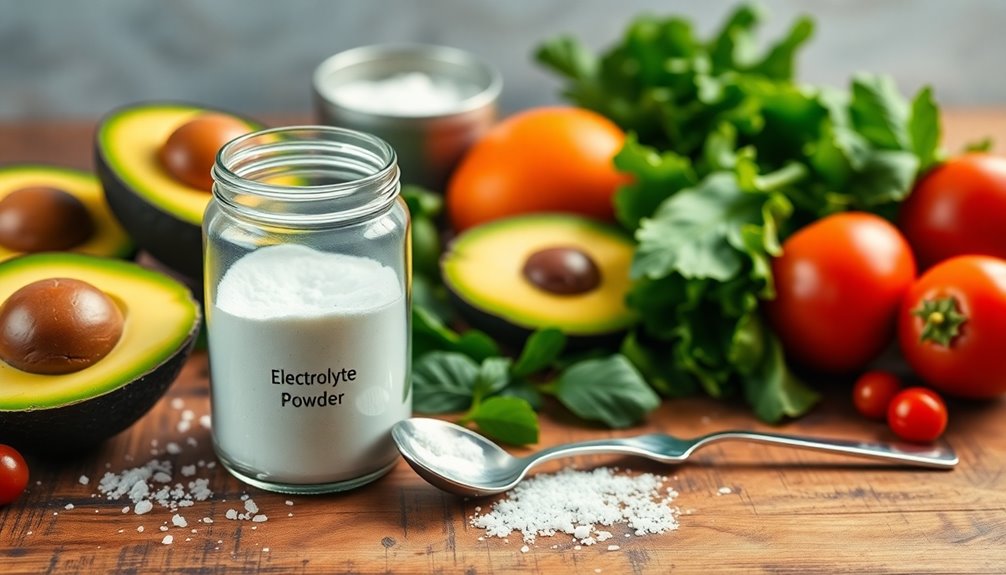
When you start a keto diet, keeping your electrolytes in check is essential for your overall health. Low levels can lead to symptoms like fatigue and cramps, which can really throw you off your game. Additionally, maintaining proper electrolyte levels supports insulin sensitivity and helps mitigate some of the side effects associated with the initial transition to ketosis. Let’s explore the best food sources to help you maintain that balance and feel your best.
Importance of Electrolytes
Electrolytes play an essential role in your body, especially when you’re on a keto diet. Maintaining electrolyte balance is vital for managing symptoms like muscle cramps and fatigue.
Here are key strategies to keep your electrolytes in check:
- Incorporate electrolyte sources: Foods like avocados, spinach, and nuts are rich in potassium and magnesium.
- Hydration strategies: Drink plenty of water, and consider adding electrolyte-rich beverages.
- Dietary adjustments: Experiment with recipes that include high-sodium foods like broth or pickles.
- Supplement options: Consider electrolyte supplements if you’re struggling to get enough from food.
Symptoms of Imbalance
Neglecting your electrolyte balance can lead to a range of uncomfortable symptoms that may derail your keto journey. You might experience fatigue, which often stems from hormonal fluctuations and nutrient deficiencies.
Pay attention to symptom identification; if your energy levels drop or you encounter digestion issues, it’s time to reassess your intake. Mood changes and decreased mental clarity can also signal an imbalance.
Many beginners face what’s known as the keto flu, where these symptoms intensify. To keep your progress on track, focus on incorporating adequate electrolytes into your diet.
Best Food Sources
To maintain ideal electrolyte levels on your keto journey, focus on integrating key food sources into your meals. Here are some great options:
- Avocado Benefits: Packed with potassium, avocados help balance electrolytes and provide healthy fats.
- Cheese Options: Varieties like feta and cheddar offer calcium and can be used in meal prep or as snack ideas.
- Nut Varieties: Almonds and walnuts are excellent fat sources, contributing magnesium and making for easy on-the-go snacks.
- Vegetable Choices: Leafy greens like spinach and kale are low in carbs and rich in essential nutrients.
Incorporate these foods into your cooking methods or even as dessert alternatives, and don’t forget to stay hydrated with appropriate drink selections!
Skipping Meal Planning: How to Stay on Track
While skipping meal planning might seem tempting, it can lead to unintentional carb-heavy choices that derail your keto journey. To stay on track, prioritize meal prep by dedicating a couple of hours each week to plan your meals.
Use shopping strategies like creating a list based on your favorite recipe resources to avoid impulse buys. Incorporate healthy snack ideas that align with your keto goals, and guarantee you practice portion control to prevent overeating. Consider trying Cheesy Bacon Cauliflower Rice as a flavorful low-carb option to include in your meal prep.
Invest in kitchen essentials that streamline your cooking process, and use proper food storage techniques to keep your meals fresh. Effective time management will help you stick to your plan, making your keto journey smoother and more enjoyable.
Misjudging Protein Intake: Are You Eating Enough?
How can you guarantee you’re getting enough protein on a keto diet? It’s vital to focus on protein sources, timing, quality, and tracking to avoid common protein myths.
Here are four tips to help you achieve protein balance:
- Choose Quality Sources: Opt for lean meats, eggs, and dairy to maximize nutritional benefits.
- Mind Your Timing: Spread your protein intake throughout the day to support muscle maintenance and energy levels.
- Track Your Intake: Use apps or journals to monitor how much protein you’re consuming.
- Avoid Myths: Don’t fall for the idea that low protein is acceptable on keto; it’s essential for your overall health. Additionally, increased protein intake supports muscle growth and metabolism, which are crucial for effective weight loss.
Ignoring Your Body’s Signals: Listening to Hunger Cues
Protein intake is just one piece of the puzzle when it comes to a successful keto diet.
Listening to your body’s hunger cues is essential for effective hunger management. Practice mindful eating by paying attention to satiety signals, which helps with portion control.
Avoid emotional eating by identifying triggers that lead to cravings; consider using food journaling to boost self-awareness.
Focus on intuitive eating—trust your instincts about when and what to eat. Meal timing can also influence your cravings management, so try to establish a routine that works for you. Additionally, being aware of normal blood sugar ranges can help you better understand your body’s needs and responses.
Expecting Immediate Results: What to Realistically Anticipate?
Here’s a realistic time frame of what you might experience:
- Initial Weight Loss (1-2 weeks): Many see quick water weight loss.
- Keto Flu (1 week): You may feel fatigued, irritable, or dizzy as your body adjusts.
- Steady Fat Loss (3-4 weeks): With consistent effort, you should notice gradual fat loss.
- Increased Energy (1 month): As your body adapts, expect improved energy levels and mental clarity, particularly as you enter a fat-burning mode that enhances your overall metabolism.
Conclusion
Starting the keto diet can feel overwhelming, but avoiding common pitfalls makes the journey smoother. While hidden carbs can sabotage your efforts, balancing electrolytes keeps you energized. Meal planning might seem tedious, yet it’s your roadmap to success. Ignoring hunger cues can lead to burnout, while setting realistic expectations will keep you motivated. Embrace the challenges, and you’ll discover the rewards of a vibrant, healthier lifestyle. Remember, every misstep is just a step toward mastering keto!