
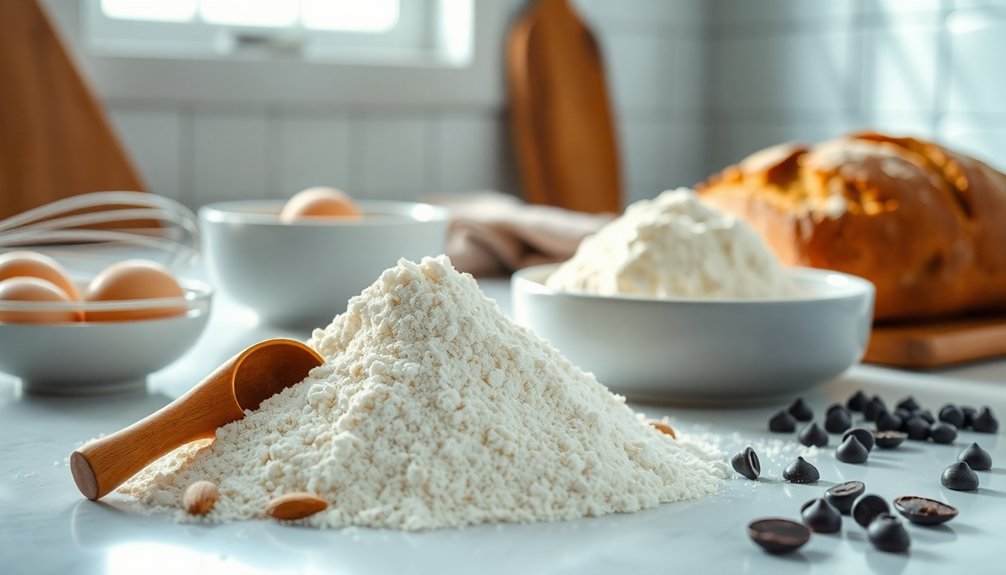
Almond flour is a fantastic keto-friendly option thanks to its low carb count and high nutritional value. With only 3 grams of carbs per serving, it fits perfectly into low-carb diets. When baking with almond flour, remember to adjust your recipes by reducing liquids and increasing eggs for better structure. Plus, you’ll want to measure accurately for the best results. There’s so much more to learn about almond flour’s unique properties and baking tips you can use.
What Makes Almond Flour a Popular Choice for Low-Carb Diets?
Almond flour has become a popular choice for low-carb diets, especially since it offers a tasty alternative to traditional flours without compromising your dietary goals.
With only about 3 grams of total carbohydrates per 13-gram serving, it’s perfect for your Keto lifestyle. This gluten-free option not only caters to those with gluten sensitivities but also packs in 6 grams of healthy fats per serving, keeping you satisfied.
Its nutty taste enhances your low-carb treats, making baking a delight. Plus, almond flour’s lower glycemic index helps prevent insulin spikes, ensuring steady energy levels. Additionally, its high fiber content promotes feelings of fullness, aiding in weight management.
For successful baking, remember these tips: adjust liquids due to almond flour’s unique texture and try mixing it with other low-carb flours for varied results.
Nutritional Profile of Almond Flour
When considering alternatives to traditional flours, the nutritional profile of almond flour stands out. Almond flour contains about 80 calories, 6 grams of dietary fat, and only 3 grams of total carbohydrates per 13-gram serving.
With its low carb content, it’s a fantastic low-carb flour option for those on a ketogenic diet. You’ll find it’s a good source of protein, with 3 grams per serving, and it’s rich in healthy fats, boasting 50 grams per 100 grams.
Plus, almond flour includes essential vitamins and minerals like vitamin E, magnesium, potassium, and calcium, enhancing its health benefits. Additionally, it contributes to heart health due to its high content of healthy fats.
With approximately 32 grams of net carbs per cup, it’s a great choice for low carb baking, supporting your keto lifestyle.
Almond Flour vs. Almond Meal: Understanding the Difference
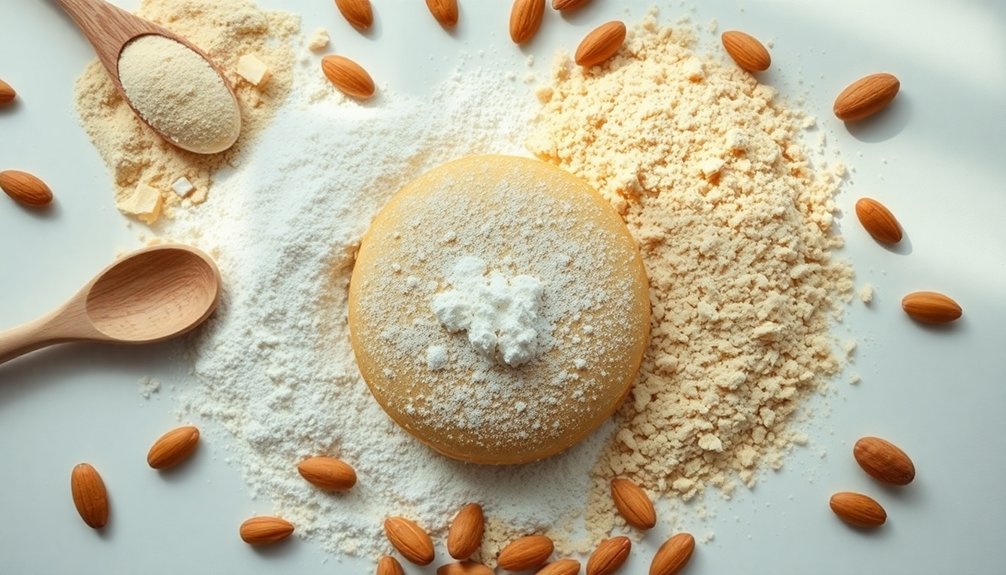
Almond flour is finely ground from blanched almonds, providing a smooth texture that’s perfect for delicate baked goods like cakes and cookies.
Almond flour, made from blanched almonds, offers a fine texture ideal for creating delicate cakes and cookies.
In contrast, almond meal is coarser and made from whole almonds, often retaining the skins, which can result in a denser texture.
For low-carb and keto baking, almond flour is typically preferred due to its finer consistency.
Both options are great for a gluten-free diet, but if you’re substituting almond flour with almond meal in your recipes, keep in mind that it may alter the texture of your baked goods, possibly making them crumblier.
Additionally, almond flour is a versatile option for breads, muffins, cookies, allowing for a variety of delicious low-carb treats.
Use these baking tips to achieve the best results!
Substituting Almond Flour in Baking
If you’re looking to substitute almond flour in your baking, it’s vital to understand how it differs from other flours.
When substituting almond flour for wheat flour, use about 1 cup of almond flour for every 1/4 to 1/3 cup of wheat flour due to its higher fat and moisture content.
If you’re using coconut flour, reduce the amount to 1/3 to 1/4 of almond flour, as it absorbs more liquid.
Nut flours can work as alternatives, but make certain they’ve a similar grind to maintain the texture of your baked goods.
Always measure almond flour using the scoop and level method to guarantee accuracy and achieve the best results in your low-carb recipes while baking with Keto. Additionally, consider incorporating low-carb flour alternatives to enhance your baking versatility and flavor profile.
Best Keto-Friendly Alternatives to Almond Flour
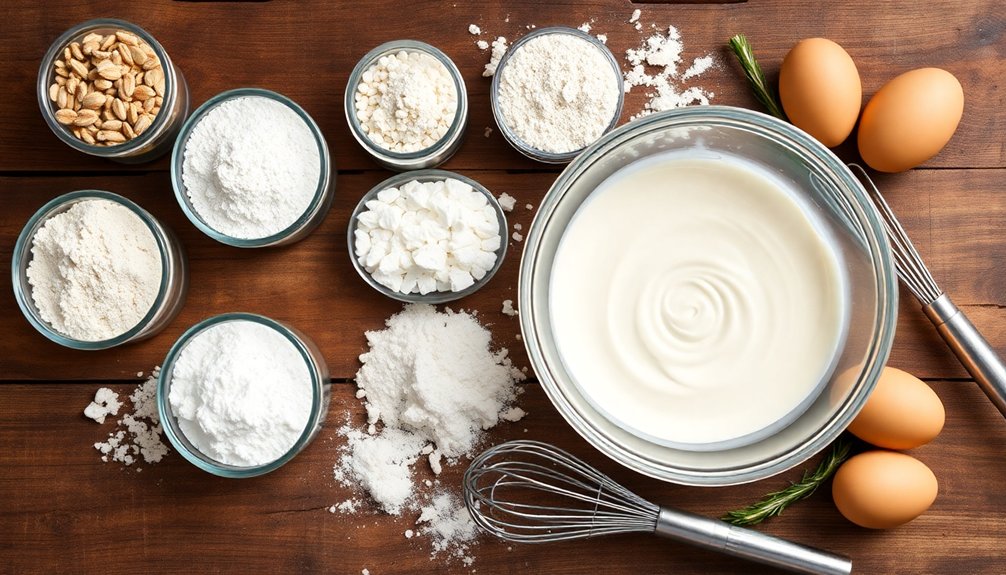
Finding the right alternative to almond flour can elevate your keto baking without sacrificing flavor or texture.
Coconut flour is a great option, but it absorbs more moisture, so use only 1/3 to 1/4 the amount of almond flour and adjust your liquid and egg quantities.
Coconut flour is an excellent alternative, absorbing more moisture, so use less and adjust liquids and eggs accordingly.
Sunflower Seed Flour is nut-free and gluten-free, providing a solid substitution, though it may change the color of your baked goods.
For a different texture, consider peanut flour, which requires adjustments due to its unique moisture properties.
While cassava flour can mimic wheat flour, it has higher carbs per serving, so use it cautiously.
Ultimately, oat flour offers a similar texture but also comes with higher carbs, making it less ideal for strict keto recipes.
Additionally, experimenting with keto-friendly pasta swaps can further enhance your low-carb baking experience.
Essential Tips for Baking With Almond Flour
When baking with almond flour, you’ll notice it behaves quite differently from traditional wheat flour, so understanding its unique properties is essential for achieving the best results.
When using almond flour, measure it using the scoop and level method to prevent packing. Since almond flour is thicker than traditional flour, avoid adding extra liquids, which can lead to sogginess. Instead, increase the number of eggs, as this requires more eggs for better structure.
You can also combine almond flour with other flours, like coconut flour, but keep in mind that this requires careful recipe adjustments.
The good news is most baked goods freeze well, so you can prepare delicious low-carb treats like cookies and muffins in advance.
How to Measure Almond Flour Accurately
Measuring almond flour accurately is essential for successful baking, as even slight variations can affect the texture and flavor of your treats.
For the best results, use the scoop and level method: gently scoop the almond flour with a measuring cup and level it off with a straight edge. This helps avoid packing it down.
For improved accuracy in gluten-free recipes, consider using a kitchen scale; 1 cup of almond flour weighs about 3.75 ounces (106 grams).
Always check if your recipe specifies packing; if it doesn’t, don’t pack the flour.
Remember, almond flour requires adjustments compared to traditional wheat flour due to its higher fat and moisture content. Additionally, incorporating healthy oils and fats such as coconut oil can enhance the flavor and moisture of your baked goods.
Follow these baking tips for low-carb success!
Freezing and Storing Almond Flour Baked Goods
Many almond flour baked goods, like cookies and muffins, can be easily frozen to extend their shelf life and keep them fresh for later enjoyment.
Almond flour treats like cookies and muffins freeze well, ensuring you can savor them later while maintaining their freshness.
When freezing, store your items in an air-tight container to prevent freezer burn. If you’ve got unbaked almond flour cookies, flash freeze them before storing to maintain shape; just remember to thaw them fully before baking.
To preserve the freshness of almond flour itself, keep it in a cool, dry place, ideally in an air-tight container or refrigerated. Incorporating almond flour’s low carbs into your diet can help maintain a keto lifestyle.
Always check for rancidity, especially if you’ve bought in bulk, as the fats in almonds can spoil.
With proper storage, you’ll enjoy low-carb treats long after baking!
Adapting Recipes for Almond Flour
Storing almond flour baked goods properly can help you enjoy them longer, but adapting recipes for almond flour is where the real magic happens.
When you swap traditional flour for almond flour, adjust your liquid ingredients since almond flour is higher in fat and moisture. Remember, it’s gluten-free, so you’ll need binding agents like eggs or xanthan gum to maintain structure. Additionally, using sugar-free sweeteners can enhance the flavor of your almond flour desserts while keeping them keto-friendly.
Measure accurately using the scoop and level method or weight measurements for precision. To get familiar with almond flour’s unique baking properties, start with tried and true recipes designed for it.
Finally, don’t forget that due to its density, almond flour batters often need more eggs for the right rise and texture without becoming rubbery.
Engaging With the Baking Community for Tips and Recipes
How can you elevate your almond flour baking skills? Engaging with the baking community is a fantastic way to gain support and inspiration for low-carb recipes.
Join online forums or social media groups where enthusiasts share tips on measuring almond flour accurately, ensuring your baked goods have the perfect texture. You’ll find many recipe adaptations that substitute almond flour for traditional flours, making your creations gluten-free and keto-friendly.
Engage with online baking communities to discover tips for mastering almond flour and creating delicious gluten-free treats.
Plus, community members often share their successes and failures, giving you valuable insights to refine your baking techniques. Don’t forget to subscribe to newsletters or follow popular baking blogs for exclusive recipes and updates on the latest trends in almond flour baking. Incorporating high-protein ingredients into your recipes can also enhance both nutrition and satisfaction.
Get involved and watch your skills soar!
Conclusion
In the world of low-carb baking, almond flour stands out like a shining star. Its nutritional benefits and versatility make it a go-to choice for keto enthusiasts. By understanding its unique characteristics and how to adapt recipes, you can whip up delicious treats without compromising your diet. So, roll up your sleeves and immerse yourself in the baking community—there’s a wealth of tips and recipes waiting for you to explore. Happy baking and enjoy your low-carb journey!