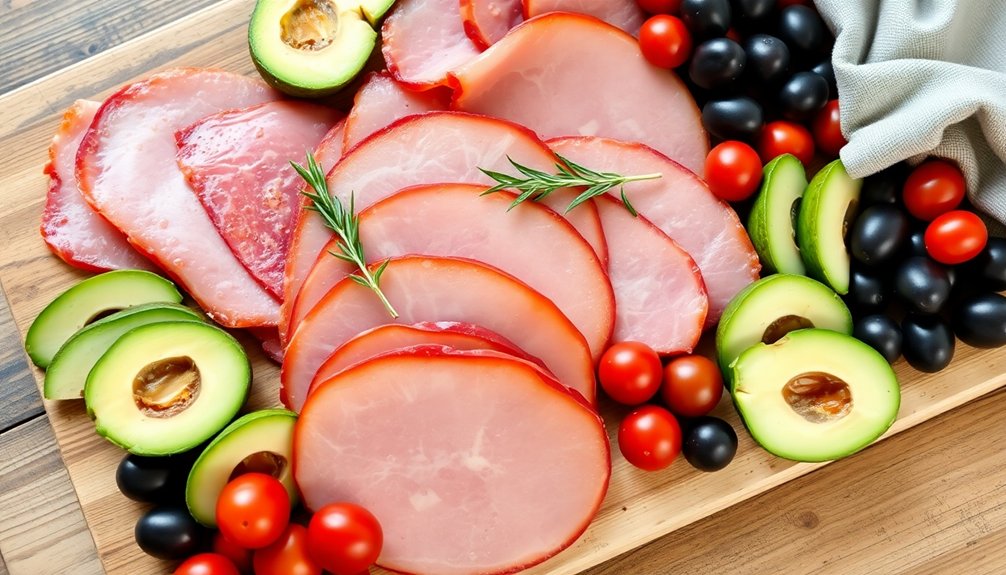
Yes, ham can be keto-friendly! Opt for uncured or unglazed varieties, as they typically have low carbs—around 1 gram per slice. Just make sure to check labels for added sugars in processed options, like honey-cured or glazed ham. With its high protein and healthy fats, ham fits well into your low-carb meals. If you want to explore recipes and tips on choosing the best ham for your keto lifestyle, keep going!
Understanding the Keto Diet
When you plunge into the ketogenic diet, you’ll find it’s all about drastically reducing your carbohydrate intake to shift your body into ketosis.
This means eating foods that are low in carbs—typically around 5-10% of your total daily calories. Instead, the keto diet emphasizes meals that are high in fat, making up about 70-75% of your calorie intake, and includes moderate protein sources, accounting for 20-25%.
By lowering your insulin levels, your body starts burning fat for energy instead of glucose. You’ll steer clear of high-carb foods like grains, sugars, and starchy vegetables to maintain ketosis.
Embracing this lifestyle can lead to weight loss, improved metabolic health, and even enhanced mental clarity. Additionally, better insulin sensitivity is associated with a lower risk of Type 2 diabetes, making keto a beneficial choice for many.
Is Ham Keto-Friendly?
Is ham a suitable option for your keto diet? Absolutely! Ham can be keto-friendly, especially when you choose uncured and unglazed varieties.
These types are low in carbs, with non-cured ham containing about 1.02 grams of carbs per slice. You’ll find sliced deli ham is often carb-free, but always check the labels for any added sugars or preservatives.
While honey-cured and glazed hams have higher carb counts, they can still fit your diet if consumed in moderation. Plus, ham is high in protein and fat, making it a great addition to your meals. Additionally, ham provides essential nutrients such as vitamin B6 and selenium, which can support your overall health.
Just keep an eye on your sodium intake, as processed meats like ham can be high in salt. Enjoy your ham responsibly!
How Many Carbs Are in Ham?
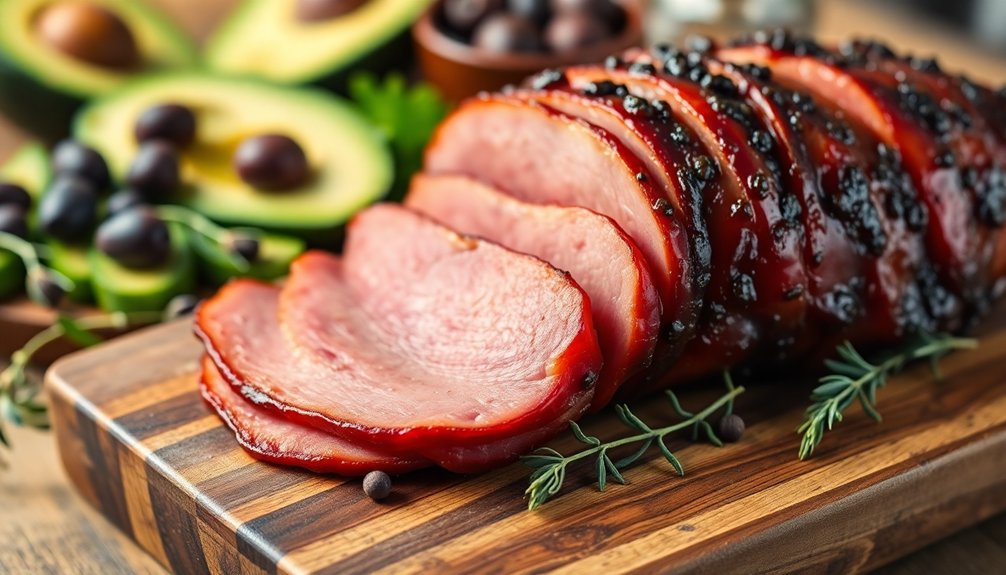
Ham can be a delicious addition to your meals, but knowing how many carbs it contains is key to maintaining your keto diet. In its natural state, ham is a good option for keto dieters, with about 1.02 grams of carbs per slice for non-cured varieties.
Even cured ham keeps the carb count low at roughly 0.9 grams per 3 oz serving, making it suitable for your meals. However, be cautious with honey-cured ham, which has around 3.9 grams of carbs per 1.9 ounces, and glazed ham often exceeds 6 grams due to added sugars. Additionally, processed meats may contain added sugars and nitrates that can affect your health and carb intake.
Always read labels carefully to avoid hidden sugars that can push you over your carb limit. Enjoy ham, but stay informed!
Benefits of Including Ham in Your Keto Diet
Including ham in your keto diet can be a smart choice, as it provides a wealth of benefits while keeping carbs to a minimum.
This delicious meat is a fantastic protein source, offering around 18.9 grams of protein in just a 3 oz serving. The high protein content promotes satiety and supports muscle maintenance, making it an excellent addition to your high-fat diet.
Plus, ham is virtually carb-free, with only 1 gram of carbs per serving, allowing you to easily incorporate it into your meal plan.
It’s also rich in essential nutrients like selenium, providing over 60% of your daily recommended value in one serving. Enjoying ham alongside nutrient-dense ingredients can further enhance the nutritional profile of your meals.
Savor the numerous health benefits!
Choosing High-Quality Ham
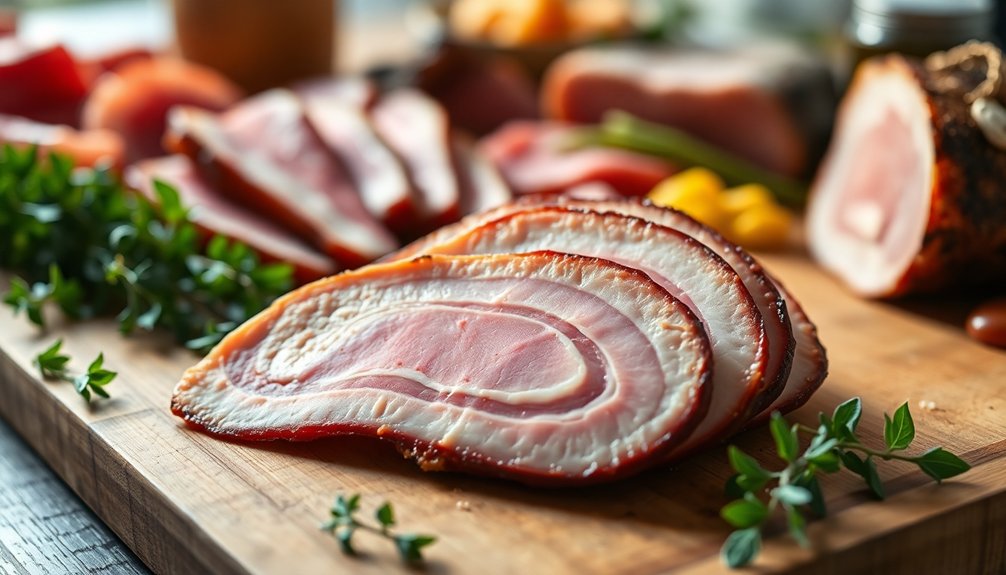
When it comes to enjoying ham on your keto diet, selecting high-quality options is key to maximizing its benefits. Here’s what you should prioritize:
- Organic: Look for hams that are certified organic to guarantee no harmful chemicals.
- Non-GMO: Choose non-GMO options to avoid genetically modified ingredients that may affect your health.
- Pasture-Raised: Opt for pasture-raised ham to enhance nutrient quality and support animal welfare.
- Hidden Sugars: Always read labels to identify hidden sugars and preservatives that can spike carb content. Additionally, selecting high-quality ham can support heart disease prevention by ensuring a better balance of healthy fats and nutrients in your diet.
Types of Ham: What to Look For
When you’re selecting ham for your keto diet, it’s essential to understand the differences between natural and cured varieties.
Beware of glazed hams, as they often come with added sugars that can spike your carb intake.
Always prioritize quality by checking labels for harmful additives and choosing hams that are pasture-raised or organic. Additionally, selecting meats high in healthy fats can contribute to improved HDL cholesterol levels, enhancing your overall cardiovascular health.
Natural vs. Cured Ham
As you navigate the world of ham, understanding the differences between natural and cured options is essential for maintaining a keto-friendly diet. Here’s what to assess:
- Natural Ham: Typically sugar-free and contains about 1 gram of carbohydrates per 3 oz serving, making it a solid keto choice.
- Cured Ham: Often has added sugars and preservatives, which can raise carbohydrates to around 3.9 grams per 1.9 ounces.
- Ingredient Labels: Always read them; some cured hams may contain synthetic additives that disrupt ketosis.
- Quality Matters: Opt for pasture-raised, uncured, and sugar-free hams for better nutrients and fewer harmful additives.
Glazed Ham Risks
While glazed ham might seem like a delicious option for your holiday meals, it poses significant risks for anyone on a keto diet. The carbohydrate content in glazed ham can be surprisingly high, with added sugars pushing it to 6 grams or more per serving. This can easily disrupt your ketosis, exceeding your daily carb allowance on a ketogenic diet.
It’s essential to read labels carefully, as many pre-packaged hams contain hidden sugars that aren’t keto-friendly. Instead, opting for plain, uncured, and unglazed ham is a better choice, offering around 1 gram of carbs per 3 ounces. By choosing wisely, you can enjoy ham without compromising your low-carb goals.
Choosing Quality Ham
Choosing the right ham for your keto diet is essential for maintaining your low-carb lifestyle. When you’re choosing quality ham, keep these tips in mind:
- Opt for plain, uncured, or unglazed varieties to avoid added sugars and excess carbohydrates.
- Look for organic, non-GMO, or pasture-raised options for better nutrient quality and farming practices.
- Check ingredient lists; prioritize hams with simple, natural ingredients, avoiding harmful additives like sodium nitrates.
- Aim for high-quality ham, which can provide over 60% of your daily selenium needs in just a 3 oz serving, supporting overall health.
Honey-Baked Ham vs. Traditional Ham
When comparing honey-baked ham to traditional ham, it’s crucial to take into account their carbohydrate content.
Honey-baked ham typically contains added sugars, resulting in about 4 g of net carbs per 1.9 oz serving. This makes it less suitable for your keto diet, as the high sugar content can disrupt ketosis.
Honey-baked ham has about 4 g of net carbs per serving, making it less ideal for keto diets.
On the other hand, traditional ham, especially when uncured and unglazed, has virtually zero carbs, allowing it to fit perfectly within your carb limits.
If you’re following a keto lifestyle, opting for plain, uncured ham is your best bet to avoid hidden sugars found in honey-baked varieties.
Always check ingredient labels to verify there are no added sugars that could interfere with maintaining ketosis. Additionally, incorporating healthy fats into your meals can promote better cholesterol dynamics while following a keto diet.
Delicious Keto Ham Recipes
When you’re looking for tasty keto-friendly meals, honey mustard glazed ham and ham and cheese casserole are perfect options. These dishes not only satisfy your cravings but also keep your carb intake in check. Additionally, incorporating high-protein meats into your diet is essential for maintaining muscle mass while on a keto journey. Let’s explore how to make these delicious recipes a part of your keto journey!
Honey Mustard Glazed Ham
Although honey mustard glazed ham is a favorite for many, it often contains added sugars that can derail your keto diet.
Instead of reaching for that pre-packaged ham, consider creating a keto-friendly version with a homemade glaze. Here’s how to keep it low-carb:
- Use uncured, unglazed ham as your base.
- Make a glaze with mustard and sugar-free sweeteners.
- Pair your ham with low-carb vegetables like broccoli or cauliflower.
- Always check ingredient labels for hidden sugars.
Ham and Cheese Casserole
If you’re looking for a comforting dish that fits perfectly into your keto lifestyle, a Ham and Cheese Casserole is an excellent choice. This keto-friendly casserole uses leftover ham, making it a great way to reduce waste while enjoying a satisfying meal.
Incorporate low-carb vegetables like broccoli or cauliflower to add flavor and fiber without spiking your carb count. High-fat cheeses, such as cheddar or mozzarella, boost the richness and provide essential protein.
For a creamy texture, use an egg-based custard or heavy cream as a binder. Don’t forget to season with garlic powder, onion powder, or herbs for extra taste without the carbs.
This delicious casserole will quickly become a favorite in your keto meal rotation!
Portion Control and Serving Suggestions
To keep your keto diet on track, portion control is essential when serving ham. Aim for a serving size of about 3 oz (85 g) to keep carbs low—typically around 1 g.
Portion control is key on a keto diet; aim for 3 oz (85 g) of ham to keep carbs low.
Here are some serving suggestions:
- Pair ham with low-carb vegetables like spinach or zucchini to balance your plate.
- Use keto-friendly condiments, such as mustard or olive oil, to enhance flavor without adding carbs.
- Incorporate ham as a protein source in salads or omelets, but watch your total daily carb consumption.
- Monitor your sodium intake, and consider adding potassium-rich foods like avocados to maintain electrolyte balance. Additionally, maintaining insulin sensitivity through a balanced diet can further enhance your metabolic health on keto.
Key Takeaways for Eating Ham on Keto
When you’re following a keto diet, understanding how to incorporate ham can help you stay within your carb limits while enjoying a delicious protein source.
Plain, uncured ham is keto-friendly, containing virtually zero carbohydrates, making it an excellent choice. A standard serving of non-cured ham has only about 1.02 grams of carbohydrates, fitting easily into your daily allowance.
However, be cautious with honey-cured ham, which contains around 3.9 grams of carbs per 1.9 ounces and can disrupt ketosis if overconsumed. Always read labels for added sugars found in deli or processed options. Additionally, incorporating healthy fats from sources like avocados and olive oil can enhance your cholesterol management while enjoying ham on keto.
Conclusion
Incorporating ham into your keto lifestyle can be both delicious and satisfying. With its low carb content and high protein, it fits well into your meal plan. Just remember to choose high-quality options and watch portion sizes. Whether you opt for traditional or honey-baked, ham can add variety to your meals. So go ahead, enjoy that savory slice, and embrace the flavorful possibilities that ham brings to your keto journey!