Yes, keto bread can often be gluten-free! It’s usually made with low-carb alternatives like almond or coconut flour, which don’t contain gluten. However, always check ingredient labels, as pre-packaged options might have hidden gluten from fillers or flavorings. When you choose keto bread, you’re likely getting a lower carb count and added fiber. If you’re curious about popular brands and homemade recipes, there’s much more to explore beyond the basics!
What Is Keto Bread?
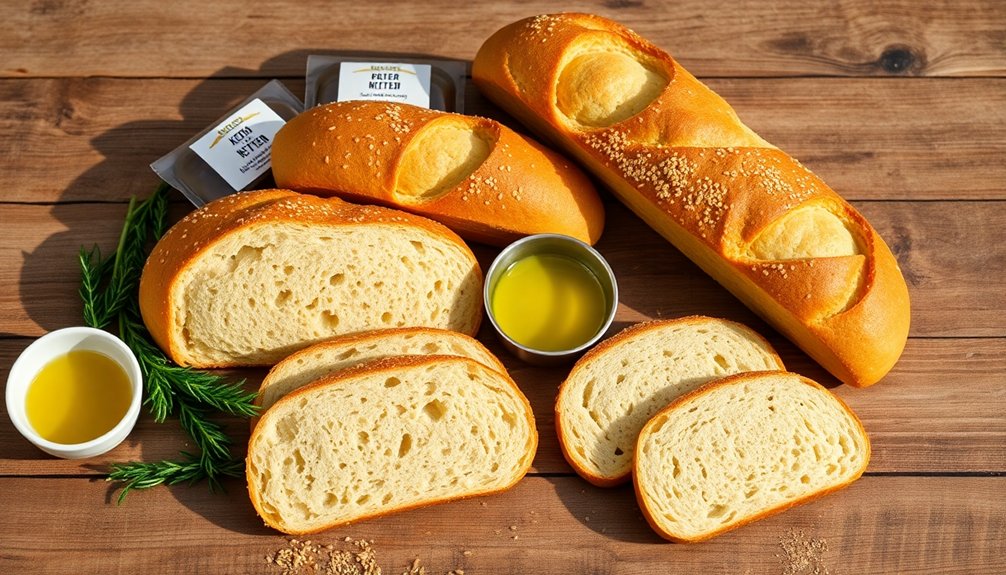
Keto bread is a low-carb alternative specifically crafted for those following a ketogenic diet. Unlike traditional bread, it uses low-carb ingredients like almond or coconut flour, resulting in less than 5 grams of carbohydrates per slice. This is a significant reduction compared to the roughly 15 grams found in regular bread.
To meet your nutritional needs, keto bread often includes added fiber from sources like psyllium husk powder or ground flaxseed, enhancing its structure and health benefits. Many keto breads also contain healthy fats and protein, which are essential for supporting muscle repair and overall health.
You can easily make keto bread at home or buy it in various forms, such as sliced loaves and bagels. Just remember to check nutrition labels to verify it fits your low-carb diet and confirm the carbohydrate content.
Is Keto Bread Typically Gluten-Free?
Many people following a ketogenic diet often wonder about the gluten content in keto bread. Typically, keto bread is gluten-free because it’s made from low-carb flour substitutes like almond flour or coconut flour, both of which lack gluten.
Many recipes also include added fibers like psyllium husk or ground flaxseed, keeping the bread gluten-free. However, it’s essential to be cautious with pre-packaged keto bread; some commercially available options may contain hidden gluten or small amounts of traditional flour to improve texture.
Additionally, using almond flour in keto bread not only ensures it’s gluten-free but also provides nutritional benefits such as healthy fats and protein. Always check the ingredient list to verify it meets gluten-free standards. By doing this, you can enjoy your keto bread without worrying about gluten in your diet.
Understanding Gluten and Its Sources
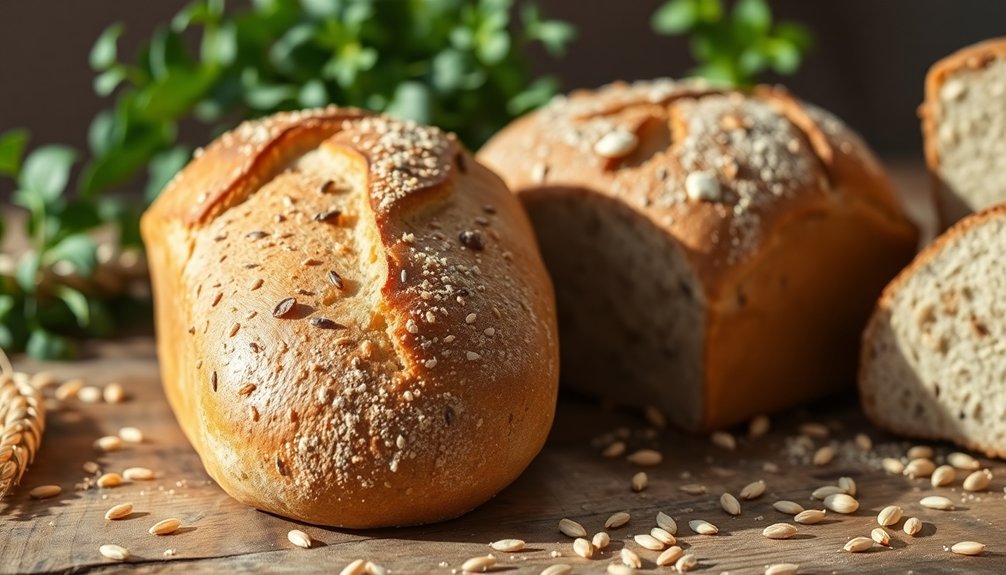
Gluten is a protein found in grains like wheat, barley, and rye, and it can trigger reactions in people with celiac disease or gluten sensitivity.
You’ll find gluten in many traditional breads and processed foods, so it’s essential to know what to look for.
Understanding gluten and its sources helps you make informed choices, especially when selecting keto-friendly options. Additionally, the ketogenic diet may offer improved metabolic health benefits, making it a popular choice for many seeking dietary changes.
What Is Gluten?
Understanding gluten is essential, especially for those managing dietary restrictions. Gluten is a protein found in wheat, barley, and rye, providing elasticity and structure to dough.
If you have celiac disease or gluten sensitivity, avoiding gluten entirely is vital, as it can trigger severe digestive issues and autoimmune responses. You’ll find gluten in common sources like bread, pasta, cereals, and many processed foods, which often contain wheat-based ingredients.
Even less obvious products, like sauces and dressings, may contain gluten, so careful label reading is necessary.
To maintain nutritional balance, gluten-free diets focus on eliminating gluten-containing foods while incorporating alternatives like rice, quinoa, and gluten-free grains, supporting your digestive health without sacrificing flavor or variety.
Gluten-Containing Foods
While steering through dietary choices, it’s essential to recognize the common sources of gluten that can impact your health, especially if you have celiac disease or gluten sensitivity.
Gluten is a protein found in grains like wheat, barley, and rye, often lurking in foods such as bread, pasta, cereals, and baked goods. Those with gluten intolerance must strictly avoid gluten-containing foods to prevent discomfort and inflammation.
Even gluten-free options can become contaminated when they come into contact with gluten-containing foods, so careful preparation is vital.
Fortunately, you can turn to gluten-free substitutes like almond flour and coconut flour, especially if you’re following a low-carb lifestyle and craving keto bread without the gluten.
Gluten Sensitivities Explained
If you’ve ever experienced discomfort after eating, you might be among the many people affected by gluten sensitivity. This condition can lead to adverse reactions like bloating, diarrhea, fatigue, and joint pain when you consume gluten, a protein found in wheat, barley, and rye.
For those with celiac disease, ingesting gluten can cause severe intestinal damage. It’s essential to read labels carefully, as gluten often hides in processed foods.
Fortunately, there are plenty of gluten-free alternatives available. Grains like rice, quinoa, and corn can replace wheat, while flours made from almond or coconut offer great baking options.
The Importance of Reading Labels
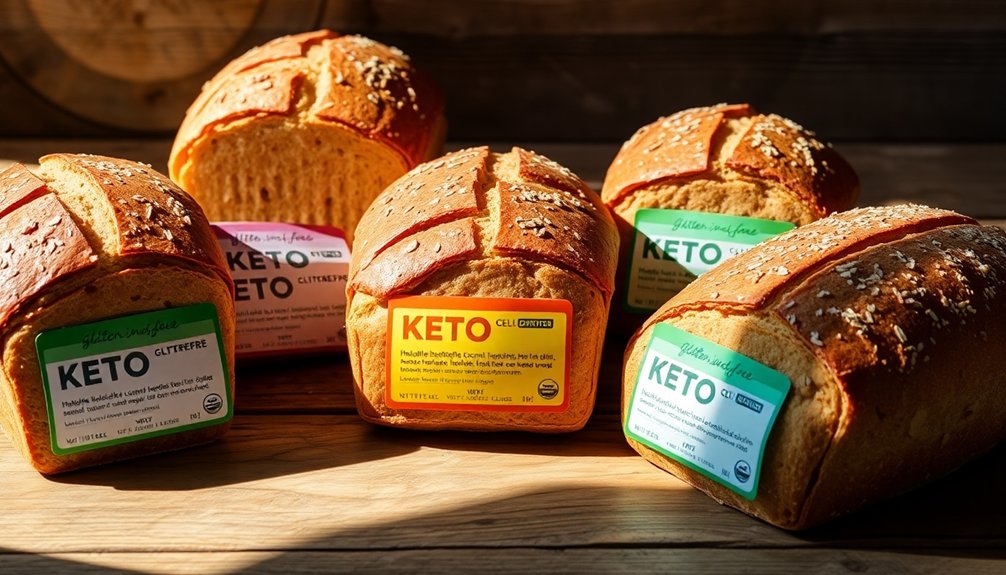
When you’re maneuvering the world of keto bread, reading labels becomes essential to guarantee you’re choosing gluten-free options. Many products might contain hidden gluten as fillers or flavorings, so you need to be vigilant.
Look for ingredients like almond or coconut flour, which are naturally gluten-free, but double-check for wheat or other gluten-containing grains. Make sure to check certifications on the nutrition label that indicate the product is gluten-free, providing extra assurance for those with sensitivities.
Some brands might market their bread as “keto” without properly addressing gluten content, so scrutinizing labels is vital. Also, pay attention to total carbohydrates and net carbs, as gluten-free breads can still be high in carbs, affecting your strict keto diet. Additionally, consider using natural sugar substitutes that can help enhance the flavor of your keto bread without compromising its gluten-free status.
Popular Brands of Keto Gluten-Free Bread
Here are three popular brands that align with your health goals:
- Base Culture Keto Bread: Gluten-free and packed with 4 grams of net carbohydrates and 110 calories per slice, it’s also paleo and dairy-free.
- Arnold Superior Keto Bread: With only 3 grams of net carbohydrates and 5 grams of protein per slice, it offers a convenient option for healthy eating.
- Simple Truth Original Puff Bunz: This unique gluten-free option has 0 grams of total carbohydrates and 2 grams of protein, making it an excellent choice for low-carb breads.
Incorporating options like almond flour bread can further enhance your keto diet while providing essential nutrients. Explore these options to boost your protein content while enjoying delicious keto breads!
Homemade Keto Bread Options
If you’re looking to make delicious homemade keto bread, there are plenty of easy recipes you can try. You can experiment with ingredient variations like almond flour, coconut flour, or even add spices and herbs for extra flavor. With these simple options, you’ll have full control over what goes into your bread and how it fits your dietary needs. Additionally, consider incorporating low-carb ingredients to enhance both taste and texture in your baking.
Easy Recipes to Try
Crafting your own keto bread at home is easier than you might think, especially with simple recipes that use low-carb flours like almond or coconut flour.
These options are naturally gluten-free and perfect for your dietary needs. Here are three easy recipes to try:
- Almond Flour Bread: Combine almond flour, eggs, baking powder, and psyllium husk powder for a loaf that’s low in carbs and high in fiber.
- Flaxseed Meal Bread: Mix flaxseed meal with almond flour for added healthy fats and omega-3s.
- Herbed Coconut Bread: Add your favorite herbs to coconut flour, creating a flavorful and nutritious keto option.
Explore these recipes to enjoy delicious keto bread while maintaining your macronutrient composition!
Ingredient Variations Explored
When you’re making homemade keto bread, exploring ingredient variations can elevate your baking experience and customize flavors to your liking.
You’ll find that using gluten-free flours like almond flour or coconut flour is perfect for those with gluten sensitivities. Incorporating psyllium husk powder and ground flaxseed not only provides structure but also boosts fiber content, promoting better digestive health.
Don’t hesitate to personalize your bread with herbs, seeds, or other flavorings to enhance taste. As you prepare, remember to measure and calculate net carbs carefully to stay on track with your keto diet.
Nutritional Benefits of Gluten-Free Keto Bread
Gluten-free keto bread offers a range of nutritional benefits that make it an appealing choice for anyone following a ketogenic diet. Here are some key advantages:
- Low in Net Carbs: With fewer than 5 grams of net carbs per slice, gluten-free keto bread fits perfectly within your low-carb lifestyle.
- High Fiber Content: Typically containing around 4-5 grams of fiber per slice, it supports digestive health and keeps you feeling full longer.
- Healthy Fats and Protein: Enriched with healthy fats from flaxseed or chia seeds and protein sources like eggs, it aligns with your ketogenic dietary goals while aiding in blood sugar management. Additionally, the incorporation of omega-3 fatty acids from ingredients like flaxseed oil enhances heart health and reduces inflammation.
Compared to traditional bread, gluten-free keto bread has a lower glycemic index, making it a smarter choice for maintaining stable energy levels.
Tips for Incorporating Keto Bread Into Your Diet
Incorporating keto bread into your diet can be both enjoyable and beneficial, especially if you focus on the right choices.
Always check nutrition labels for net carbs, aiming for 2-6 grams per slice to maintain ketosis. Opt for gluten-free options made from almond flour or coconut flour to meet your dietary needs.
Check nutrition labels for net carbs, targeting 2-6 grams per slice with gluten-free options like almond or coconut flour.
To enhance meals, pair keto bread with high-protein spreads like nut butters or avocado for added satiety and a balanced macronutrient ratio.
Experiment with different varieties, such as buns or flatbreads, to keep your meals versatile while staying low-carb. Additionally, using high fiber content options like flaxseed bread can further support digestive health and weight management.
You might also consider homemade recipes, allowing you to control ingredients and flavors that align with your weight management goals and preferences.
Conclusion
Incorporating keto bread into your diet can be a game-changer, especially if you’re looking for gluten-free options. Just like a bridge connecting two shores, it links your cravings for bread with your health goals. Remember to read labels and choose wisely, whether you opt for store-bought brands or whip up your own at home. With a little creativity, you can enjoy delicious meals without sacrificing your low-carb lifestyle. Embrace your bread choices and savor each bite!