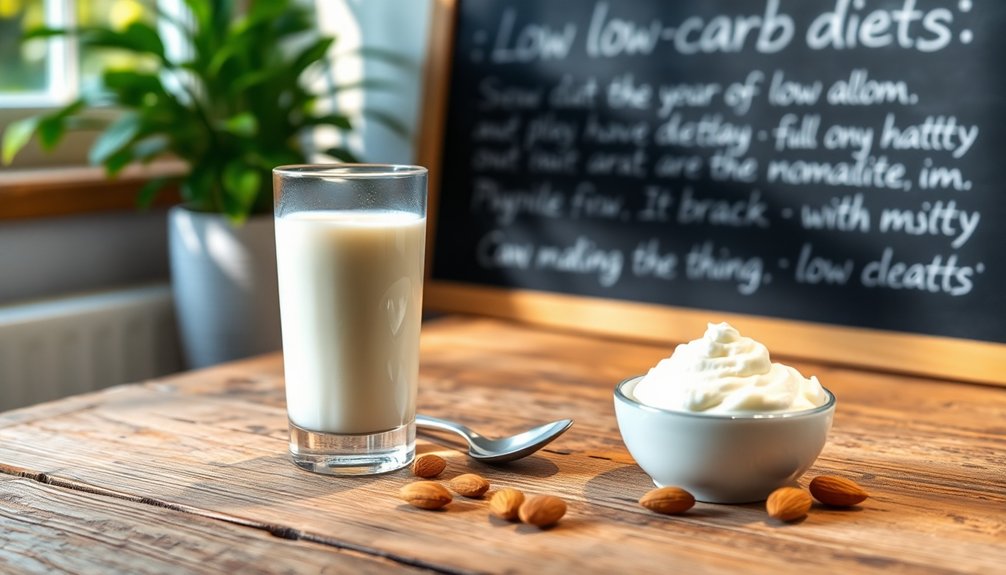
Milk is generally not keto-friendly due to its high carbohydrate content—cow’s milk has about 12 grams per cup. This can hinder your progress on a low-carb diet. Alternatives like unsweetened almond milk or heavy cream, which are low in carbs, are better options. Additionally, choosing high-quality, organic dairy can enhance your nutrition. It’s also essential to understand lactose’s impact on carbs. Explore more about the best dairy choices and their benefits for a keto lifestyle.
Is Milk Keto-Friendly?
When considering whether milk is keto-friendly, it’s important to look at its carbohydrate content.
Cow’s milk and goat’s milk have about 12 and 11 grams of carbs per cup, respectively, making them unsuitable for a keto diet that limits carbs to 20-50 grams daily.
Cow’s milk and goat’s milk contain too many carbs for a keto diet, making them poor choices.
If you’re seeking low-carb dairy options, unsweetened almond milk is a standout, containing just 1 gram of net carbs per cup.
Unsweetened soy milk, at 3 grams of net carbs, also fits better into a keto-friendly milk category.
Additionally, heavy cream and half-and-half are excellent choices for low-carb diets, with heavy cream offering only 1 gram of carbs per ounce.
Therefore, while traditional milk isn’t ideal, alternatives exist to support your keto journey. Incorporating low-carb dairy products into your meals can enhance flavor while adhering to your dietary goals.
Best and Worst Types of Milk on Keto
While traditional cow’s milk may not fit into your keto diet, understanding the best and worst types of milk can help you make informed choices.
Cow’s milk contains 11-13 grams of carbohydrates per cup, which is too high for a low-carb lifestyle. Instead, opt for keto-friendly dairy like unsweetened almond milk, which has just 1 gram of net carbs per cup.
Coconut milk varies in carb content, so always check the label, as some brands may have up to 5 grams. Pea milk and hemp milk are excellent options, containing 0 grams of net carbs. Monitoring portion sizes is essential to prevent excessive calorie intake from dairy.
Avoid high-carb alternatives like oat milk and rice milk, which can pack 15 and 25 grams of carbs per cup, respectively.
Choosing High-Quality Dairy
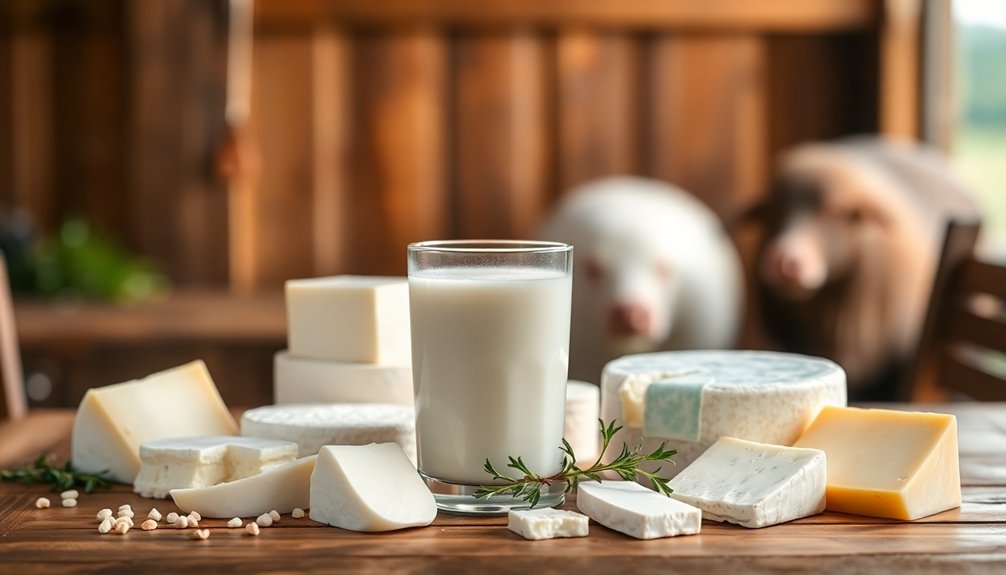
Choosing high-quality dairy is essential for optimizing your ketogenic diet. Prioritize organic and grass-fed options to avoid harmful additives and enhance nutrient profiles.
Look for dairy products free from antibiotics and synthetic hormones, like rBGH, which can negatively impact your health. When possible, opt for full-fat dairy, as it tends to have fewer carbs and provides greater satiety, helping you manage hunger on keto.
Always read labels carefully to check for added sugars; even small amounts can considerably elevate carbohydrate content and disrupt your diet. If you’re lactose-sensitive, consider lactose-free dairy options that still deliver nutritional benefits without digestive issues. Incorporating healthy fats from dairy can enhance your overall nutrient intake and support your keto goals.
Making informed choices about dairy can greatly support your keto journey.
Understanding Lactose
Understanding Lactose
Lactose, the sugar naturally present in milk, plays a crucial role in the carbohydrate content of dairy products, which is essential for those following a ketogenic diet. Here’s what you need to know about lactose:
- Composition: Lactose is a disaccharide made of glucose and galactose.
- Carbohydrate Impact: One cup of cow’s milk has around 12 grams of lactose, affecting your carb intake notably.
- Lactose Intolerance: If you’re lactose intolerant, consuming lactose can lead to digestive discomfort due to a lack of the enzyme lactase.
- Keto Consideration: High lactose levels can inhibit ketosis, so it’s crucial to choose dairy wisely. Additionally, opting for low-lactose options can help maintain improved lipid profiles while adhering to your keto diet.
Opt for low-lactose options like hard cheeses or lactose-free milk to stay aligned with your keto diet.
Benefits and Nutritional Value

Dairy products pack a powerful nutritional punch, offering essential nutrients like calcium and vitamin D that support bone health.
When you include high-fat options in your keto diet, you not only increase your healthy fat intake but also help manage your weight by promoting feelings of fullness.
Plus, the probiotics found in certain dairy can enhance gut health, contributing to your overall well-being. Additionally, incorporating keto-friendly dairy products into your meals can provide delicious and satisfying choices that align with your weight loss goals.
Nutrient Density of Dairy
Nutrient-rich options like full-fat dairy products can be a valuable addition to your diet, especially if you’re aiming for a ketogenic lifestyle.
The nutrient density of dairy offers several benefits that align with a low-carb diet:
- Calcium and Vitamin D: Essential for strong bones and teeth, helping you maintain overall health.
- Healthy Fats: High-fat dairy like cheese and butter promotes satiety and fits perfectly into your macronutrient goals.
- Probiotics: Fermented dairy, such as yogurt, supports gut health and enhances digestion.
- Low-Carb Energy: Full-fat options like heavy cream and Greek yogurt provide concentrated energy while keeping carbs low.
Incorporating these nutrient-dense dairy products can enhance your ketogenic meals and overall wellness.
Role in Weight Management
Including high-fat dairy products in your ketogenic diet can greatly impact weight management. These dairy products, like cheese and heavy cream, promote satiety, helping you reduce overall caloric intake, which is essential for weight loss.
The protein found in options such as Greek yogurt and cottage cheese aids muscle maintenance and growth, especially if you’re active. Full-fat dairy is also packed with fat-soluble vitamins A, D, E, and K, critical for metabolism and fat absorption.
By incorporating low-carb dairy, you can meet your micronutrient needs while gaining calcium and probiotics that support gut health—important for efficient digestion.
Plus, studies suggest high-fat dairy may help preserve muscle mass, making it an effective component of your weight management strategy.
Potential Downsides and Considerations
When considering dairy on a keto diet, you need to be aware of potential downsides.
Regular milk contains lactose, which can contribute to your carb count and may cause discomfort if you’re lactose intolerant.
Additionally, some dairy products have hidden sugars that can derail your ketosis efforts, so choosing high-quality, low-carb options is essential. Furthermore, it’s important to note that dietary choices significantly influence cholesterol management, which can impact overall health while on a ketogenic diet.
Lactose Intolerance Issues
Although many people enjoy dairy as part of their diets, lactose intolerance presents a significant challenge for those considering a keto-friendly approach.
About 68% of adults globally struggle with digesting lactose, which can lead to uncomfortable symptoms. Here are some considerations:
- Bloating: Even low-carb options like Greek yogurt can cause discomfort.
- Diarrhea: This can occur after consuming traditional dairy products.
- Gas: A common issue for those with lactose intolerance.
- Alternatives: You might need to switch to lactose-free alternatives or non-dairy substitutes.
It’s essential to monitor your body’s response to dairy, as small amounts of lactose can disrupt ketosis for lactose-sensitive individuals.
Hidden Carbs in Dairy
For those managing a keto diet, being aware of hidden carbohydrates in dairy products is essential. Many dairy items, especially flavored yogurts and sweetened varieties, contain hidden sugars that can greatly increase carb counts, potentially disrupting your ketosis.
For example, one cup of regular cow’s milk has about 12 grams of carbohydrates, primarily from lactose. This can take up a considerable portion of your daily carb allowance.
While low-carb options like heavy cream and hard cheeses are safer, you still need to monitor your dairy intake carefully. Always read nutrition labels, as added sugars or fillers can contribute hidden carbs that undermine your ketogenic goals.
Staying vigilant helps you stay on track with your diet.
Quality of Dairy Products
While dairy can be a staple in many diets, its quality can greatly impact your health and adherence to a keto lifestyle.
Here are some key considerations regarding the quality of dairy products:
- Carbohydrate Content: Regular milk is high in carbs due to lactose, which can hinder ketosis.
- Digestive Issues: You may experience discomfort from lactose intolerance or sensitivity to dairy proteins.
- Organic and Grass-Fed Options: Choosing these can help avoid harmful additives, antibiotics, and synthetic hormones.
- Added Sugar: Flavored yogurts and sweetened dairy products often contain added sugars, increasing carb content and complicating your keto journey.
Conclusion
To sum up, while milk can fit into a keto diet, it’s crucial to choose wisely. Think of it as a balancing act; the right types of milk can nourish without derailing your low-carb goals. Keep an eye on lactose and opt for high-quality dairy to reap the benefits. Just like a well-tended garden, understanding the nuances of your choices can yield a bountiful harvest of health and satisfaction on your keto journey.