Yes, soy sauce can be keto-friendly! It typically contains about 0.8 grams of net carbs per tablespoon, making it a flavorful option for low-carb diets. However, be cautious with dark soy sauce, which may have added sugars and higher carb counts. Light soy sauce and gluten-free alternatives like tamari or coconut aminos are great choices too. Want to learn how to incorporate soy sauce and its alternatives into your meals effectively? There’s more to explore!
What Is Soy Sauce?
Soy sauce is a flavorful condiment made from fermented soybeans, water, salt, and often wheat. This fermentation process creates its distinctive umami flavor, making it a staple in various Asian cuisines.
Traditional soy sauce is low in calories and carbs, with just about 1 gram of carbohydrates per tablespoon, positioning it among low-carb condiments. However, you should be mindful of different varieties; dark soy sauce can have higher carbohydrate counts due to added sugars. Additionally, incorporating low-carb options can further support your ketogenic diet.
If you’re avoiding gluten, consider gluten-free soy sauce options like tamari sauce or coconut aminos, which offer similar tastes with different nutritional profiles. These alternatives can help you enjoy that savory flavor while sticking to your dietary needs.
Is Soy Sauce Keto-Friendly?
When you’re following a keto diet, you might wonder if soy sauce can fit into your meal plan. The good news? Soy sauce is generally considered keto-friendly due to its low carb content.
Here are a few points to keep in mind:
- Regular soy sauce contains about 0.8 grams of net carbs per tablespoon.
- Always check for added sugars, as these can increase carbohydrate content.
- Dark soy sauce may have higher carbs due to added sugars, so use it sparingly.
- Low-sodium soy sauce has a similar carb count, making it a viable option.
Remember to check labels, as different brands can vary greatly. Additionally, using sugar substitutes can help you enhance flavor without compromising your keto goals.
Types of Soy Sauce
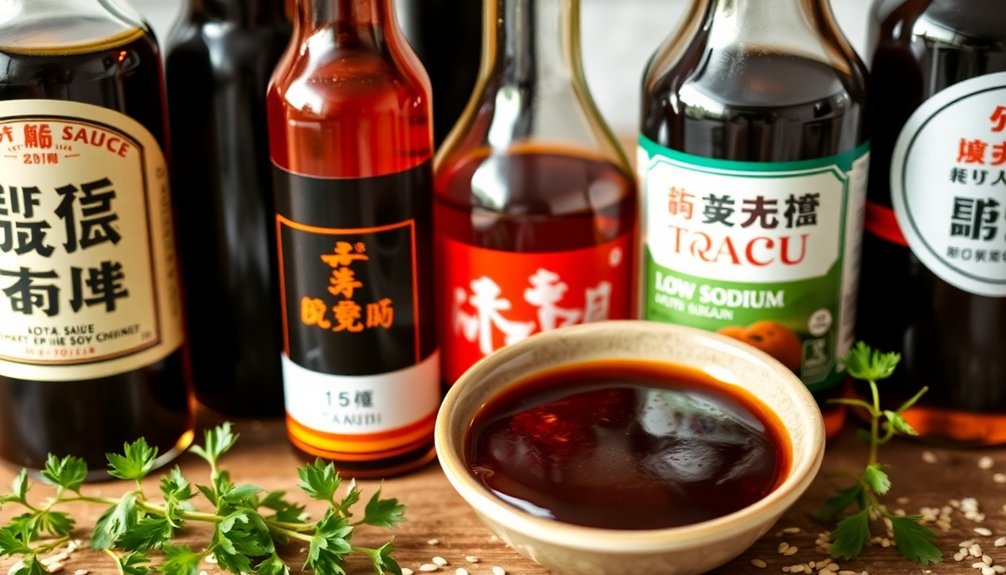
When you’re exploring soy sauce options, it’s crucial to know the differences between types. Dark soy sauce is richer but packs more carbs, while light soy sauce offers a lower-carb alternative. If you’re looking for gluten-free options, tamari could be your go-to choice without sacrificing flavor. Additionally, when choosing condiments, consider using natural zero-calorie sweeteners to maintain your keto lifestyle without added sugars.
Dark Soy Sauce
While exploring the various types of soy sauce, dark soy sauce stands out for its robust flavor and deeper color.
It’s a popular choice for marinades and braised dishes, but you should use it sparingly on a keto diet due to its carb content.
Here are some important points to reflect on:
- Kikkoman’s dark soy sauce has about 25 calories and 5 grams of net carbs per tablespoon.
- It typically contains added sugars, making it higher in carbs than light soy sauce.
- Always check the ingredient list for any high-carb thickeners.
- Enjoy dark soy sauce in moderation to keep your carb count low.
With around 5 grams of net carbs per serving, it can still fit into your keto lifestyle if used wisely.
Light Soy Sauce
Light soy sauce, often referred to as Shoyu, offers a delightful option for those on a ketogenic diet due to its lower carbohydrate content compared to dark soy sauce.
With about 0.8 grams of carbohydrates and 10 calories per tablespoon, it aligns perfectly with your low-carb goals. This makes light soy sauce a preferred option for anyone monitoring their carb intake on keto.
It’s versatile too—use it as a seasoning in stir-fries, marinades, or dipping sauces to enhance flavor without greatly impacting your carb count.
Just be sure to check the labels for added sugars, as some brands may include ingredients that could affect their keto compatibility.
Enjoy the savory taste of Shoyu while staying on track with your diet!
Gluten-Free Alternatives
If you’re looking for gluten-free alternatives to traditional soy sauce, you’re in luck—there are several options that fit perfectly within a ketogenic diet.
Here are some great gluten-free sauces on the market:
- Tamari: This is primarily made from fermented soybeans and is an excellent choice for those avoiding wheat.
- Coconut Aminos: Deriving from coconut sap, it offers a slightly sweeter flavor and is low in carbohydrates.
- San-J Gluten-Free Soy Sauce: With about 1 net carb per tablespoon, it’s compliant with low-carb diets.
- White Soy Sauce: Typically lower in sodium and gluten, it provides a lighter flavor profile.
Always check labels for added sugars and carbohydrates to verify they align with your keto goals!
Is Dark Soy Sauce Keto-Friendly?
When considering dark soy sauce for your keto diet, it’s essential to look at its nutritional profile, especially its higher carbohydrate content.
With about 5 grams of net carbs per tablespoon, it can quickly add up and impact your carb limits.
However, if you love the flavor, using it sparingly in recipes might still work for you. Additionally, incorporating keto-friendly foods can help maintain stable blood sugar levels while enjoying your meals.
Nutritional Profile Comparison
While dark soy sauce can add depth to your dishes, its nutritional profile raises concerns for those on a keto diet. Here’s a comparison to take into account:
- Net Carbs: Dark soy sauce averages about 5 grams of net carbs per tablespoon, while light soy sauce has around 1 gram, making it more keto-friendly.
- Calorie Content: Dark soy sauce contains approximately 25 calories per tablespoon; light soy sauce has about 10 calories.
- Sugar Content: Many dark soy sauces include added sugars or sweeteners, increasing the carb count.
- Carbohydrate Level: The higher carbohydrate levels in dark soy sauce may hinder your keto goals, so always check the label.
Choosing the right soy sauce is essential for maintaining your desired carb intake.
Carbohydrate Content Analysis
Although dark soy sauce can enhance the flavor of your dishes, its carbohydrate content makes it a less favorable choice for those following a keto diet.
Typically, dark soy sauce contains around 5 grams of net carbs per tablespoon, markedly higher than regular soy sauce, which has about 1 gram of carbs. This higher carb content often results from added sugars.
While the fermentation process of fermented soybeans reduces sugar, dark soy sauces can still include high-carb ingredients. Always check the labels, as some brands may use thickeners or sweeteners that raise carb levels.
For a keto-friendly alternative, consider tamari or coconut aminos, which provide similar flavors with fewer carbs.
Usage in Keto Recipes
Dark soy sauce can certainly add depth to your dishes, but using it in keto recipes requires careful consideration. While it enhances the umami taste, its higher carbohydrate content makes it less suitable for strict ketogenic diets.
Here are some tips for incorporating it wisely:
- Opt for light soy sauce when possible; it typically has only 0.8 grams of net carbs per tablespoon.
- Use dark soy sauce in moderation—stick to small amounts to maintain low carb intake.
- Always check for added sugars on the label to avoid sneaky carbs.
- Consider using dark soy sauce as a flavoring agent in marinades rather than a main ingredient to keep your carb count in check.
Is Light Soy Sauce Keto-Friendly?
If you’re following a ketogenic diet, you might be wondering about the compatibility of light soy sauce with your meal plan.
Light soy sauce, or shoyu, is typically quite keto-friendly, containing around 0.8 grams of carbohydrates per tablespoon. This low carb option is a great seasoning or condiment to enhance your dishes without greatly impacting your carb intake.
It’s also lower in calories than dark soy sauce, with about 10 calories per tablespoon. However, it’s essential to check the labels for any added sugars or thickeners that could increase the carbohydrate count. Additionally, using low-carb sugar substitutes in your recipes can complement the flavor of light soy sauce while keeping your carb intake in check.
To maintain your low carbohydrate levels, be mindful of the quantities you use. Enjoy light soy sauce in moderation while sticking to your ketogenic diet!
How to Eat Soy Sauce on a Keto Diet
Wondering how to enjoy soy sauce while sticking to your keto diet? You can savor the flavor without worrying about carbs by following these tips:
- Use soy sauce as a marinade or braising liquid for meats; it only has about 0.8 grams of net carbs per tablespoon.
- Add it to stir-fries, soups, and stews for a rich umami taste, ensuring you choose low-carb varieties without added sugars.
- Create homemade dipping sauces by combining soy sauce with sesame oil and a keto-approved sweetener.
- Make salad dressings by blending soy sauce with olive oil and vinegar to keep carb counts low.
Moreover, incorporating healthy fats from sources like avocados and nuts can further enhance your heart health while enjoying your meals. Always check nutrition labels to avoid soy sauces with high-carb thickeners. Enjoy!
Soy Sauce Benefits on the Keto Diet
While you’re maneuvering through the keto diet, soy sauce offers a wealth of benefits that can enhance your meals.
With only about 0.8 grams of net carbs per tablespoon, it aligns perfectly with your low-carb lifestyle. The savory flavor of soy sauce adds depth to dishes without piling on calories, containing roughly 10 calories per tablespoon.
Plus, its sodium content, around 878 milligrams, can help you maintain electrolyte balance during ketosis. Regular use of soy sauce has a low glycemic response, supporting blood sugar management essential on a keto diet. Additionally, its incorporation into your meals can promote improved glycemic control for better overall health.
You can incorporate soy sauce into various keto-friendly recipes, like marinades and dressings, to enhance flavor while sticking to your low-carb guidelines.
The Best Keto Soy Sauce Alternatives
Here are some of the best keto-friendly options:
- Coconut Aminos: A soy-free, gluten-free alternative with just 1-2 grams of carbs per tablespoon.
- Tamari: This Japanese variant is usually gluten-free and contains about 0.8 grams of net carbs per tablespoon, offering a deeper flavor.
- Liquid Aminos: A non-fermented, gluten-free choice that has around 1 gram of carbs per tablespoon, delivering that umami taste.
- Fish Sauce: Low in carbs, it adds a unique umami flavor, typically containing less than 1 gram of carbs per tablespoon.
You can also use diluted miso paste sparingly for added flavor and probiotics! Additionally, incorporating these alternatives can help maintain improved insulin sensitivity while enjoying the flavors you love.
Summary
When it comes to maintaining a keto lifestyle, soy sauce can fit into your diet due to its low carbohydrate content, typically around 0.8 grams of net carbs per tablespoon. It’s a flavorful addition, especially in marinades and stir-fries. However, be cautious with dark soy sauce, as it may contain added sugars that increase carbohydrate content. For those strictly following a keto diet or avoiding soy, alternatives like tamari and coconut aminos provide excellent options without sacrificing flavor. Always read labels to check for hidden added sugars or high-carb thickeners in sweet varieties. By incorporating soy sauce and its alternatives mindfully, you can enjoy tasty meals while staying within your low carb goals. Additionally, mustard is a low-calorie option that can enhance flavor without adding carbohydrates to your meals.
Conclusion
To sum up, soy sauce can fit into your keto lifestyle if you choose wisely. While some may worry about the sodium content, remember that moderation is key. A small amount can enhance flavors without derailing your diet. Plus, exploring low-sodium options or alternatives can provide even more flexibility. So, don’t shy away from enjoying soy sauce; just be mindful of your portion sizes and pair it with other keto-friendly ingredients!