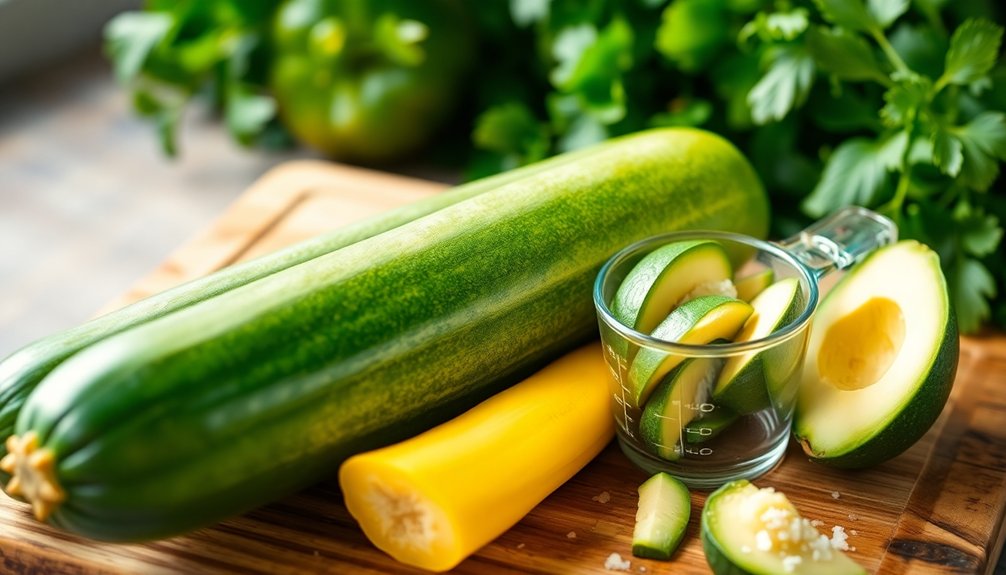
Yes, squash can fit into your ketogenic diet, but not all varieties are equal. Low-carb options like zucchini and spaghetti squash are great choices, with about 3 to 7 grams of net carbs per 100 grams. However, you’ll need to limit higher-carb types like butternut and acorn squash. Portion control is key to staying within your carb limits. Keep exploring to discover the best ways to incorporate healthy squash into your meal plan.
Understanding Squash and Its Carbohydrate Content
When you’re managing a ketogenic diet, understanding the carbohydrate content of various foods, like squash, is essential. Squash can be a tasty addition to your meals, but it’s vital to know the net carbs in different varieties.
For instance, butternut squash has about 10 grams of net carbs per 100 grams, making it moderate in carbohydrate content. On the other hand, spaghetti squash is low in net carbs, with around 5.5 grams, making it a fantastic pasta substitute for keto. Additionally, incorporating low-carb grain alternatives such as zucchini noodles or cauliflower rice can enhance your meal variety while keeping carb counts in check.
Yellow squash is versatile and also low in net carbs, fitting perfectly into keto-friendly dishes. Acorn squash is acceptable in moderation, emphasizing the need for portion control.
Always choose lower-carb varieties to maintain your keto diet effectively!
Low-Carb Squash Options for Keto
If you’re looking to enjoy squash while sticking to a keto diet, there are several low-carb options that can fit seamlessly into your meals.
Zucchini is a fantastic keto-friendly vegetable, boasting about 3 grams of net carbs per 100 grams, making it perfect for adding to stir-fries or as noodles.
Spaghetti squash is another great choice, with around 7 grams of net carbs per 100 grams; it’s excellent for replacing traditional pasta.
While butternut and acorn squash contain more carbs—12 and 14 grams respectively—you can still enjoy them in moderation.
Just be mindful of your portion sizes, and pair your squash with healthy fats like olive oil or cheese to enhance flavor without exceeding your daily carb limit. Incorporating these low-carb squash options can help ensure you meet your daily carb limit while enjoying a variety of flavors.
High-Carb Squash Varieties to Avoid
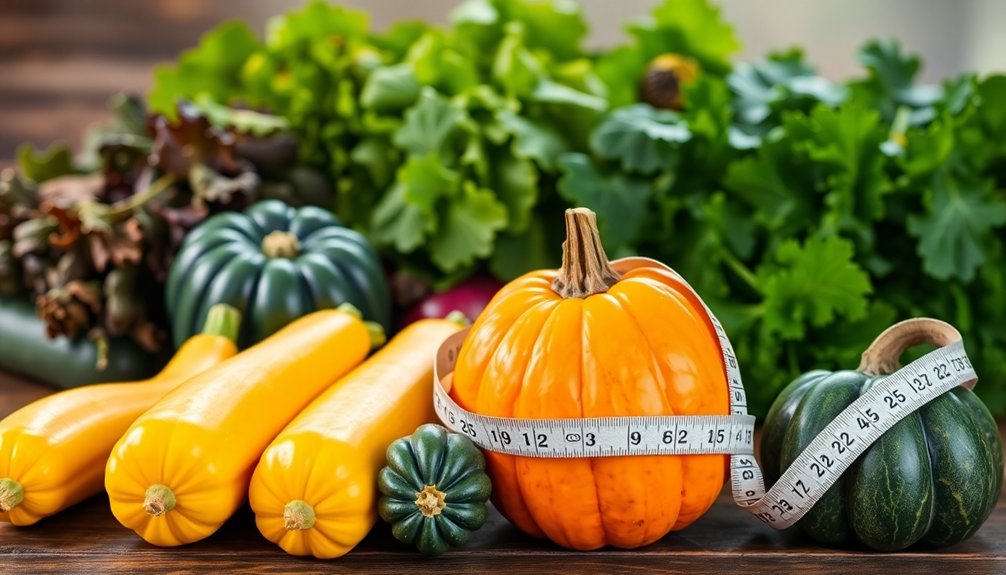
When you’re following a keto diet, it’s essential to watch out for high-carb squash varieties.
Butternut squash, for example, has about 12 grams of net carbs per 100 grams, while acorn squash ramps that up to 14 grams.
You’ll want to keep these options in check to stay within your carb limits. Additionally, understanding the glycemic index of different squash can help you make better choices for maintaining ketosis.
Butternut Squash Carbohydrate Count
Although butternut squash is a popular fall staple, its carbohydrate count may not align with a strict ketogenic diet. A 100-gram serving of butternut squash has about 12 grams of carbohydrates and 2 grams of fiber, leaving you with 10 grams of net carbs.
This higher carb content makes it less favorable compared to low carb, keto-friendly alternatives. If you choose to include butternut squash, it’s important to monitor your portion sizes to stay within the typical keto range of 20 to 50 grams of daily carbs.
Instead, focus on non-starchy vegetables that offer lower net carbs to guarantee you’re supporting your keto diet effectively while enjoying your meals.
Sweet Potato Carbohydrate Content
While many people enjoy sweet potatoes for their flavor and versatility, their carbohydrate content makes them a high-carb option that doesn’t fit into a ketogenic diet.
A medium sweet potato contains about 20 grams of carbohydrates, which can quickly exceed your daily limit, especially if you’re aiming for 20 to 50 grams of net carbs to maintain ketosis.
This high-carb vegetable can hinder your weight loss efforts, as it doesn’t align with the principles of a keto diet.
Instead, opt for non-starchy vegetables that offer lower carb counts and can help you stay in ketosis.
Portion Sizes and Squash on a Keto Diet
When you’re incorporating squash into your keto diet, it’s essential to pay attention to portion sizes.
Aiming for about ½ cup servings can help you balance your carb intake while still enjoying its benefits. Don’t forget to track those net carbs closely to stay within your daily limits! Additionally, many low-carb vegetables, such as spinach and cauliflower, can complement your meals and provide essential nutrients while keeping your carb count in check!
Recommended Serving Sizes
Understanding the recommended serving sizes for squash on a keto diet is essential for maintaining your carbohydrate limits.
Butternut squash, while delicious, has higher net carbs—about 12 g per 100 g—so enjoy it in moderation.
Spaghetti squash offers a great low-carb pasta alternative, with a typical serving size of around 1 cup cooked, containing just 7 g of carbs.
Yellow squash and zucchini are excellent nonstarchy vegetables with only 3 g and 2.6 g of net carbs per 100 g, allowing for larger servings.
To manage your carb intake effectively, limit acorn squash to about ½ cup per meal.
Tracking Carb Intake
Monitoring your carbohydrate intake is essential for success on a keto diet, especially with squash varieties. While zucchini and spaghetti squash are low in net carbs, butternut squash is higher, containing about 12 grams of carbohydrates and only 2 grams of fiber per 100-gram serving.
Portion control is important; you should adjust your serving sizes based on the type of squash. For instance, use smaller portions of butternut squash compared to zucchini.
Tracking your total carb intake is critical, as a keto diet typically recommends keeping carbs between 20 to 50 grams per day. Regularly monitoring your portions of these high-fiber vegetables can help you enjoy their nutritional benefits while maintaining ketosis.
Balancing With Other Foods
Balancing squash with other foods on a keto diet requires careful portion control, especially with higher-carb varieties like butternut and acorn squash. To maintain ketosis, you should keep your net carbs between 20 to 50 grams daily.
Spaghetti squash is a great low-carb option, offering about 7 grams of net carbs per 100 grams. While acorn squash has around 10 grams, consuming it in moderation is key.
Pair squash with a variety of non-starchy vegetables to boost your fiber intake and guarantee nutrient diversity. Keep track of your carb intake to adjust other food choices accordingly.
Health Benefits of Incorporating Squash
Incorporating squash into your diet can offer a wealth of health benefits that support your overall well-being.
Here are some key advantages of adding squash to your meals:
- High in Vitamin C: Boosts your immune system and skin health.
- Anti-inflammatory Properties: Butternut squash may help combat macular degeneration and enhance heart health.
- Promotes Digestive Health: The high fiber content aids digestion and maintains a feeling of fullness.
- Low-Carb Substitute: Squash serves as a satisfying alternative to higher-carb ingredients, perfect for a keto lifestyle.
- Rich in Nutrients: Incorporating squash into your diet can provide various vitamins and minerals, promoting overall health.
Creative Ways to Enjoy Squash on Keto

You can get creative with squash on your keto journey by trying spiralized zucchini noodles as a pasta alternative. Stuffed acorn squash makes for a hearty, low-carb meal that’s packed with flavor. Incorporating low-carb noodles can enhance your meals while ensuring you stay in ketosis!
Spiralized Zucchini Noodles
Looking for a delicious and low-carb alternative to pasta? Spiralized zucchini noodles, or zoodles, are perfect for your ketogenic diet!
With just 3 grams of net carbs per medium-sized zucchini, they’re an ideal low-carb pasta substitute.
Here’s how you can enjoy zoodles:
- Raw in salads for a revitalizing crunch.
- Sautéed with olive oil for a warm, comforting dish.
- Topped with keto-friendly sauces like marinara or pesto.
- Paired with proteins like grilled chicken or shrimp for a complete meal.
Stuffed Acorn Squash
After enjoying spiralized zucchini noodles, why not explore another delightful way to incorporate squash into your keto meals?
Stuffed acorn squash is a versatile option that allows you to fill it with keto-friendly ingredients like ground meat, cheese, and non-starchy vegetables. With about 15 grams of net carbs per cup, moderation is key to keeping your low carb levels in check.
Bake the squash until tender for a hearty vessel, and season it with herbs like cinnamon or nutmeg to enhance its natural sweetness.
Don’t forget to add healthy fats, such as olive oil or butter, to your stuffing. This combination will help you meet your daily fat goals while enjoying a satisfying, flavorful dish on your ketogenic journey.
Comparing Squash With Other Vegetables
How do squash varieties stack up against other vegetables on a ketogenic diet? Squash can be a fantastic choice, especially when you compare it to other options. Here’s how they measure up:
- Zucchini: About 3 grams of net carbs per medium squash, making it an excellent low-carb option.
- Butternut squash: Contains around 12 grams of carbs per 100 grams but can be enjoyed in moderation.
- Broccoli and cauliflower: Non-starchy vegetables with only 2 grams of net carbs per half cup, often preferable for strict keto followers.
- Starchy vegetables: Sweet potatoes and peas can exceed 20 grams of net carbs per serving, making squash a more manageable alternative.
Incorporating squash into your meals can offer essential nutrients while keeping your carb count low. Additionally, non-starchy vegetables like broccoli and spinach are great for maintaining a balanced keto diet.
Tips for Selecting Fresh Squash
When you’re shopping for fresh squash, it’s essential to pay attention to certain qualities to guarantee you pick the best options.
Look for squash with firm, unblemished skin; any soft spots could mean spoilage. Choose squash that feels heavy for its size, indicating higher moisture content and better flavor. Opt for those with a vibrant color, as dull hues may suggest overripeness and decreased nutritional value.
Don’t forget to check the stem end; it should be dry and firm. A moist or decayed stem can lead to quicker spoilage.
Finally, store fresh squash in a cool, dry place or the refrigerator to maintain its freshness and maximize its nutritional value. Incorporating low-carb vegetables into your diet, like squash, can enhance your overall nutrient intake while supporting your keto goals.
Happy selecting!
Cooking Methods for Keto-Friendly Squash
While exploring cooking methods for keto-friendly squash, you’ll find that various techniques can enhance its natural flavors without adding extra carbs.
Here are four delicious options to try:
- Roasted: Baking squash, like butternut, brings out its sweetness while keeping it low in net carbs.
- Sautéed: Toss zucchini in olive oil and spices for a tasty side dish that’s nutritious and low in carbs.
- Spaghetti Squash: Roast it to easily separate the strands, creating a perfect low-carb pasta alternative.
- Grated: Incorporate yellow squash into baked goods or fritters, adding moisture and nutrition without greatly raising carb counts.
Additionally, using squash as a base for low-carb pasta dishes allows you to enjoy vegetable-based options while adhering to your keto-friendly lifestyle. These cooking methods guarantee you enjoy squash while staying committed to your keto-friendly lifestyle.
Balancing Squash With Your Daily Carb Limit
To maintain your keto lifestyle, balancing squash with your daily carb limit is essential. Some squash varieties, like spaghetti and yellow squash, are keto-friendly, offering 2-7 grams of net carbs per 100 grams.
However, be cautious with butternut squash, which contains about 12 grams of total carbs for the same serving size. To stay within your daily carb limit of 20-50 grams, monitor your serving sizes carefully.
Even low-calorie squash can add up, impacting your balanced daily carb intake. Consider using these squash varieties as substitutes for higher-carb ingredients in meals, allowing you to enjoy delicious dishes without exceeding your carb count. Additionally, incorporating dietary fiber can aid in blood sugar regulation and improve insulin sensitivity, enhancing your overall metabolic health.
Make mindful choices to keep your keto journey on track!
Conclusion
Incorporating squash into your ketogenic diet can be a delicious balancing act between flavor and carb counts. While some varieties can push you over your daily limit, others can add a nutritious punch without guilt. Embrace the low-carb options like zucchini and spaghetti squash, but steer clear of their high-carb counterparts. By carefully selecting and preparing your squash, you can enjoy its health benefits while staying true to your keto goals. Enjoy the journey of flavors!