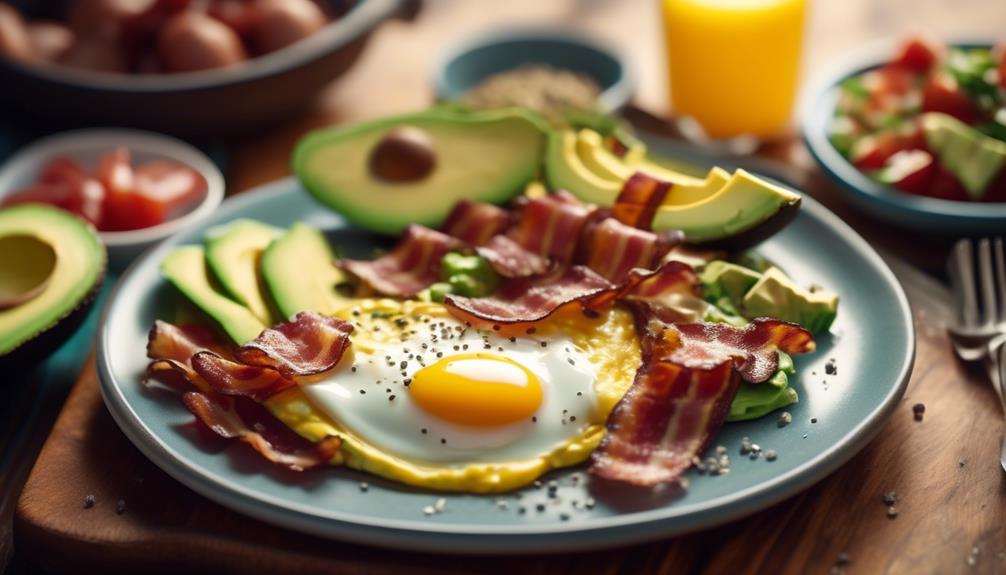
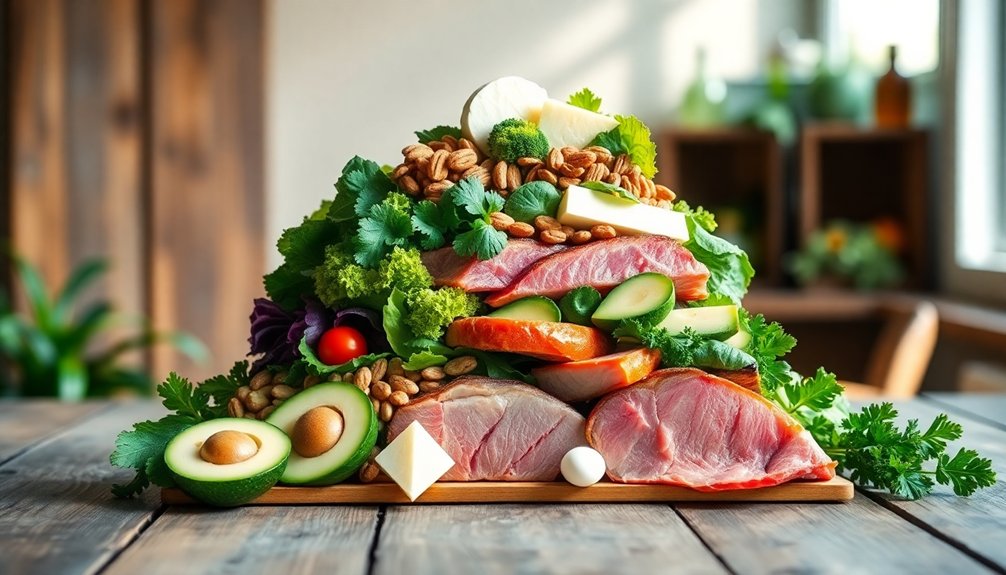
The keto food pyramid‘s your essential guide to the ketogenic diet, placing healthy fats at the base and prioritizing their role in your meals. You’ll build your plate with proteins, low-carb vegetables, and enjoy nuts, seeds, and dairy in moderation. Remember to limit high-carb foods and beverages to stay in ketosis. By following this visual framework, you can maximize your health benefits. There’s even more to discover about crafting your perfect keto meal plan.
Understanding the Keto Food Pyramid
When you plunge into the Keto Food Pyramid, you’ll discover that it prioritizes healthy fats as the foundation of your diet. Comprising 70-80% of your daily caloric intake, these fats promote fat burning and help you achieve ketosis.
Next in line are proteins, making up about 20-25% of your meals. Focus on fatty cuts of meat, fish, and eggs to maintain muscle and hormonal balance.
Protein plays a vital role in your keto diet, comprising 20-25% of your meals with an emphasis on fatty cuts for optimal health.
You’ll also want to include low-carb vegetables, consuming 2-4 portions per meal to stay within your carb limits.
Nuts, seeds, and dairy can enrich your diet, but keep them moderate at 1-2 servings daily.
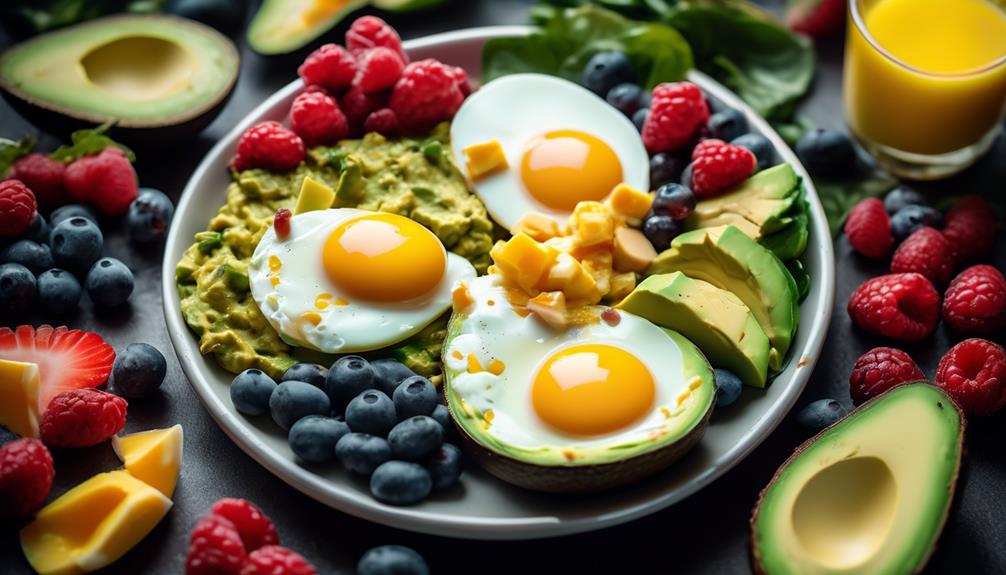
Finally, treat yourself occasionally to keto-friendly fruits like berries, ensuring you limit them to a handful to maintain ketosis. Additionally, incorporating healthy fats like avocados and olive oil can further enhance cardiovascular health.
The Base: Healthy Fats
Healthy fats form the cornerstone of the Keto food pyramid, making up 70-80% of your daily caloric intake. These nutrient-dense fats, found in sources like olive oil, avocado oil, coconut oil, butter, and animal fats, are essential for effective fat burning and energy production.
Aim for 2-6 tablespoons of healthy fats per meal to maintain the right macro ratios. By incorporating these fats, you not only enhance the flavor of your dishes but also support the absorption of fat-soluble vitamins. Healthy fats are vital for producing ketones, your body’s alternative energy source when carbs are limited. Embrace these fats in your ketogenic diet to boost your overall health and feel satisfied throughout the day. Additionally, incorporating MCTs from coconut oil can further enhance your energy levels and support weight loss efforts.
Proteins: Building Blocks of Your Keto Diet

Proteins serve as the building blocks of your ketogenic diet, ensuring you get essential nutrients while maintaining muscle mass and hormonal balance. Aim for proteins to make up about 20-25% of your daily caloric intake.
Focus on moderate protein sources, preferring fatty cuts of meat like salmon, chicken thighs, and grass-fed beef to complement your high-fat intake. Each meal should typically include 3-12 ounces of protein, depending on your macro needs, which also promotes satiety.
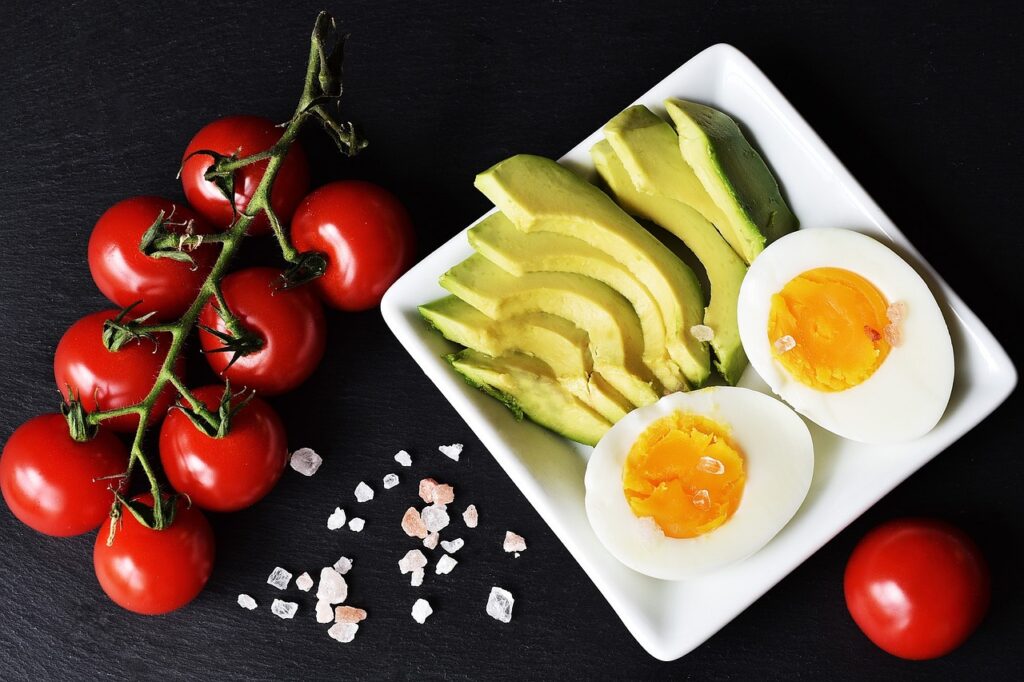
Opt for high-quality protein sources such as wild-caught fish and pasture-raised eggs for their additional benefits, like omega-3 fatty acids. Incorporating keto-friendly meat recipes into your meal planning can help diversify your protein sources while ensuring you remain within your carbohydrate limits.
Just remember, balancing protein intake with fat consumption is vital, as too much protein can hinder your ability to stay in ketosis.
Low-Carb Vegetables: Filling Your Plate
When you’re on a ketogenic diet, filling your plate with low-carb vegetables is key to staying within your carb limits.
Options like spinach, cauliflower, and zucchini not only provide essential nutrients but also support your overall health. Incorporating high-fiber low-carb vegetables into your meals can promote digestive health and aid in weight management.
Let’s explore the best choices and their nutritional benefits to enhance your keto meals.
Best Low-Carb Options
To maintain a successful ketogenic diet, you’ll want to fill your plate with low-carb vegetables that provide essential nutrients while keeping your carbohydrate intake in check.
Focus on non-starchy vegetables like spinach, cauliflower, broccoli, and zucchini. Aim for 2-4 servings per meal, as these low-carb veggies enhance satiety without pushing you over your carb limits.
Don’t forget about avocados, which are a standout option: they’re packed with healthy fats and fiber, containing only about 2 grams of net carbs per half.
Incorporating a variety of colorful low-carb vegetables can help you enjoy a wider range of vitamins and minerals, supporting your overall health.
Just steer clear of starchy veggies like potatoes and corn to stay in ketosis.
Nutritional Benefits Explained
Low-carb vegetables like spinach and broccoli offer a wealth of nutritional benefits that can greatly enhance your ketogenic diet.
These nutrient-dense options are low in carbohydrates, with most containing fewer than 5 grams of net carbs per serving, allowing you to enjoy generous portions without hindering ketosis.
They’re packed with fiber, which not only promotes satiety but also aids digestion, helping you manage hunger effectively on your keto plan.
By incorporating a variety of low-carb vegetables into your meals, you’ll improve flavor and texture while supporting your overall health.
Regular consumption can also stabilize blood sugar levels and enhance insulin sensitivity, key advantages of maintaining a ketogenic diet.
Make these veggies a staple on your plate!
Nuts, Seeds, and Dairy: Moderation Is Key
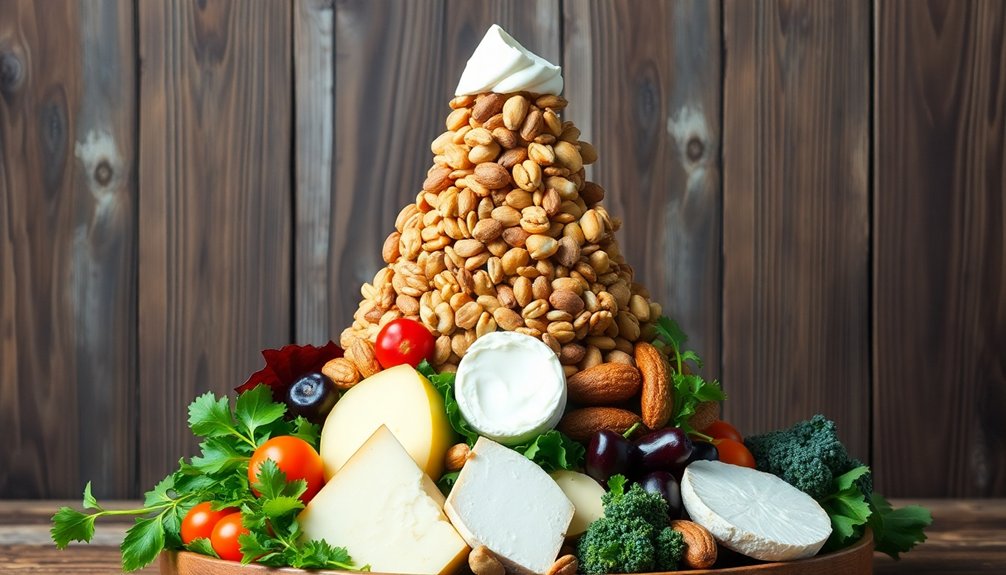
While nuts, seeds, and dairy can be valuable components of a keto diet, it’s crucial to consume them in moderation. Nuts and seeds are high in fat and packed with nutrients, but sticking to about one palmful per day helps you avoid exceeding your carb limits.
Macadamia nuts, for example, are a great choice since they contain around 75% fat and only 2g of net carbs per serving.
When it comes to dairy products, such as cheese and heavy cream, limit yourself to 1-2 servings per meal to manage calories and carbs effectively. Always check serving sizes and nutritional info, especially with products like milk, which can have around 13g of carbs per glass.
Incorporating healthy fats from sources like nuts and seeds can enhance your overall nutrition on a keto diet.
Moderation is key!
Keto-Friendly Fruits: Nature’s Treats
When it comes to keto-friendly fruits, you’ll want to focus on options like blackberries, raspberries, strawberries, and blueberries, which are low in carbs.
Remember to keep your serving size to about a palmful or less each day to stay within your carb limits.
Incorporating these fruits can add flavor and essential nutrients to your diet without disrupting ketosis. Additionally, these fruits are rich in antioxidants, which help combat oxidative stress and inflammation in the body.
Recommended Low-Carb Options
If you’re following a ketogenic diet and craving something sweet, you’ll be pleased to know there are plenty of low-carb fruit options that can satisfy your taste buds without derailing your goals.
Incorporating these healthy keto fruits can help you enjoy flavors while keeping net carbs per serving low. Here are some top choices:
- Blackberries
- Raspberries
- Strawberries
- Blueberries
- Starfruit
These fruits offer a delightful sweetness with minimal carbohydrate content, making them perfect for your diet.
However, remember to enjoy them in moderation—aim for a palmful or less daily to stay within your carb limits.
Consulting a low-carb fruit guide can also help you track your net carb intake effectively.
Serving Size Guidelines
Enjoying keto-friendly fruits can add a revitalizing twist to your meals, but understanding serving sizes is key to staying within your carb limits.
For keto dieters, it’s essential to keep fruit consumption moderate—typically limited to one small handful per day. Opt for low-carb food options like blackberries, raspberries, strawberries, and blueberries, which have lower net carbs than tropical fruits.
Each of these delicious choices not only supports your health with antioxidants and vitamins but also provides essential nutrients without disrupting ketosis.
Always check serving sizes and net carb content to maintain your desired macronutrient ratios. Consulting a low-carb fruit guide can help you make informed decisions on incorporating these treats into your ketogenic meal plans.
Drinks and Foods to Avoid on Keto
To maintain ketosis effectively, it’s vital to avoid certain drinks and foods that can sabotage your efforts.
Sticking to the keto diet means steering clear of high-carb foods that can kick you out of ketosis. Here are some items to watch out for:
- Bread, cereal, rice, and pasta
- High-carb fruits like apples and bananas
- Starchy vegetables such as potatoes and corn
- Added sugars found in sweets and pastries
- High-carb drinks like regular soda and fruit juice
Instead, opt for water, black coffee, or unsweetened tea.
Being mindful of hidden carbs in processed foods, sauces, and dressings is important to staying on track and enjoying the benefits of your ketogenic lifestyle. Additionally, limiting carbohydrate intake is essential for achieving improved glycemic control and maximizing the benefits of the ketogenic diet.
Conclusion
Steering the keto food pyramid can feel like charting a course through uncharted waters. Just like a skilled sailor relies on a compass to stay on course, you can use this guide to direct your diet towards success. Embrace healthy fats, savor proteins, and enjoy low-carb veggies to keep your energy sailing smoothly. Remember, moderation with nuts and dairy is essential, just as a sailor knows not to overload their ship. Stay focused, and you’ll reach your keto destination!