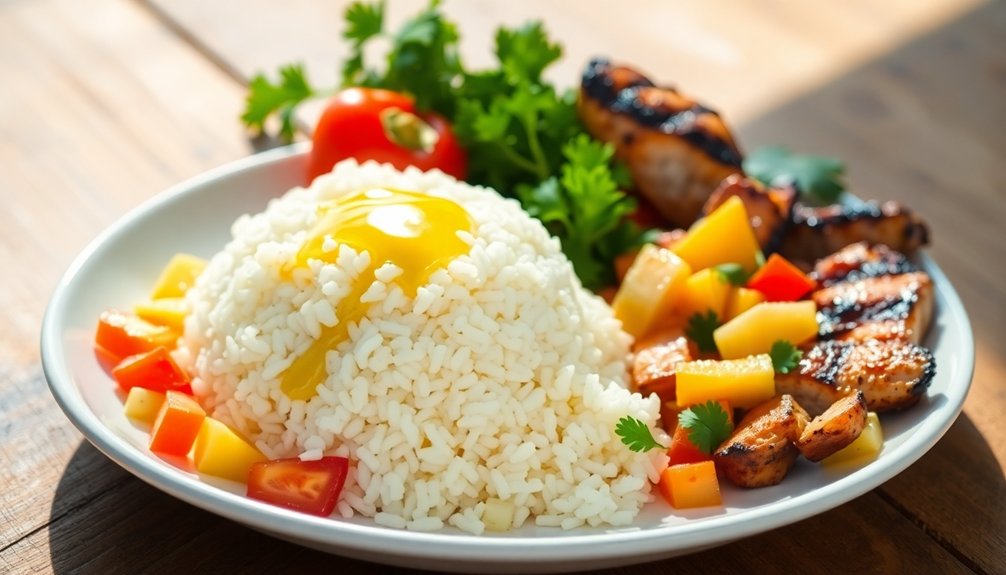
If you’re looking for keto rice substitutes, you’ve got plenty of healthy alternatives! Options like cauliflower rice and shirataki rice are low in carbs and calories, while riced broccoli and zucchini offer great nutrients. If you want something a bit heartier, consider wild rice or lentils for added protein and fiber. Mushroom rice is perfect for flavor absorption. Each of these can enhance your favorite dishes and keep the carb count down. There’s much more to explore!
Cauliflower Rice
Cauliflower rice is a fantastic low-carb alternative to traditional rice that you can easily incorporate into your meals.
With only 0.9 grams of net carbs and 24 calories per 100 grams, it’s a great choice for those watching their carb intake. Not only is cauliflower rice low in calories, but it’s also packed with vitamins C, K, and B6, making it a nutritious addition to your dishes. Additionally, one cup of cauliflower rice contains approximately 5 grams of carbs, making it a suitable option for keto diets.
You can quickly make it at home by grating raw cauliflower or grab some pre-riced for convenience. Its mild flavor allows it to absorb various seasonings and sauces, enhancing your favorite stir-fries and casseroles.
Shirataki Rice
If you’re looking for a low-carb rice substitute, shirataki rice might just be the answer. Made from konjac root, it contains only 0.6 grams of net carbs and about 10 calories per 50-gram serving, primarily from fiber. This makes shirataki rice an excellent choice for your low-carb diet.
It’s also gluten-free and soy-free, so it fits well for those with dietary restrictions. Preparation is simple—just rinse and warm it before adding it to your favorite dishes.
Shirataki rice absorbs flavors beautifully, making it a versatile addition to stir-fries, soups, and more. Additionally, it is a great option for those seeking low-carb alternatives to traditional rice, allowing you to enjoy your meals without the extra carbs. Enjoy enhancing your meals without the extra carbs, and discover how this “miracle rice” can transform your keto cooking!
Mushroom Rice
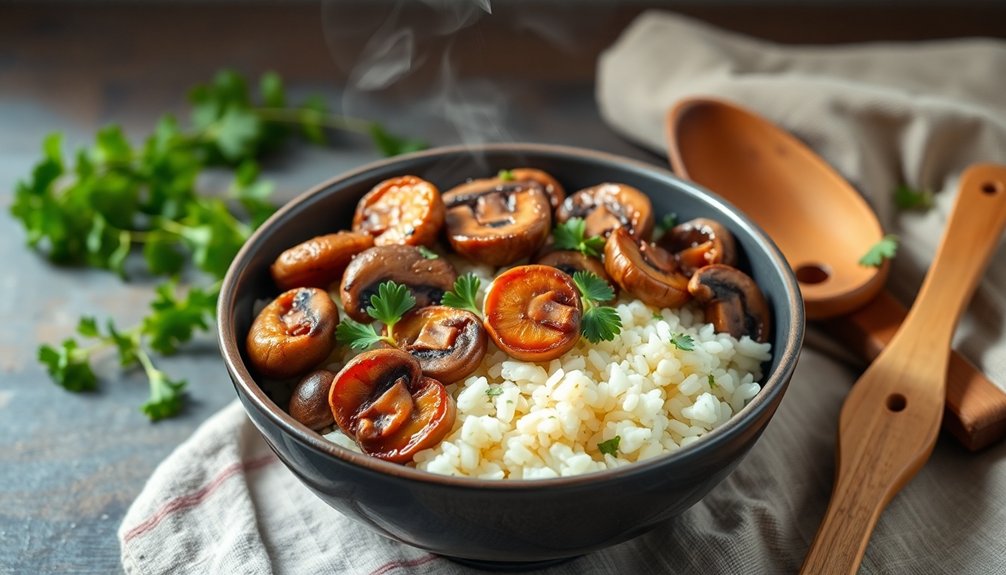
Mushroom rice isn’t just a low-carb option; it packs nutritional benefits that can enhance your meals. You can easily prepare it in various ways, from sautéing to baking, and it pairs wonderfully with other keto-friendly ingredients. Additionally, mushrooms are known for their immune-boosting properties, making this dish not only delicious but also beneficial for your health. Let’s explore some quick recipes and cooking methods to make the most of this tasty substitute!
Nutritional Benefits Overview
When you’re looking for a nutritious and low-carb alternative to traditional rice, mushroom rice stands out as a fantastic option. With only 1.5 grams of net carbs and 1.1 grams of protein per 50-gram cooked serving, it’s perfect for your keto diet.
Sliced white mushrooms, a key ingredient, contain just 2 grams of carbs per cup, making it a great choice for low-carb meals. The earthy flavor enhances your dishes, and sautéing it in butter adds richness.
Plus, combining mushroom rice with other rice alternatives can provide variety and texture while keeping your carbohydrate intake low. Not only is mushroom rice delicious, but it’s also packed with essential vitamins and minerals that support your overall health and well-being.
Cooking Methods Explained
Exploring cooking methods can elevate your mushroom rice experience, making it even more satisfying as a keto-friendly alternative.
Here are some tips to get the most out of your low-carb dish:
- Sauté mushrooms in butter to enhance their earthy flavor.
- Wash and dice mushrooms without soaking to keep their texture intact.
- Cook on low heat to reduce moisture, achieving a pilaf-like consistency.
- Combine with other low-carb ingredients for diverse textures and flavors.
- Serve immediately for the best taste and texture.
Recipe Ideas and Pairings
Transform your meals with delicious recipe ideas that incorporate mushroom rice as a versatile base. This low-carb alternative boasts only 1.5 grams of net carbs per serving, making it perfect for your keto lifestyle.
Start by sautéing sliced white mushrooms in butter to enhance their earthy flavor, then mix in mushroom rice for a savory side dish. Pair it with grilled chicken or beef for a hearty meal, or use it as a base in casseroles and soups to elevate their taste and nutritional value.
You’ll love how mushroom rice not only keeps your carb intake low but also adds vitamins and minerals, ensuring every dish is both satisfying and healthy. Enjoy experimenting with this nutritious option!
Lentils
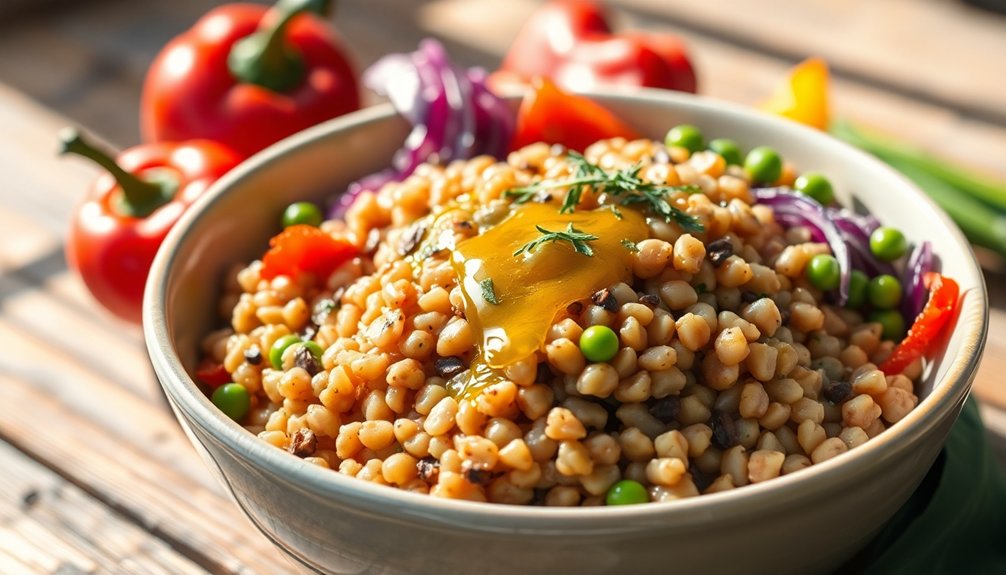
Lentils are a fantastic keto rice substitute, offering a nutrient-dense option for those looking to reduce their carb intake. With only 6.1 grams of net carbs and 4.5 grams of protein per 50 grams cooked serving, they fit perfectly into your low-carb lifestyle.
Plus, they’re packed with essential nutrients that boost your health.
Consider these benefits of lentils:
- High in fiber, aiding digestion
- Rich in iron and B vitamins
- Versatile for soups, salads, and stews
- A great source of plant-based protein
- Helps regulate blood sugar levels
Incorporating lentils into your meals not only enhances their nutritional value but also keeps your diet both satisfying and healthy. Additionally, they are a great source of plant-based protein, which is crucial for maintaining muscle mass during weight loss.
Enjoy experimenting with this delicious legume!
Wild Rice
While many people think of rice as a staple grain, wild rice offers a unique alternative that’s both nutritious and satisfying.
Technically an aquatic grass, wild rice boasts a nutty, earthy flavor that enhances casseroles, soups, and salads. With just 9.8 grams of carbohydrates per 50 grams serving, it’s a low-carb option that won’t weigh you down.
Plus, it provides 4.5 grams of protein and is considered a complete protein, delivering all nine essential amino acids to support muscle health.
Wild rice is high in fiber and antioxidants, which contribute to heart health and help regulate blood sugar levels. Its chewy texture adds variety, making it a perfect pairing with vegetables and proteins in your favorite dishes. Incorporating high-fiber low-carb vegetables into your meals can further enhance their nutritional value and support overall wellness.
Quinoa
Quinoa is a fantastic alternative to rice, packed with protein and fiber while being gluten-free. You’ll love its nutty flavor and chewy texture in salads or grain bowls, making it a versatile addition to your meals. Plus, its low glycemic index and rich nutrient profile can support your overall health. Additionally, incorporating plant-based foods can enhance nutrient density without extra carbs.
Nutritional Profile Highlights
A powerhouse of nutrition, quinoa stands out as an excellent rice substitute for those following a keto diet. With its impressive nutritional profile, it’s a fantastic choice for anyone looking to reduce carbs while boosting protein intake.
Here’s what makes quinoa a standout:
- Only 9.3 grams of carbs per 50-gram cooked serving
- 2.2 grams of protein, making it a high-protein option
- Gluten-free and a complete protein, containing all essential amino acids
- Low glycemic index, helping maintain stable blood sugar levels
- Rich in magnesium, supporting heart health and blood sugar regulation
Incorporating quinoa into your meals not only enhances nutrition but also makes for a satisfying alternative among rice substitutes.
Culinary Versatility Options
If you’re looking for a versatile ingredient that can elevate your meals, quinoa fits the bill perfectly. This gluten-free seed makes an excellent rice substitute, especially for those on low-carb diets.
You can easily incorporate quinoa into salads, grain bowls, or serve it as a side dish, thanks to its fluffy texture and nutty flavor. Plus, it’s a complete protein source, containing all nine essential amino acids, which is fantastic for vegans and vegetarians.
You might even blend quinoa with broccoli rice for a nutrient-packed dish that’s both satisfying and healthy. With about 9.3 grams of carbs in a 50-gram serving, quinoa helps you manage your carbohydrate intake while enjoying delicious meals.
Health Benefits Overview
When exploring healthy alternatives to traditional rice, quinoa stands out not just for its culinary versatility but also for its impressive health benefits. This superfood is low in carbs and contains all nine essential amino acids, making it a complete protein source.
Here are some key benefits you’ll enjoy:
- Regulates blood sugar levels due to its low glycemic index, benefiting those managing diabetes.
- Gluten-free, making it suitable for individuals with gluten sensitivities.
- High in fiber, promoting digestive health and aiding in weight management.
- Packed with essential nutrients like magnesium, iron, and B vitamins for overall health.
- Versatile and easy to incorporate into various dishes, from salads to grain bowls.
Quinoa is truly a powerhouse for your healthy eating plan!
Riced Broccoli
Riced broccoli offers a nutritious, low-calorie alternative to traditional rice, packing only 29 calories and 5 grams of carbs per 100 grams.
Riced broccoli is a healthy, low-calorie substitute for rice, with just 29 calories and 5 grams of carbs per 100 grams.
This versatile vegetable isn’t just low in calories; it’s also high in vitamins K and C, providing antioxidant and anti-inflammatory benefits that support your overall health.
You can easily prepare riced broccoli using a food processor or blender to achieve that perfect rice-like texture. It absorbs flavors well, making it a great addition to stir-fries, casseroles, and more.
By incorporating riced broccoli into your meals, you’ll add extra servings of vegetables, enhancing your diet’s nutritional profile and fiber content. Additionally, riced broccoli is rich in vitamins C and K, which are essential for maintaining overall health.
It’s a delicious way to boost your meals while staying low-calorie!
Zucchini Rice
Zucchini rice isn’t just a low-carb alternative; it also packs a punch with essential nutrients. You can easily prepare it by chopping or grating zucchini and cooking it lightly to keep its texture. Incorporating low-carb vegetables into your diet not only enhances flavor but also supports overall health. Let’s explore its health benefits, preparation methods, and some delicious recipe ideas to inspire your meals!
Nutritional Benefits Overview
Although you might be looking for a low-carb rice alternative, zucchini rice offers a nutritious and flavorful option that fits your dietary needs.
Here are some nutritional benefits of zucchini rice:
- Low in calories: Only about 17 calories per 100 grams.
- Low carbs: Contains just 3.4 grams of carbohydrates, perfect for keto diets.
- Rich in vitamins: Packed with vitamins A, B6, and C, supporting immune function.
- Source of manganese: Essential for bone health and metabolism.
- Flavor absorber: Versatile in dishes, pairing well with broccoli florets and other ingredients.
Preparation Methods Explained
When you’re ready to whip up zucchini rice, the process is simple and quick. Start by grating or chopping fresh zucchini into rice-like pieces. This low-carb alternative isn’t only low-calorie but also packed with vitamins A, B6, and C, plus manganese.
To guarantee your zucchini rice isn’t watery, drain any excess liquid after processing. It’s essential to cook it quickly; overcooking can lead to a soggy texture.
Use zucchini rice in various dishes like stir-fries or casseroles, and enjoy how it enhances your meals while keeping them nutritious. With just a few easy steps, you’ll have a delicious, healthy substitute that fits perfectly into your low-carb lifestyle.
Recipe Ideas and Inspiration
If you’re looking to jazz up your meals with zucchini rice, there are plenty of delicious recipes to explore. This low-carb alternative can enhance your favorite dishes while keeping them nutritious.
Here are some tasty ideas to get you started:
- Zucchini Rice Casserole: Combine zucchini rice with chicken, mushrooms, and artichokes for a fulfilling meal.
- Stir-Fry Delight: Toss zucchini rice with your choice of protein and vibrant veggies for a quick stir-fry.
- Zucchini Fried Rice: Sauté it with eggs, soy sauce, and your favorite spices for a satisfying dish.
- Stuffed Peppers: Use zucchini rice as a filling for bell peppers, along with ground meat and cheese.
- Zucchini Rice Salad: Mix with herbs, tomatoes, and a lemon vinaigrette for a rejuvenating side.
Enjoy the versatility of zucchini rice!
Riced Cabbage
Riced cabbage is a fantastic low-calorie alternative to traditional rice, packing just 25 calories and 5.8 grams of carbohydrates per 100 grams.
Riced cabbage offers a low-calorie, low-carb alternative to rice, with just 25 calories and 5.8 grams of carbs per 100 grams.
It’s rich in essential nutrients like calcium and vitamins C and E, which may help protect against heart disease and high cholesterol.
You can easily prepare riced cabbage using a food processor or cheese grater to achieve that perfect rice-like texture.
This low-carb substitute can be cooked just like regular cabbage, often stir-fried with oil and seasonings to enhance its flavor.
Riced cabbage works beautifully in hearty recipes such as beef stroganoff and savory mushroom stew, offering a satisfying and nutritious alternative to traditional rice that fits perfectly into your keto lifestyle. Additionally, incorporating nutrient-dense ingredients like riced cabbage into your meals can enhance overall health and support weight management.
Sweet Potato Rice
While riced cabbage offers a low-calorie alternative to traditional rice, sweet potato rice brings its own unique benefits and vibrant flavor to the table.
This nutritious option is made by grating or processing sweet potatoes into rice-like pieces, making it a colorful addition to your meals.
Here are some reasons to try sweet potato rice:
- Rich in vitamins A and C for immune support
- Low in fat and low carbs
- Contains 86 calories and 3 grams of fiber per 100 grams
- Naturally sweet, enhancing both savory and sweet dishes
- Versatile for stir-fries, casseroles, and grain bowls
- Nutritious low-carb options like sweet potato rice can complement other healthy substitutes in your diet.
Switching to sweet potato rice can add variety and nutrition to your favorite dishes!
Conclusion
You might think that giving up traditional rice means sacrificing flavor, but that’s far from the truth! These keto-friendly substitutes not only keep your meals healthy but also add unique tastes and textures to your favorite dishes. Whether you choose cauliflower rice or zucchini rice, you’ll discover delicious ways to enjoy your meals without compromising on satisfaction. Embrace these alternatives, and you’ll find that healthy eating can be both enjoyable and fulfilling!