
To measure ketosis effectively, use ketone testing strips that detect acetoacetate in urine. After a clean sample, submerge the strip and wait for color changes to interpret your levels. Aim for a result between 0.5 and 2 mmol/L for maximum health benefits. Remember, hydration and consistent testing times can impact accuracy. For more reliable results, consider blood or breath ketone meters. There’s much more to learn about maintaining those ideal ketone levels efficiently.
Understanding Ketone Testing Strips
Ketone testing strips are essential tools for anyone on a ketogenic diet, allowing you to easily monitor your body’s state of ketosis.
These urine test strips react with acetoacetate, providing a quick, color-coded indication of your ketone levels. You can measure ketosis and get results in seconds, with colors ranging from light pink for low ketones to dark purple for high levels.
This non-invasive method is especially useful when starting a ketogenic diet, helping you track your progress. Regular testing, ideally daily at the same time, helps you correlate your food intake with your ketone levels. Additionally, maintaining insulin sensitivity can enhance your overall metabolic health and support successful weight loss on a ketogenic diet.
However, keep in mind that urine test strips may be less accurate for long-term dieters, as ketone levels can decrease with adaptation.
How to Use Ketone Strips for Accurate Measurement
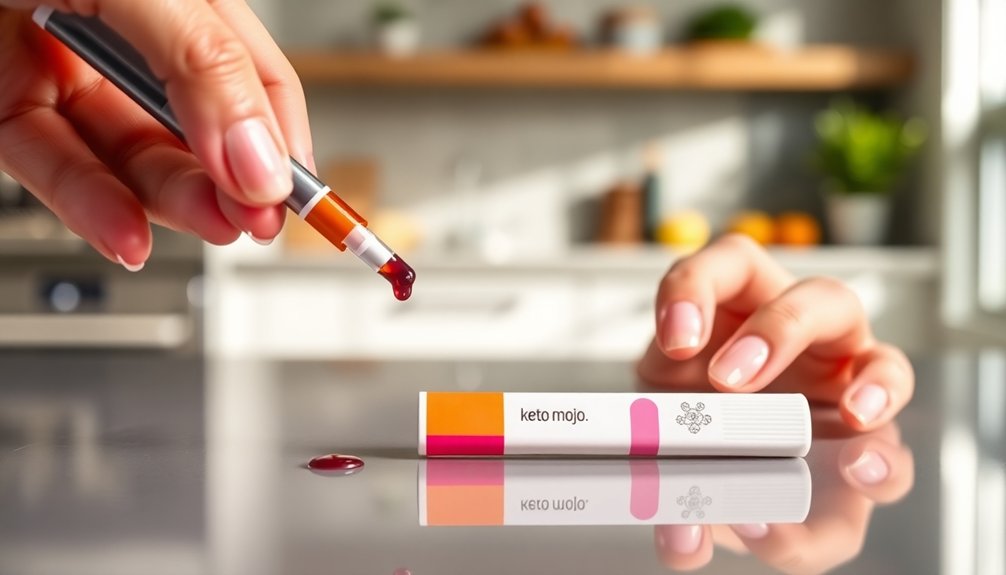
To accurately measure your ketone levels using strips, start by ensuring you have clean hands and a suitable urine sample. You can either collect urine in a clean container or urinate directly on the strip for accurate results.
Submerge the ketone strip in the urine for a few seconds, then wait 15 to 45 seconds for a color change that indicates ketone concentration. Afterward, compare the color change on the strip to the provided color chart to determine your ketone levels, ranging from negative to large.
For the most accurate results, test your urine in the morning or at least 3-4 hours after eating. Additionally, monitoring your ketone levels can help ensure that you are maintaining improved insulin sensitivity and effectively managing your blood sugar. Finally, dispose of the used strip properly and wash your hands to maintain hygiene.
Interpreting Your Ketone Strip Results

Once you’ve measured your ketone levels with the strips, interpreting the results accurately is key to understanding your metabolic state.
Here’s how to interpret your ketone strip results effectively:
- No Ketones: Light beige indicates no ketones detected.
- Trace Level (0.5 mmol/L): Suggests light nutritional ketosis, a good starting point.
- Moderate Level (4.0 mmol/L): Indicates effective ketone production, often linked to exercise or fasting.
- High Ketone Levels (8.0-16 mmol/L): These levels are typically unsustainable long-term and may lead to nutrient deprivation.
For an accurate reading, maintain consistent testing practices, as hydration and dietary adherence can affect your results. Achieving improved insulin sensitivity can enhance the benefits of being in ketosis, supporting better overall metabolic health.
Aim for a level of ketosis between 0.5 and 2 mmol/L for ideal health benefits.
Factors Affecting Ketone Readings
Understanding the factors that influence your ketone readings is essential for accurate monitoring of your ketogenic progress. Hydration levels greatly affect your results; overhydration can yield lower readings, while dehydration may cause higher ones.
To guarantee accurate readings, test at consistent times, preferably after fasting or in the morning, as food intake alters ketone levels temporarily. Long-term adaptation to a ketogenic diet might result in lower urine ketone levels since your body becomes more efficient at using ketones for energy.
Additionally, expired ketone test strips can produce inaccurate results, so always check expiration dates. Finally, consistent dietary habits, particularly carbohydrate intake, can impact your readings, with high-carb snacks potentially leading to falsely low levels. Improving insulin sensitivity through a well-structured ketogenic diet can further enhance your ketone utilization and overall metabolic health.
Alternative Methods for Measuring Ketosis
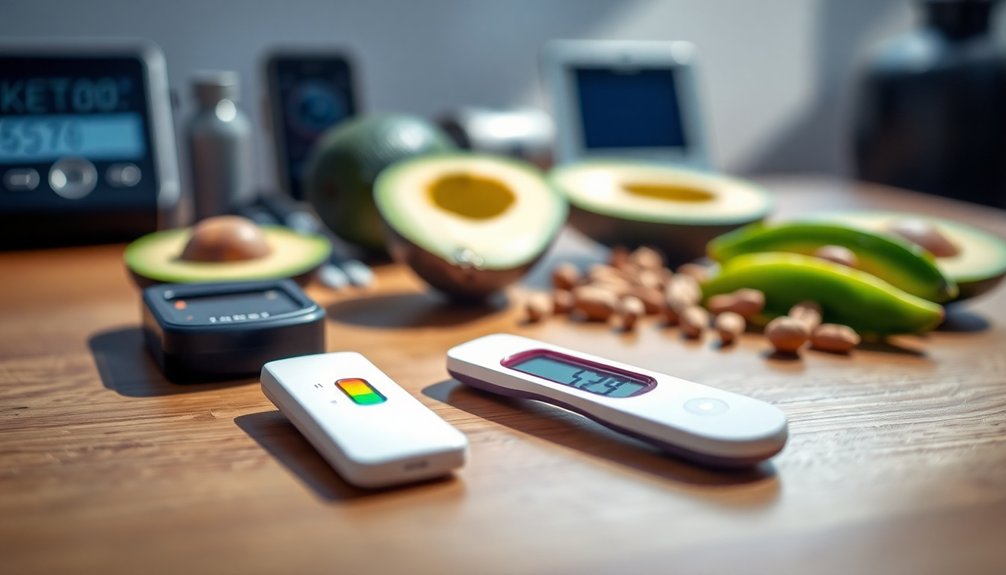
Monitoring your ketosis can go beyond just using urine strips. You have several alternative methods to take into account for accurate measurements:
- Blood ketone meters: These provide real-time readings of ketone levels, with ideal ranges between 0.5 and 3 mmol/L for health benefits.
- Breath ketone meters: A non-invasive option that measures acetone in your breath, though accuracy may vary, especially in early ketosis stages.
- Blood ketone testing: Involves a meter and strips, offering reliability for seasoned keto dieters compared to urine strips.
- Regular testing: No matter which ketosis testing method you choose, consistent monitoring helps you adjust your diet and manage your metabolic state effectively. Additionally, understanding the macronutrient ratios is crucial for optimizing your ketogenic diet and ensuring you stay in a state of ketosis.
Explore these options to find what works best for your ketogenic journey!
Tips for Achieving and Maintaining Optimal Ketone Levels
To achieve and maintain ideal ketone levels, it’s crucial to focus on your macronutrient ratios and overall dietary habits. Limit your carbohydrate intake to 30-50 grams per day to encourage ketosis, allowing your body to burn fat for energy.
Increase your healthy fat intake to 65-90% of your total daily calories to curb hunger and support hormonal balance on the keto diet. Moderate protein consumption, around 10-30%, aids in cell repair without hindering ketosis.
Engage in intermittent fasting and regular exercise to boost ketone production. Consistently measure ketones using strips or meters to monitor your progress, ensuring you’re maintaining nutritional ketosis and achieving ideal ketone levels for your health goals. Additionally, incorporating regular physical activity can enhance insulin sensitivity, further supporting your ketogenic efforts.
Conclusion
In conclusion, using keto strips is an effective way to track your ketosis journey. Did you know that about 80% of people on a ketogenic diet experience an increase in energy levels within the first week? By measuring your ketone levels accurately, you can optimize your diet and stay motivated. Remember, consistency is key, and understanding your results helps you make informed adjustments. Keep testing, stay committed, and enjoy the benefits of a well-managed ketogenic lifestyle!