
To use allulose in your keto recipes for sweet success, substitute it for sugar with a 1 to 1.5 ratio, as it’s about 70% as sweet. It browns faster, so lower the baking temperature by 25°F and keep an eye on it. Allulose retains moisture, making baked goods tender and creamy, perfect for cheesecakes and frostings. For ice cream, use about 30% more to prevent crystallization. Keep exploring to reveal all its delicious potential!
Allulose in Baking
When you bake with allulose, you’ll notice it behaves differently than traditional sugar, which can enhance your keto recipes.
Allulose browns faster than sugar, so it’s wise to lower your baking temperature by 25°F to prevent over-browning. When substituting allulose for sugar, use a 1 to 1.5 ratio, as it’s about 70% as sweet.
One of the best features of allulose is its ability to retain moisture, resulting in softer, more tender baked goods like cakes and muffins. It can also enhance the fluffiness and lightness of your creations. Additionally, incorporating allulose into your recipes can help you create sugar-free desserts that align with your keto dietary goals.
Keep in mind that individual oven characteristics may influence your results, so monitor your baking time closely for the best outcome when using this unique sweetener.
Allulose in Cheesecake Making
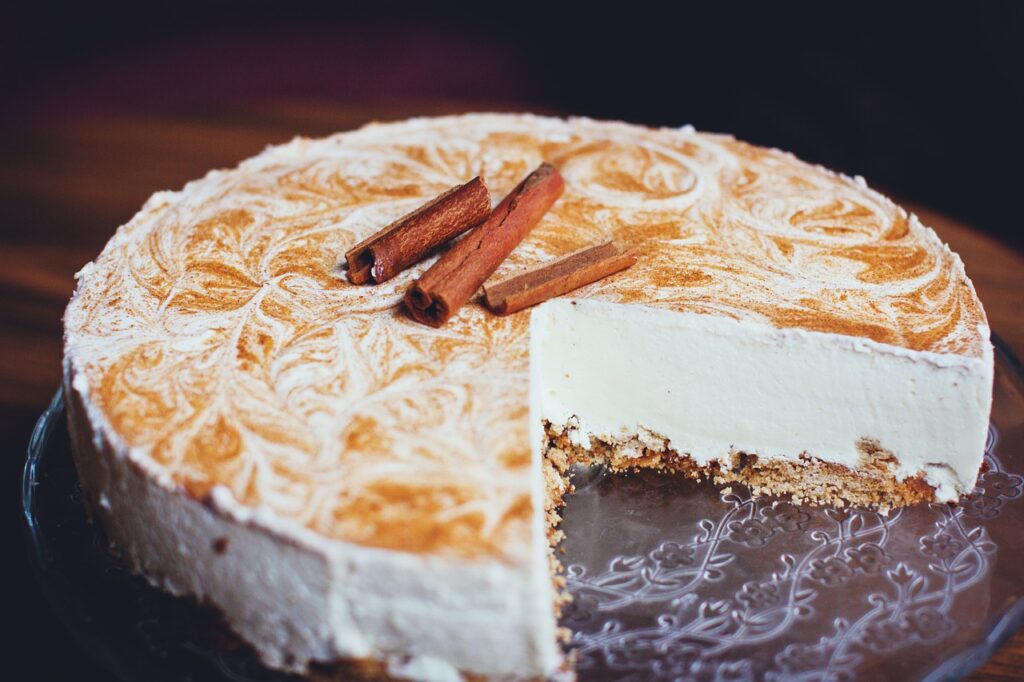
When you use allulose in cheesecake making, you’ll appreciate its unique ability to retain moisture, resulting in a creamy texture. However, keep in mind that allulose browns more quickly than sugar, so covering the top during baking is essential to prevent burning. Additionally, incorporating allulose allows for the creation of guilt-free cheesecake options that align with a keto lifestyle, ensuring you can indulge without compromising your dietary goals.
Browning Properties of Allulose
While you might expect allulose to behave like traditional sugar in cheesecake making, its enhanced browning properties can surprise you. This sweetener can give your cheesecake a rich golden color, especially when baked uncovered at high heat.
However, to achieve ideal results, consider lowering the baking temperature by about 25°F to prevent excessive browning. Allulose caramelizes more quickly, so close monitoring is essential to avoid a burnt crust.
Additionally, its ability to caramelize enhances the flavor profile, lending a sweet and slightly nutty taste that complements the creamy texture. By keeping an eye on your cheesecake as it bakes, you can enjoy a beautifully browned dessert without sacrificing quality.
Moisture Retention for Creaminess
Because allulose retains moisture exceptionally well, it plays an essential role in achieving the creamy texture that makes cheesecakes so delightful.
This low-calorie sweetener can be substituted for sugar in a 1:1 to 1.5 ratio, allowing you to enjoy a sweet treat without the guilt.
When making a Burnt Basque cheesecake, allulose not only enhances the creamy consistency but also utilizes its caramelization properties to prevent excessive browning.
The unique molecular structure of allulose helps maintain moisture content, ensuring your cheesecake stays fresh and doesn’t dry out.
Experiments have shown that using allulose results in a rich, smooth filling, free from the graininess often found with other sweeteners.
Embrace allulose for your next cheesecake adventure!
Caramelizing Allulose
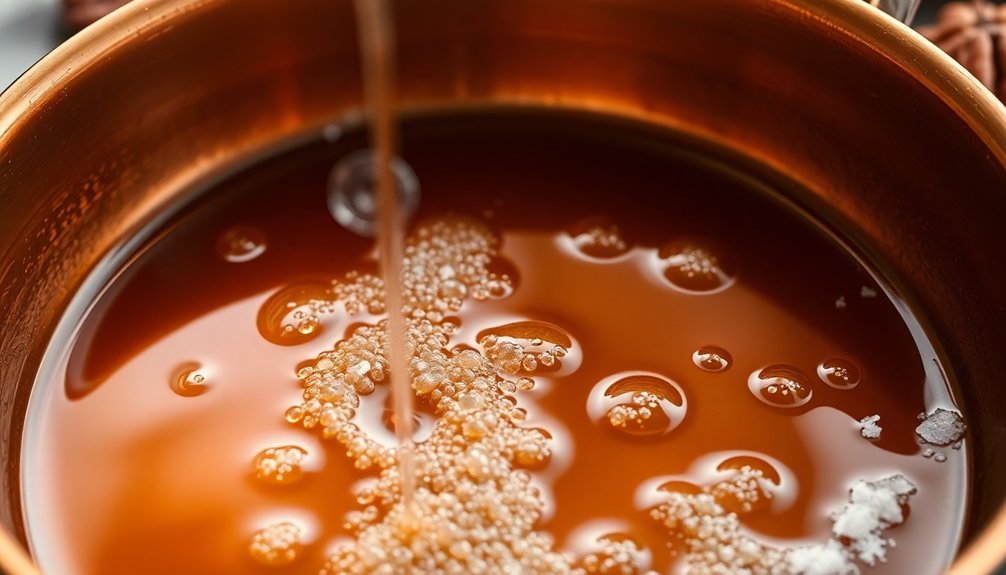
Caramelizing allulose offers a unique opportunity to create delicious, low-calorie treats without sacrificing flavor. Allulose caramelizes at a lower cooking temperature of about 110 °C (230 °F), allowing it to brown beautifully compared to sucrose. However, you must monitor the cooking temperature closely, as it can quickly shift from golden to burnt. The beauty of allulose is that it doesn’t crystallize, resulting in smooth and creamy textures in your caramel sauces and candies. For best flavor, melt allulose with butter and cream to create a rich caramel sauce that mimics traditional recipes. Just remember, adjustments in cooking time and temperature are necessary since allulose browns faster than regular sugar, so stay vigilant to avoid over-browning. Additionally, using allulose as a sweetener can provide health benefits that contribute to maintaining ketosis without impacting blood sugar levels.
Allulose in Frostings and Puddings
When you use allulose in frostings and puddings, you’ll appreciate its ability to create a smooth, non-grainy texture that closely resembles traditional sugar. Since allulose is less sweet than sugar, you might need to adjust the quantity to achieve your desired flavor. This adjustment guarantees that you enjoy the creamy consistency and rich mouthfeel that allulose brings to your desserts. Additionally, allulose is a low-calorie sweetener that does not raise blood sugar levels, making it an excellent choice for those following a keto diet.
Smooth Texture Achieved
Allulose is a game changer for achieving a smooth texture in frostings and puddings. As a sugar substitute, it creates a creamy, non-grainy consistency that enhances your keto recipes.
Its unique non-crystallizing properties guarantee that you won’t encounter unwanted graininess in your desserts. Plus, allulose boasts excellent moisture retention, contributing to a rich mouthfeel that’s perfect for those indulgent treats.
To get the best results, make certain allulose is fully dissolved before mixing it into your frostings or puddings. This step is essential for maintaining that desired smooth texture.
Its stability under varying temperatures also makes allulose versatile for both baking and chilled applications, allowing you to create delightful keto desserts without compromise.
Adjusting Sweetness Levels
To achieve the perfect sweetness balance in your frostings and puddings, you might need to adjust the amount of allulose used since it’s only about 70% as sweet as regular sugar.
Typically, you’ll want to use about 1.3 to 1.5 times more allulose to hit that desired sweetness level. This adjustment is essential for maintaining flavor in your desserts.
For puddings, allulose not only enhances sweetness but also retains moisture, delivering a rich mouthfeel.
If you want to avoid any aftertaste, consider combining allulose with other sweeteners like erythritol or stevia, but be cautious with proportions.
Balancing these sweeteners can provide additional health benefits while ensuring your frosting or pudding tastes just right.
Non-Grainy Consistency Benefits
While many sweeteners can leave a gritty texture in frostings and puddings, allulose stands out for its ability to create a smooth, non-grainy consistency.
Its unique properties prevent crystallization, resulting in a silky mouthfeel that enhances your desserts. When using allulose, you might want to increase the amount slightly compared to sugar to achieve the desired sweetness and consistency.
One of the key benefits is allulose’s ability to retain moisture, ensuring your frostings and puddings stay creamy and moist rather than dry or gritty.
Additionally, its quick dissolution allows for a uniform blend in your recipes, eliminating any graininess that other sweeteners might introduce.
Enjoy the velvety texture allulose brings to your favorite treats!
Allulose in Ice Cream and Sorbet Making
When making keto ice creams and sorbets, using allulose can greatly enhance texture and sweetness. This unique sweetener lowers the freeze point, preventing crystallization and guaranteeing a scoopably soft texture.
Here are some tips for incorporating allulose:
- Substitute about 30% more allulose than sugar for desired sweetness.
- Combine with other sweeteners like erythritol for enhanced flavor.
- Confirm allulose fully dissolves in your base to avoid graininess.
- Monitor freezing times, as allulose caramelizes and browns faster than sugar.
Additionally, using allulose in your recipes can help maintain the nutrient-rich profile of your keto desserts.
Where to Buy Allulose
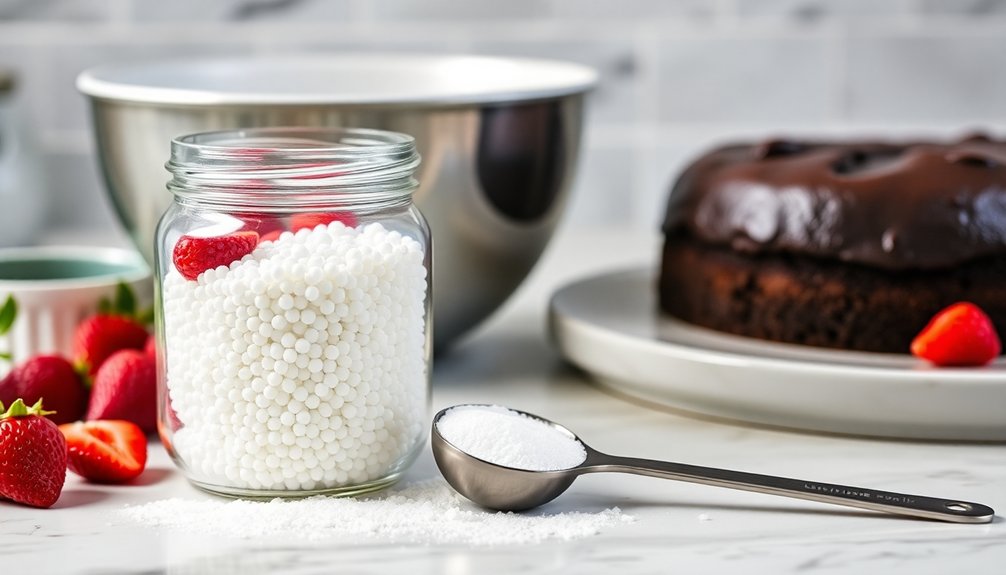
Wondering where to find allulose for your keto baking? Your best bet is online retailers like Amazon and the Goalz Allulose Shop, especially since allulose isn’t widely available in Europe or many U.S. stores.
When you buy allulose, make certain to look for pure allulose to avoid fillers that can affect your baking applications. Goalz Powdered Allulose is a popular choice, thanks to its fine granule size that guarantees a smooth texture in your keto recipes. Additionally, remember that tracking daily nutrition is essential to maintain keto goals while using allulose in your baking.
Since allulose can be pricier than regular sugar, consider buying in bulk if you use it frequently. Availability may vary, so explore different brands to find the best quality allulose for your needs and enjoy sweet success in your baking!
Conclusion
By incorporating allulose into your keto recipes, you’re not just sweetening your dishes; you’re revolutionizing your approach to low-carb living. Whether you’re baking a decadent cheesecake or crafting creamy ice cream, allulose provides that delightful sweetness without the carbs. Coincidentally, you might find that your friends and family can’t tell the difference between your keto treats and traditional desserts. So, grab some allulose and start experimenting—you’ll be amazed at the sweet success you can achieve!