

Black beans aren’t a good fit for a ketogenic diet due to their high carb content. With around 41 grams of total carbohydrates per cup, they can easily exceed your daily carb limit. While they offer great fiber and protein benefits, their net carbs can hinder ketosis. If you’re looking for low-carb alternatives, there are plenty of options available. Stick around to discover the best choices for your keto meals!
Understanding Black Beans and Their Nutritional Profile
When you look at black beans, you might be surprised by their nutritional profile. These legumes pack approximately 41 grams of total carbohydrates per 100-gram serving, which translates to about 25.5 grams of net carbs after considering their high fiber content.
With around 15.5 grams of fiber per 100 grams, black beans can aid digestion and help you feel full longer. However, if you’re on a strict keto diet, be cautious; a half-cup serving contains around 20 grams of carbs, which can greatly impact your daily carb limit.
Despite their rich nutrient profile, including folate, manganese, and iron, the high net carbs in black beans make them generally unsuitable for a ketogenic lifestyle. Additionally, reduced hunger and cravings are key benefits of a ketogenic diet that black beans may not support due to their carbohydrate content.
The Keto Diet Explained
The ketogenic diet, often referred to as keto, greatly alters your approach to eating by emphasizing high-fat and low-carbohydrate foods.
The keto diet aims to reduce your carbohydrate intake to about 5-10% of total daily calories, typically allowing for just 20-50 grams of carbs per day. This drastic reduction pushes your body into ketosis, where it burns fat instead of carbs for energy.
Foods high in carbs, like starchy vegetables, grains, and most fruits, are restricted to maintain this state. You’ll need to carefully plan your meals, focusing on foods that are high in fats and moderate in protein, ensuring you meet your nutritional needs while keeping total carbs minus fiber low enough to stay in ketosis. High HDL levels from the keto diet contribute to better overall lipid profiles and cardiovascular health.
Carbohydrate Content in Black Beans
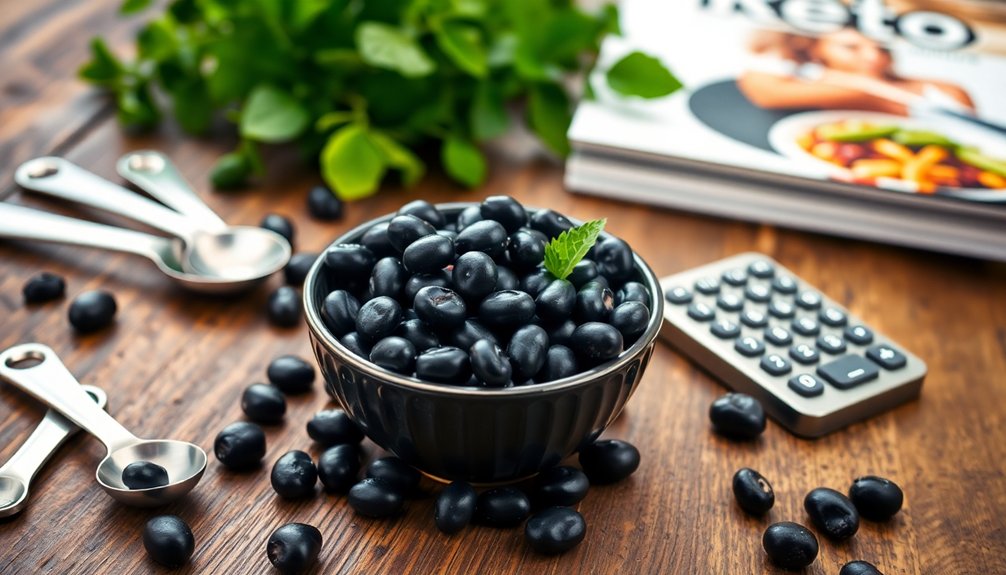
Black beans pack approximately 41 grams of total carbohydrates in a one-cup serving, which can pose a challenge for those on a ketogenic diet.
After considering their fiber content, you’re left with about 25.5 grams of net carbs per cup. This net carb content considerably exceeds the daily carb limit for strict keto dieters, typically set at 20 to 50 grams.
Black beans contain about 25.5 grams of net carbs per cup, exceeding the daily limit for strict keto dieters.
Here are some points to visualize their carbohydrate content:
- One cup of black beans equals a hefty carb load.
- They contain more net carbs than black soybeans.
- This high carb count makes them a poor choice for keeping ketosis.
- You might find better alternatives to stay within your carb limit.
In essence, black beans aren’t ideal for keto. Additionally, their high carbohydrate content can hinder improved insulin sensitivity, which is essential for effective blood sugar regulation on a ketogenic diet.
Benefits of Including Black Beans in Your Diet
Including black beans in your diet offers numerous health benefits, especially due to their rich fiber content, which aids digestion and keeps you feeling full longer.
With about 15.5 grams of fiber per 100-gram serving, these beans promote satiety and support a healthy gut. They’re also a great source of high protein, providing around 8.9 grams per serving, which is essential for muscle growth and repair.
Additionally, black beans are packed with essential nutrients like folate, manganese, and magnesium, enhancing your overall well-being. Regularly including them can help manage blood sugar levels, making them a smart choice for those concerned about diabetes. Furthermore, incorporating beans on keto can also diversify your meals, making healthy eating more enjoyable and sustainable, as they support metabolic processes essential for enhancing insulin sensitivity.
Cautions for Consuming Black Beans on Keto
When considering black beans on a keto diet, you need to be cautious about their high carb content, which could push you over your daily limit.
While some people might manage small portions, it’s essential to monitor your intake closely.
Exploring alternatives can help you stay within your carb goals while still enjoying a variety of flavors. Additionally, maintaining stable blood sugar levels is crucial for optimizing insulin sensitivity while on a ketogenic diet.
High Carb Content
With around 41 grams of total carbohydrates per 100-gram serving, black beans can pose a significant challenge for anyone on a ketogenic diet. The high carb content means you need to be wary of how they fit into your daily limits.
Here are some key points to take into account:
- A half-cup serving delivers about 20 grams of carbs.
- This can quickly eat up your daily allowance of 20 to 50 grams of net carbs per day.
- Consuming even small amounts may hinder ketone production.
- Individuals on a therapeutic ketogenic diet should avoid them entirely.
While black beans offer nutritional benefits, their high carb content requires careful portion control for those committed to maintaining ketosis.
Alternatives for Keto
Given the high carb content of black beans, it’s important to explore alternatives that align better with a ketogenic diet. One of the best low-carb options is black soybeans, which contain only about 1g of net carbs per 100g serving. This makes them a fantastic bean alternative for those wanting to maintain ketosis without sacrificing flavor.
Additionally, consider incorporating non-bean substitutes such as mushrooms or avocado in your meals. These ingredients provide similar textures and can enhance your dishes while keeping your carb intake in check.
Alternative Low-Carb Bean Options
If you’re looking for low-carb bean substitutes, there are plenty of options to explore. Green beans and black soybeans are excellent choices that fit well within your keto diet. Remember to contemplate portion control to maximize the nutritional benefits of these alternatives while keeping your carb intake in check. Additionally, incorporating high-fiber low-carb vegetables like broccoli and spinach can further enhance your meal’s nutritional profile.
Low-Carb Bean Substitutes
When you’re following a keto diet, finding suitable substitutes for high-carb beans can be a game-changer.
Here are some fantastic low-carb bean options you can try:
- Green Beans: With only 0.3g net carbs per cup, they’re perfect for stir-fries or salads.
- Black Soybeans: Offering about 2g net carbs per half-cup, these are ideal for soups and dips.
- Enoki Mushrooms: At just 3g net carbs per cup, they mimic bean texture and add flavor to your dishes.
- Diced Eggplant: A versatile substitute, especially in dips like baba ganoush, keeping your carb counts low.
Incorporating these low-carb beans into your meals can help you stay on track while enjoying delicious, keto-friendly dishes!
Nutritional Benefits of Alternatives
While exploring low-carb alternatives to traditional beans, you’ll discover a variety of options that not only help you maintain your keto lifestyle but also offer impressive nutritional benefits.
Green beans stand out as a fantastic low-carb option, containing just 0.3 grams of net carbs per cup. Black soybeans are another great choice, with only 2 grams of net carbs per ½ cup, perfect for various recipes.
If you’re looking for something different, enoki mushrooms provide a unique addition with 3 grams of net carbs per cup. Zucchini can be creatively transformed into beanless refried beans, boasting only 8 grams of carbs per serving.
Finally, while not a traditional bean, avocado is low in carbs and high in healthy fats, making it a nutritious alternative.
Portion Control Strategies
To successfully enjoy black beans on a keto diet, it’s crucial to practice portion control due to their higher carb content. A half-cup serving can hit your daily carb limit hard, so consider these alternative low-carb options:
- Black Soybeans: About 2 grams of net carbs per half-cup.
- Green Beans: Only 0.3 grams of net carbs per cup.
- Mushrooms: Provide a meaty texture with just 2 grams of net carbs per cup.
- Diced Eggplant: Offers a similar texture with around 3 grams of net carbs per cup.
Conclusion
In the end, deciding whether black beans fit into your keto lifestyle hinges on your unique dietary goals. They offer nutrients and fiber, but their carbohydrate content can be a stumbling block for strict adherence. So, are they a keto no-go? It’s a balancing act—like walking a tightrope between health and carbs. If you’re craving beans, consider low-carb alternatives that can still satisfy your palate without derailing your progress. Choose wisely, and enjoy your culinary journey!