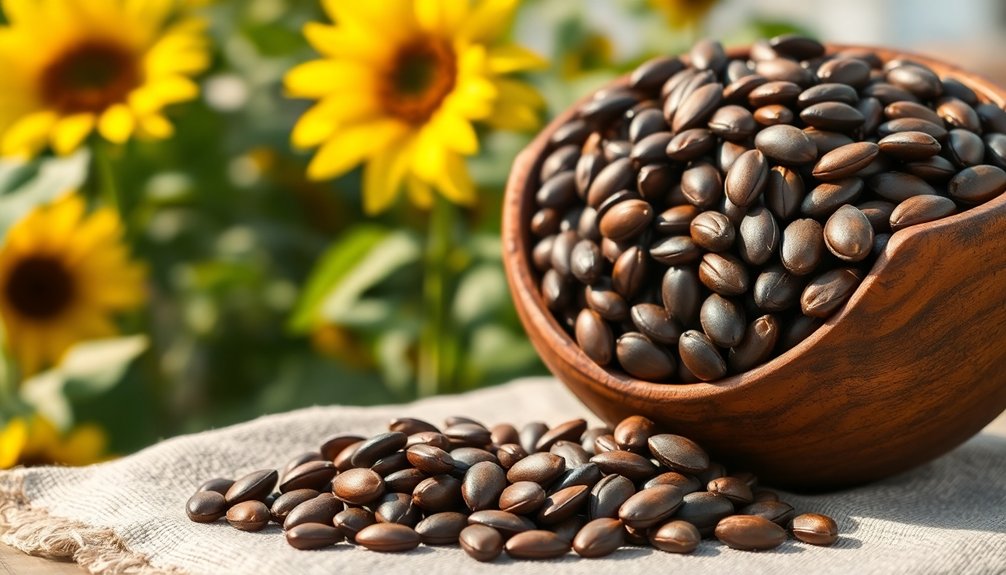
Yes, sunflower seeds are definitely keto-friendly! With just 3.9 grams of net carbs per 30-gram serving, they’re a great low-carb snack option. They’re packed with healthy fats and essential nutrients like vitamin E and magnesium, making them a smart choice for your ketogenic diet. Enjoy them raw, roasted, or sprinkled on salads for a delicious crunch. Keep going to discover more ways to incorporate these nutritious seeds into your meals!
Sunflower Seeds and the Keto Diet
If you’re looking for a tasty and nutritious snack on the keto diet, sunflower seeds are an excellent choice. With less than 4 grams of net carbs per serving, they’re low in carbs and fit perfectly into your ketogenic diet.
A 30-gram serving packs 175 calories, 15 grams of healthy fats, and 5.8 grams of protein, making them a great high-fat snack. Plus, sunflower seeds can help maintain stable blood sugar levels due to their low impact on glucose and insulin.
They’re rich in essential nutrients like vitamin E and magnesium, supporting your overall health on a low-carb diet. You can also incorporate sunflower seeds into recipes, like making sunflower seed butter or adding them to baked goods for an extra nutritional boost. Additionally, sunflower seeds are high in vitamin E, a potent antioxidant that enhances your overall health on a keto diet.
Nutritional Profile of Sunflower Seeds
Sunflower seeds boast a remarkable nutritional profile that makes them a standout snack for anyone on a ketogenic diet. A 30-gram serving contains 175 calories, packed with 5.8 grams of protein and 15 grams of healthy fats.
With just 3.9 grams of net carbs per serving, they fit perfectly into your low-carb lifestyle. The high fiber content of 3.3 grams not only aids digestion but also helps you feel full and satisfied.
Additionally, sunflower seeds are rich in essential vitamins and minerals like vitamin E, magnesium, selenium, and zinc, contributing to your overall well-being. Their unique blend of nutritional content makes sunflower seeds an ideal choice for anyone looking to snack smartly while staying keto-friendly. Including sunflower seeds in your diet can also provide healthy fats that support ketogenic goals.
Health Benefits of Sunflower Seeds
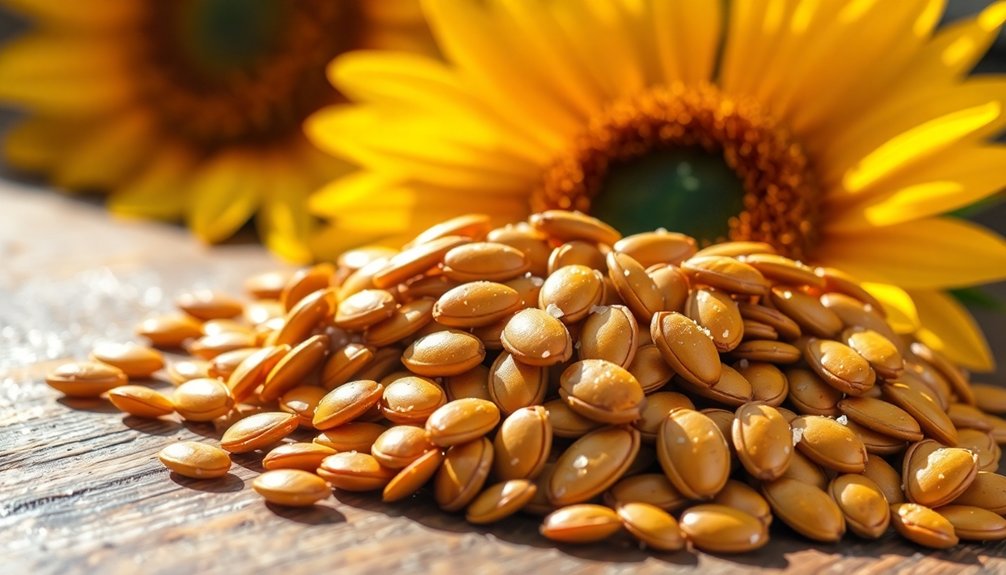
When you incorporate sunflower seeds into your diet, you’re not just enjoying a tasty snack; you’re also reaping numerous health benefits.
Incorporating sunflower seeds into your diet offers delicious taste alongside a wealth of impressive health benefits.
These small seeds pack a punch, especially for those on a keto diet. Here’s what you gain from sunflower seeds:
- Rich in polyunsaturated fats that promote heart health
- A significant source of vitamin E, an antioxidant that reduces oxidative stress
- Low in net carbs (only 3.9 grams per serving), helping with blood sugar control
- May aid in lowering cholesterol levels and regulating blood pressure
- Packed with essential micronutrients like magnesium, selenium, and zinc
Incorporating sunflower seeds can truly enhance your overall wellness while keeping your diet keto-friendly. Additionally, they can be a great complement to other healthy fats, such as coconut oil, which is beneficial for energy and ketone production.
Ways to Incorporate Sunflower Seeds Into Your Diet
Incorporating sunflower seeds into your meals is a simple way to enhance both flavor and nutrition. You can enjoy raw sunflower seeds or sprout them for better digestibility.
For a crunchy snack, toss raw sunflower seeds with olive oil and your favorite seasonings, then roast them. Consider adding sunflower seeds to keto recipes like almond flour bread or muffins to boost the nutritional content and add texture to baked goods.
You can also make sunflower seed butter by blending roasted seeds, offering a delicious peanut butter alternative. Finally, sprinkle sunflower seeds on salads to enhance flavor while maintaining a low carb intake. Incorporate sunflower seeds into your diet for their numerous health benefits, and remember that they are rich in healthy fats that contribute to overall nutrient intake!
Considerations for Consuming Sunflower Seeds
While sunflower seeds offer a tasty and nutritious addition to your diet, it’s important to contemplate a few factors before diving in. Here are some considerations to keep in mind:
- Consume sunflower seeds in moderation to avoid nutrient deficiencies caused by phytic acid.
- Balance their high omega-6 fatty acids with omega-3 sources in your diet for peak health.
- Practice mindful eating by opting for sunflower seeds in their shells, which can aid in portion control.
- Consider soaking sunflower seeds before roasting to reduce phytic acid content and enhance nutrition.
- Store them in airtight containers to maintain freshness and guarantee they remain a healthy snack option.
- Incorporate sunflower seeds alongside plant-based protein sources to ensure a well-rounded nutrient intake.
Conclusion
Incorporating sunflower seeds into your keto diet can be a delicious and nutritious choice. With their low carb count and healthy fats, they can easily fit into your meal plan. For example, Sarah, a keto enthusiast, found that snacking on sunflower seeds helped her stay full between meals while keeping her carb intake in check. So, grab a handful of sunflower seeds and enjoy their benefits as a satisfying, keto-friendly snack!