
You can’t eat oatmeal on a keto diet because its high carb content can disrupt ketosis. Just a half-cup of rolled oats packs around 27 grams of carbs, making it hard to stay within your daily limit. Luckily, there are low-carb alternatives like flaxseed meal, almond meal porridge, and coconut flour options. These can keep you satisfied without derailing your goals. Discover more about these tasty alternatives and how to prepare them for your keto meals.
Understanding the Keto Diet and Carbohydrate Limits

To fully grasp the keto diet, you need to understand its carbohydrate limits. Typically, you should aim for around 20 to 50 grams of net carbs per day. This means effective carb counting is essential to stay within those limits.
Start by tracking your daily carb intake, focusing on foods low in carbs and high in healthy fats. Meal planning plays an important role here; it helps you prepare low-carb meals in advance, reducing the temptation to stray off track.
Think about incorporating protein sources like meats and cheeses while avoiding grains and sugars. By mastering these aspects, you can successfully navigate the keto lifestyle and achieve your health goals. Additionally, the keto diet’s ability to reduce brain inflammation can enhance cognitive function, making it easier to stay focused on your dietary goals.
Keep it simple, stay consistent, and enjoy the journey!
Is Oatmeal Keto-Friendly? Analyzing Its Carb Content
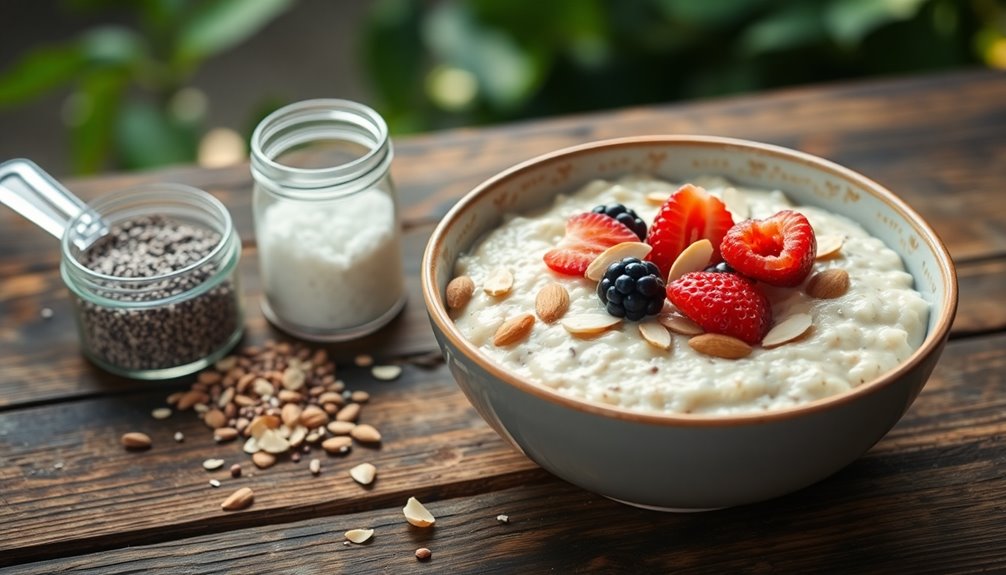
Is oatmeal truly a viable option for your keto diet? While oatmeal can be a nutritious choice, its carbohydrate content may not fit well within your keto limits.
Oatmeal may be nutritious, but its high carb content often conflicts with keto diet guidelines.
Here are three key oatmeal varieties to evaluate in your carb comparisons:
- Rolled Oats: Approximately 27 grams of carbs per 1/2 cup.
- Steel-Cut Oats: About 29 grams of carbs per 1/4 cup.
- Instant Oats: Roughly 30 grams of carbs per 1/2 cup.
As you can see, these oatmeal varieties pack a hefty carb punch, making it challenging to stay within the keto threshold. Additionally, the ketogenic diet has been shown to reduce systemic inflammation, which can further support your overall health while managing carb intake.
If you’re serious about keto, you might want to explore low-carb alternatives that can satisfy your cravings without exceeding your carb limits.
Health Benefits of Oatmeal: What You Need to Know
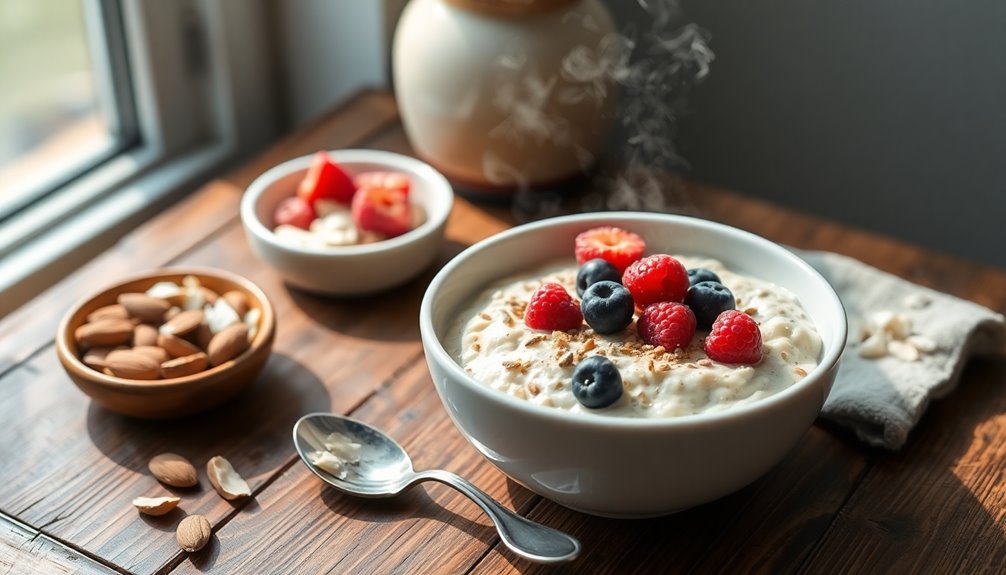
Oatmeal offers several health benefits that can enhance your overall well-being. Packed with oatmeal nutrition, it’s a fantastic source of fiber benefits, supporting digestive health and promoting regularity.
This fiber can also aid in weight management by keeping you full longer, making it easier to control your appetite. Plus, oatmeal can provide an energy boost, perfect for kickstarting your day.
Its low glycemic index helps stabilize blood sugar levels, contributing to heart health. Rich in antioxidants, oatmeal supports your immune system and combats oxidative stress.
With its meal versatility, you can enjoy oatmeal in various ways, making it a staple for sustainable eating. Incorporating oatmeal into your diet can truly elevate your health. Additionally, understanding the keto diet basics can help you explore alternative options that align with your dietary goals.
The Impact of Oatmeal on Ketosis: What Do Studies Show?
When considering oatmeal on a keto diet, understanding its carb content is essential. Studies show that the high carbohydrate levels in oatmeal can markedly impact your state of ketosis. Additionally, consuming oatmeal can hinder increased fat burning, which is a key benefit of a ketogenic diet. Let’s explore how it affects your body and what that means for your diet goals.
Oatmeal’s Carb Content
A bowl of oatmeal may seem like a healthy choice, but its carb content can pose a challenge for those on a keto diet.
When you’re carb counting, it’s essential to understand the impact of different oatmeal varieties:
- Instant Oatmeal: Often contains around 27 grams of carbs per serving, making it a poor choice for keto.
- Rolled Oats: Typically have about 30 grams of carbs per serving, which can quickly add up.
- Steel-Cut Oats: These hold around 29 grams of carbs, still too high for a strict keto plan.
Given these numbers, you’ll want to be cautious if you’re aiming to maintain ketosis.
Exploring low-carb alternatives can help you stay on track without sacrificing breakfast.
Effects on Ketosis
Although many people view oatmeal as a wholesome breakfast choice, its high carb content can greatly disrupt ketosis. If you’re serious about maintaining ketosis, you need to keep a close eye on your carbohydrate intake.
Consuming oatmeal can easily push you over your daily carb limit, making ketosis monitoring essential. Studies show that even a small serving of oatmeal can spike your blood sugar levels, hindering your body’s ability to burn fat efficiently.
Instead of oatmeal, consider low-carb alternatives like chia seeds or flaxseed meal, which provide fiber without the carbs. By choosing wisely, you can enjoy a satisfying breakfast while staying in ketosis and reaping the benefits of a low-carb diet.
Low-Carb Alternatives to Oatmeal: An Overview
If you’re looking for low-carb alternatives to oatmeal, you’re in luck!
Chia seed pudding and flaxseed meal options offer tasty, keto-friendly choices that can satisfy your breakfast cravings. Incorporating healthy fats into your meals can enhance flavor and promote satiety.
Let’s explore how these alternatives can fit into your diet.
Chia Seed Pudding
- Cocoa and Almond: Mix unsweetened cocoa powder and almond milk for a rich flavor.
- Coconut and Vanilla: Combine coconut milk with vanilla extract for a tropical twist.
- Berry Delight: Add fresh or frozen berries for a burst of natural sweetness.
Experimenting with these chia seed variations not only keeps breakfast exciting but also guarantees you’re meeting your low-carb goals!
Flaxseed Meal Options
When you’re seeking a low-carb alternative to oatmeal, flaxseed meal stands out as a versatile option. Packed with flaxseed benefits, it’s an excellent source of protein and fiber, supporting healthy digestion.
You can whip up delicious flaxseed recipes, like pancakes or muffins, or add it to your morning flaxseed smoothies for a nutritional boost. For a quick snack, consider flaxseed snacks like energy balls, which keep you satisfied without spiking your carbs.
To enhance your meals, try flaxseed toppings, like nuts or berries, to add flavor and texture. Plus, with its ability to aid hydration, flaxseed meal is a winning choice for anyone on a keto diet.
Enjoy experimenting with this powerhouse ingredient!
Chia Seed Pudding: A Nutritious, Keto-Friendly Substitute
Chia seed pudding makes a fantastic alternative to oatmeal for those on a keto diet, as it’s low in carbs yet high in fiber and healthy fats.
You’ll love the nutrition benefits these tiny seeds offer, plus the texture contrast they provide. With a few simple ingredients, you can whip up quick recipes that fit right into your meal prep.
Here are three ideas to get you started:
- Flavor Variations: Try almond extract, vanilla, or cocoa powder for different tastes.
- Topping Ideas: Add berries, nuts, or coconut flakes for added texture and flavor.
- Serving Suggestions: Enjoy it chilled for breakfast or as a satisfying snack any time of day.
Incorporating chia seeds into your diet can also help with stabilizing blood sugar levels, making it a great choice for keto enthusiasts.
Embrace this keto-friendly treat!
Flaxseed Meal: How to Use It in Your Breakfast Routine
Flaxseed meal is a powerhouse for your breakfast routine, packed with essential nutrients. You can easily incorporate it into various recipes, making it a versatile addition to your meals. Additionally, it’s beneficial to pair it with high-fiber low-carb vegetables to enhance your nutritional intake. Let’s explore how to enjoy its benefits daily and whip up some delicious dishes!
Nutritional Benefits of Flaxseed
Rich in essential nutrients, flaxseed meal is a powerhouse addition to your breakfast routine. Packed with numerous flaxseed benefits, it enhances your nutritional profile while fitting perfectly into a low-carb lifestyle.
Here are three key benefits of incorporating flaxseed meal into your diet:
- High in Omega-3 Fatty Acids: Supports heart health and reduces inflammation.
- Rich in Fiber: Promotes digestive health and helps you feel full longer.
- Contains Lignans: Offers antioxidant properties and may support hormonal balance.
Flaxseed Meal Recipes
When you’re looking to elevate your breakfast routine, incorporating flaxseed meal can be a game changer. Packed with fiber and omega-3 fatty acids, flaxseed benefits your health while keeping your meals low-carb.
Start your day with a delicious flaxseed smoothie; just blend flaxseed meal with your favorite low-carb fruits and unsweetened almond milk. For a quick treat, whip up some flaxseed snacks like energy bites, mixing flaxseed meal with nut butter and a touch of sweetener.
If you’re in the mood for something sweet, try flaxseed desserts like keto-friendly muffins or pancakes. These recipes not only satisfy your cravings but also help you stay on track with your keto diet.
Enjoy the versatility of flaxseed in your meals!
Incorporating Flaxseed Daily
Adding flaxseed to your daily routine can be a simple yet effective way to boost your breakfast. The flaxseed benefits are numerous, including improved digestion, increased omega-3 intake, and enhanced satiety.
Here are three easy ways to integrate flaxseed into your morning meals:
- Smoothies: Blend a tablespoon of flaxseed meal into your favorite smoothie for added nutrition.
- Yogurt: Stir flaxseed into yogurt or cottage cheese for a creamy texture and nutty flavor.
- Baked Goods: Incorporate flaxseed meal into keto-friendly pancakes or muffins for a nutritional boost.
With these simple daily integrations, you’ll enjoy the health benefits of flaxseed while keeping your breakfast delicious and satisfying!
Almond Meal Porridge: A Simple Recipe to Try
If you’re craving a warm, satisfying breakfast that fits perfectly within your keto lifestyle, almond meal porridge is a fantastic option. Not only is it low in carbs, but it also packs in almond benefits like healthy fats, fiber, and protein.
To make it, combine almond meal with unsweetened almond milk and a pinch of salt in a saucepan. Cook over medium heat, stirring until it thickens to your desired consistency.
You can customize your porridge variations by adding cinnamon, vanilla extract, or your favorite low-carb sweetener. For a little crunch, toss in some chopped nuts or seeds. This recipe is an excellent way to incorporate healthy fats into your morning routine.
Enjoy this delicious, nutrient-dense breakfast that keeps you full and energized throughout the morning!
Coconut Flour: Making a Delicious Keto Oatmeal Alternative
While traditional oatmeal is off the table on a keto diet, coconut flour offers a fantastic alternative that satisfies your breakfast cravings.
With its low-carb profile and numerous coconut benefits, you can whip up a delicious keto breakfast that keeps you on track. Coconut flour is high in dietary fiber, making it a great choice for promoting healthy digestion.
Here are three ways to enjoy coconut flour in your morning meal:
- Coconut Flour Porridge: Mix coconut flour with almond milk, sweetener, and spices for a creamy texture.
- Coconut Pancakes: Combine coconut flour, eggs, and baking powder for a fluffy pancake stack.
- Coconut Flour Smoothie Bowl: Blend coconut flour with your favorite low-carb fruits and top with nuts and seeds.
These options not only taste great but also help you stay within your keto goals!
How to Prepare Your Low-Carb Breakfast Options
Preparing low-carb breakfast options can be both simple and satisfying, ensuring you kickstart your day without straying from your keto goals.
Start with meal prep by choosing easy breakfast ideas like scrambled eggs or chia seed pudding. Use ingredient swaps, like almond flour instead of regular flour, to keep carbs low. Experiment with flavor additions such as cinnamon or vanilla extract to enhance taste without adding sugar. Focus on cooking techniques that suit your lifestyle, whether it’s quick stovetop cooking or overnight recipes.
Incorporate nutritious breakfast options that are delicious and satisfying, ensuring you stay aligned with your dietary goals. Maintain portion control to avoid overeating, and consider meal timing to align with your hunger cues. Aim for nutrient balance by incorporating healthy fats and proteins, keeping your breakfast both delicious and keto-friendly.
Tips for Staying on Track With Your Keto Diet
Staying on track with your keto diet can feel challenging, especially when tempted by high-carb foods. To help you stick to your goals, here are some effective tips:
- Meal Prep: Dedicate a few hours each week to prepare your meals. This guarantees you have keto-friendly options ready and reduces the temptation to grab high-carb alternatives.
- Healthy Snack Ideas: Keep low-carb snacks on hand, like nuts, cheese, or veggie sticks with dip. Having these available can curb cravings when hunger strikes.
- Track Your Intake: Use an app or journal to log your meals and snacks. This keeps you accountable and helps you stay focused on your keto journey.
With these strategies, you’ll find it easier to maintain your keto lifestyle!
Final Thoughts: Finding What Works Best for Your Keto Journey
Finding what works best for your keto journey can make all the difference in achieving your goals.
Embrace meal planning to help you stay on track and avoid the temptation of high-carb foods. Experiment with low-carb alternatives that suit your personal preferences, whether it’s exploring cauliflower rice or nut-based snacks.
Remember, keto isn’t one-size-fits-all; adjust your meals based on what makes you feel your best. Track your progress and tweak your approach as needed. Listening to your body is key.
Ultimately, the right strategies will empower you to enjoy your food while maintaining ketosis. Stay flexible and open-minded, and you’ll find the perfect balance that keeps you motivated on your keto path.
Conclusion
So, if you’re dreaming of a warm bowl of oatmeal while on keto, you might want to wake up! Sure, it’s a health food darling, but those carbs could kick you out of ketosis faster than you can say “low-carb alternatives.” Embrace the coconut flour and almond meal instead—your taste buds might just thank you. Remember, it’s not about what you can’t eat, but about all the delicious possibilities waiting to be discovered on your keto journey!