
If you’re gaining weight on the keto diet, you might be overlooking hidden carbs and consuming too many calories from healthy fats. It’s easy to misjudge portion sizes, especially with calorically dense foods. Stress and lack of sleep can also derail your progress by affecting hormones tied to weight loss. Inadequate physical activity plays a role too. Want to uncover more reasons and tips to get back on track? Keep exploring to find solutions that work for you!
Understanding Ketosis and Weight Loss
Understanding ketosis is vital for anyone considering the keto diet. Many people fall for ketosis myths that can derail their progress.
In reality, achieving fat adaptation requires glycogen depletion and a steady approach to metabolic adaptation. You’ll likely experience energy fluctuations initially, but improving insulin sensitivity can lead to stable energy levels over time. To maximize your results, focus on nutrient absorption and make sure that you’re adhering to your personalized macros. Dietary compliance is critical for long-term sustainability; if you stray too far from your goals, it may hinder your weight loss efforts. Additionally, regular aerobic exercise can significantly enhance your insulin sensitivity, making it easier to achieve your weight loss goals.
Overeating Healthy Fats: Are You Consuming Too Many Calories?

Achieving ketosis can lead to impressive fat loss, but if you’re not careful, you might find yourself consuming more calories than you realize, particularly from healthy fats.
Achieving ketosis can be effective for fat loss, but be mindful of hidden calories from healthy fats.
To maintain dietary balance without overeating, consider these tips:
- Mindful Eating: Pay attention to your hunger cues and savor each bite.
- Portion Control: Measure your fats, as their caloric density can easily lead to excess calories.
- Meal Timing: Space out meals to enhance nutrient absorption and avoid emotional eating.
- Food Quality: Opt for high-quality fats that promote fat adaptation without overindulgence, such as nut and seed options which provide healthy fats without excessive calories.
Hidden Carbs: Are You Tracking Everything You Eat?
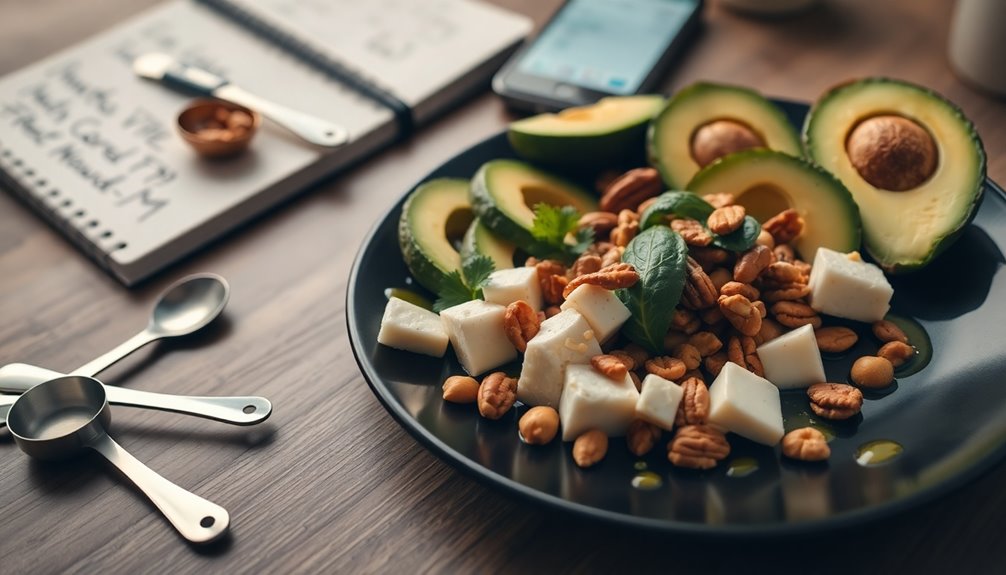
When you’re on a keto diet, tracking every bite is essential.
You might be surprised by how many hidden carbs sneak into your meals from sauces, snacks, or even vegetables.
Staying aware of these sources can make all the difference in your weight management journey. Additionally, incorporating natural sugar substitutes can help you maintain your carb limits while satisfying your sweet cravings.
Importance Of Accurate Tracking
Accurate tracking is essential on a keto diet, especially since hidden carbs can sneak into your meals. If you want to succeed, you need to be vigilant about what you’re eating.
Here are some tips to help you with accurate measurements:
- Use a Food Scale: Weigh your portions to guarantee you’re not overestimating your carb intake.
- Maintain a Food Diary: Document everything you eat, including condiments and snacks, to spot hidden carbs.
- Read Labels Carefully: Look for both total carbs and fiber to calculate net carbs accurately.
- Track Beverages: Don’t forget to include drinks; they can contain carbs that derail your progress.
Common Hidden Carb Sources
Have you ever considered how easily hidden carbs can slip into your meals? Even with diligent meal prep, sneaky sauces and hidden ingredients can derail your keto efforts.
Packaged snacks often contain unexpected carbs, so always check food labels before indulging. Restaurant meals are another major culprit; those “keto-friendly” options might be loaded with hidden sugars.
Don’t forget about your beverage choices, either—some drinks, even diet sodas, can have carb-laden sugar substitutes. Staying vigilant is key.
Track everything you eat, and scrutinize ingredients to guarantee you’re not unknowingly sabotaging your progress. By identifying these hidden carb sources, you can maintain your focus and stay on track with your keto goals.
Lack of Nutritional Variety: Is Your Diet Too Restrictive?
How diverse is your food intake on the keto diet? If you’re sticking to the same meals, you might experience food boredom and taste fatigue, hindering your weight loss efforts.
A lack of nutritional variety can lead to nutrient deficiencies and affect your micronutrient intake. Here are four reasons to rethink your meal planning:
- Dietary Balance: Diverse foods help maintain essential nutrient levels.
- Food Variety: Incorporating new ingredients keeps meals exciting.
- Meal Diversity: A broader range of options prevents monotony.
- Nutrient-Rich Choices: Different foods provide unique vitamins and minerals.
Additionally, including high-protein foods in your diet can enhance insulin sensitivity and support your overall health.
Hormonal Imbalances: How Do They Affect Your Weight Loss?
What’s the connection between hormonal imbalances and weight loss on a keto diet? Hormonal fluctuations can greatly impact your success.
For instance, insulin resistance can make it harder for your body to burn fat efficiently. If your thyroid function is off, your metabolism may slow, hindering weight loss.
High cortisol levels, often linked to stress, can lead to fat storage, while estrogen dominance may disrupt leptin sensitivity, causing hunger signals to misfire.
High cortisol levels from stress can promote fat storage, while estrogen dominance may disrupt hunger signals, complicating weight management.
A testosterone imbalance can also affect muscle mass and fat distribution. Additionally, progesterone effects can contribute to weight retention. Addressing these hormonal issues is essential for achieving your keto goals, as they play an important role in how your body processes and stores fat.
Furthermore, reduced oxidative stress from a ketogenic diet can also support hormonal balance, enhancing your weight loss efforts.
Stress and Sleep: Are They Sabotaging Your Keto Journey?
While you might think you’re doing everything right on your keto journey, stress and sleep deprivation can quietly sabotage your efforts. High cortisol levels from stress can lead to emotional eating, making it harder to stick to your plan. Additionally, chronic stress can hinder your body’s ability to improve insulin sensitivity, which is crucial for effective fat loss on the keto diet.
To improve your situation, consider these strategies:
- Practice stress management techniques like meditation or yoga to lower cortisol levels.
- Prioritize sleep hygiene by creating a calming bedtime routine that helps you unwind.
- Use relaxation techniques throughout the day to combat stress and promote better focus.
- Make sure you get adequate rest, as sleep deprivation can lead to poor decision-making around food.
Inadequate Physical Activity: Are You Moving Enough?
Are you truly moving enough to support your keto goals? If you’re stuck in a sedentary lifestyle, it’s time to rethink your activity levels.
Incorporating various movement types into your daily routine can boost your calorie expenditure considerably. Aim for a consistent number of daily steps—10,000 is a great target!
Focus on exercise intensity during your fitness routines; high-intensity workouts can be more effective than low-intensity ones. Consistency is key, so find a schedule that keeps you active.
If you’re not challenging yourself, you mightn’t see the fat loss you expect. Remember, even small changes can make a big difference, especially when combined with increased insulin sensitivity that helps the body utilize glucose efficiently.
Get up, move more, and support your keto journey effectively!
Misleading Keto Products: Are You Falling for Marketing Tricks?
When you’re shopping for keto products, it’s easy to get tricked by clever marketing. Many snacks might claim to be low-carb, but hidden sugars can sneak in and derail your efforts. It’s essential to read labels carefully and question those health claims to stay on track. Additionally, opting for savory low-carb snacks like kale chips or beef jerky can help you avoid misleading products.
Hidden Carbs in Snacks
Many people plunge into the keto diet, believing they’ve found a foolproof way to shed pounds, but hidden carbs in snacks can easily derail your progress.
To stay on track, focus on:
- Label Scrutiny: Always examine snack labels for hidden sugars and carbs.
- Portion Sizes: Even low carb alternatives can add up if you don’t watch how much you’re eating.
- Ingredient Awareness: Be cautious of processed snacks; they often contain sneaky ingredients that increase carb counts.
- Mindful Eating: Make intentional snack choices; opt for whole foods instead of misleading products.
Misleading Health Claims
While steering through the keto diet, it’s easy to get caught up in misleading health claims that promise quick results. Many products flaunt exaggerated benefits, often backed by celebrity endorsements that don’t reflect real science.
You might find yourself swayed by anecdotal evidence, believing that a supplement will be your magic solution. However, these claims often stem from nutritional myths and marketing hype, leaving you frustrated when results don’t match expectations.
Be wary of supplement scams that prey on diet fads—just because it’s labeled “keto-friendly” doesn’t mean it’s healthy. Always scrutinize the ingredients and do your research to avoid falling for misleading information that could derail your progress on the keto journey.
Stay informed and make choices that truly support your goals.
Expectations vs. Reality: What’s a Realistic Timeline for Weight Loss?
How long should you realistically expect to see weight loss results on a keto diet? It’s essential to set realistic goals and understand that timeline expectations can vary.
While some may notice changes in the first week, significant fat loss often takes longer. Here are some key progress milestones to reflect on during your weight loss journey:
- Initial Water Weight: You might lose 3-5 pounds quickly due to water loss.
- First Month: Aiming for 1-2 pounds per week is a sustainable goal.
- Midpoint Adjustments: Reassess your plan and make necessary mindset shifts.
- Long-Term Success: Focus on maintaining motivation sources and personal accountability for lasting results. Additionally, it’s important to monitor your macronutrient ratio to ensure you’re staying within the recommended guidelines for optimal fat loss.
Conclusion
So, you thought going keto meant instant fat loss, didn’t you? Ironically, while you’re munching on avocados and bacon, those sneaky calories might be piling up. Remember, it’s not just about cutting carbs; it’s about balance and awareness. If you’re still stuck on the scale, it could be time to reassess your habits. Embrace the journey, adjust your approach, and who knows? You might just find that elusive fat loss hiding under all those healthy fats!