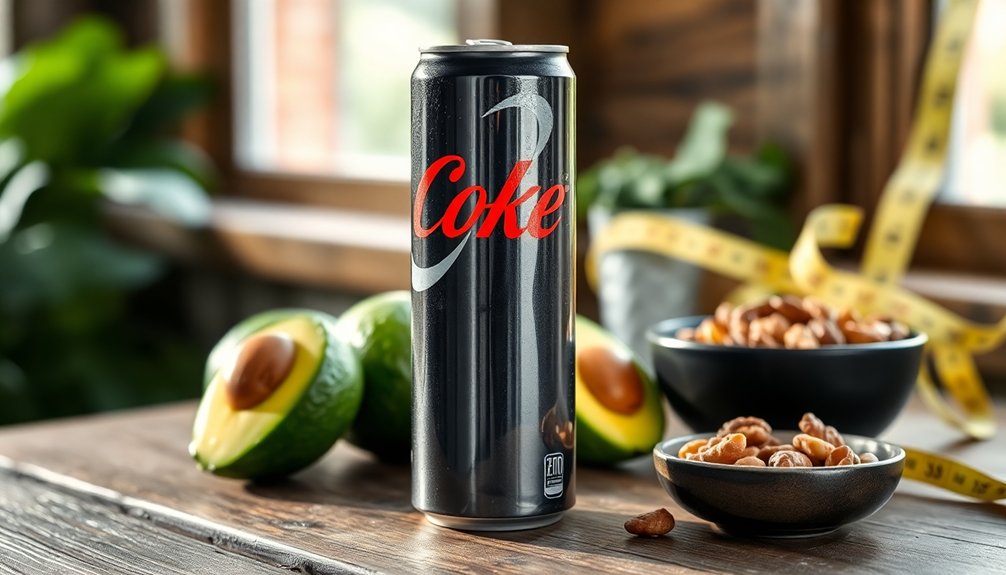
Coke Zero isn’t considered keto-friendly due to its artificial sweeteners, like aspartame and acesulfame potassium, which can disrupt insulin levels and impact your ketosis goals. While it contains no sugar or carbs, these ingredients may lead to metabolic issues, complicating your low-carb journey. Instead of Coke Zero, consider low-carb alternatives like sparkling water or herbal tea for a healthier option. Keep exploring to find more delicious drink choices that align with your keto lifestyle.
Understanding Ketosis and the Keto Diet
When you commence on the keto diet, your main goal is to reach ketosis, a state where your body shifts from burning carbohydrates to burning fat for energy. This typically requires you to limit your carbohydrate intake to just 20–50 grams per day.
On the keto diet, high fat intake is essential, as it fuels your body while keeping carb levels low to maintain ketosis. Tracking your carb consumption is vital; too many carbs can disrupt ketosis and push your body back to burning glucose.
Additionally, while low-carb options are tempting, be cautious with products like Coke Zero. They contain artificial sweeteners that may affect insulin response and impact your metabolic health, so prioritize whole, unprocessed foods for the best results. Maintaining insulin sensitivity is crucial for effective blood sugar management while on keto.
The Ingredients in Coke Zero
Coke Zero’s ingredients include carbonated water, aspartame, and acesulfame potassium, all contributing to its sugar-free appeal.
However, these artificial components might raise concerns about their impact on your health and ketogenic goals.
Let’s break down how these ingredients could affect your diet and overall well-being. Additionally, it’s important to consider how natural sweeteners like stevia and monk fruit can be healthier alternatives for those on a keto diet.
Key Ingredients Breakdown
The ingredient list for Coke Zero reveals a mix of components designed to deliver a zero-calorie beverage. Carbonated water and caramel color form the base, while artificial sweeteners like aspartame and acesulfame potassium provide the sweetness without the calories.
Aspartame, in particular, has raised concerns as it might promote insulin resistance, potentially working against your keto goals. Acesulfame potassium enhances the sweetness but its long-term effects remain uncertain.
Additionally, the caramel color is linked to advanced glycation end-products (AGEs), which may contribute to inflammation and chronic health issues.
Potential Health Impacts
While many people enjoy Coke Zero for its zero-calorie appeal, the potential health impacts of its ingredients warrant careful consideration.
Aspartame and acesulfame potassium, common sweeteners in Coke Zero, can promote insulin resistance and potentially raise blood sugar levels, counteracting your ketogenic goals.
Additionally, the caramel color present in the drink has been linked to inflammation through the formation of advanced glycation end-products (AGEs).
Frequent consumption of diet sodas like Coke Zero may increase the risk of kidney issues and metabolic syndrome.
These health impacts suggest that Coke Zero mightn’t align with the Healthy Keto diet principles, which focus on whole foods and avoiding additives that could interfere with your metabolic health.
Health Concerns Associated With Aspartame

When you’re considering Coke Zero on a keto diet, aspartame deserves your attention.
This artificial sweetener might promote insulin resistance and even raise blood sugar levels for some people, which can undermine your keto goals. Additionally, improved insulin sensitivity is crucial for overall metabolic health, making it essential to evaluate how such sweeteners may affect your body.
It’s crucial to weigh these potential impacts on your health before making a choice.
Insulin Resistance Impact
Consuming products with aspartame, like Coke Zero, can pose significant risks to your insulin sensitivity, which is critical for those on a ketogenic diet.
Research shows that aspartame may promote insulin resistance, making it harder for your body to maintain ketosis. When insulin resistance occurs, your body often prefers glucose over fat for energy, undermining the very principles of low-carb eating.
Additionally, aspartame might mimic the effects of regular sugar, potentially raising blood sugar levels. This can lead to metabolic issues, further complicating your journey on keto.
To maintain ideal insulin sensitivity and support your metabolic health, it’s best to avoid aspartame and similar artificial sweeteners altogether. Keeping your diet clean is essential for achieving your ketogenic goals.
Potential Blood Sugar Rise
Although many people think of Coke Zero as a guilt-free alternative to sugary sodas, it’s important to recognize that aspartame, its key sweetener, can lead to potential blood sugar rises.
Research suggests that aspartame might promote insulin resistance, which goes against the goals of a ketogenic diet. By potentially increasing blood sugar levels, it can mimic some effects of regular sugar consumption.
Furthermore, regular intake of aspartame may negatively impact your gut microbiome health, essential for maintaining metabolic functions.
If you’re closely monitoring your insulin levels, be aware that individual responses to aspartame can vary. Given its potential effects on insulin sensitivity, aspartame may not be the best choice for those strictly adhering to keto principles.
How Artificial Sweeteners Affect Insulin Levels
Artificial sweeteners, such as aspartame and acesulfame potassium found in Coke Zero, can considerably impact insulin levels and your ability to maintain ketosis.
Research shows that these sweeteners may promote insulin resistance, making it harder for you to stick to a low-carb diet. Here’s what you should know:
- Aspartame can potentially raise blood sugar levels, similar to regular sugar.
- Acesulfame potassium may trigger an insulin response, disrupting ketosis.
- Regular consumption can lead to metabolic issues, complicating your keto journey. Additionally, understanding insulin sensitivity is crucial when evaluating the effects of sweeteners on your overall health.
Alternatives to Coke Zero on a Keto Diet

If you’re looking for invigorating alternatives to Coke Zero while sticking to a keto diet, you’re in luck. Sparkling water is a fantastic option, boasting zero calories and no carbs. You can easily infuse it with natural flavors like lemon or mint for a revitalizing twist.
Herbal teas and black coffee are also excellent choices, providing hydration without any carbs or artificial sweeteners. Consider homemade electrolyte drinks made from water, salt, and potassium to support ketosis. Boosting electrolyte intake is essential for maintaining energy levels on a keto diet.
Unsweetened beverages like coconut water (in moderation) or cold brew tea can add variety to your low-carb lifestyle. For a sweeter touch, use keto-friendly sweeteners like monk fruit or stevia in plain drinks for a Coke Zero-like taste without compromising your diet.
Benefits of Staying Hydrated With Water
While exploring alternatives to Coke Zero, it’s important to remember the value of staying hydrated with water. Proper water consumption is essential for your overall health, especially on a ketogenic diet. It can help you maintain ketosis and support your metabolic health.
Staying hydrated with water is crucial for health and maintaining ketosis, especially on a ketogenic diet.
Here are some key benefits of staying hydrated:
- Promotes feelings of fullness, reducing the temptation to snack on high-carb foods.
- Boosts physical performance, enhancing your endurance and reducing fatigue during workouts.
- Aids in weight loss, making it easier to achieve your goals while keeping cravings at bay.
- Staying hydrated can also reduce inflammation levels, which is crucial for enhancing overall health and supporting the benefits of the ketogenic diet.
Aim for at least 8 cups (64 ounces) of water daily, adjusting based on your activity level and climate. Staying hydrated is a simple yet effective strategy for a successful keto lifestyle.
Exploring Low-Carb Beverage Options
What’re your best options when it comes to low-carb beverages?
If you’re considering Coke Zero, you’ll appreciate that it contains zero net carbohydrates, making it a popular choice among those on a keto diet. However, keep in mind that its artificial sweeteners could impact insulin sensitivity.
Instead of relying solely on diet sodas, explore natural sweeteners like monk fruit or stevia for a healthier alternative. Additionally, incorporating sparkling water into your routine can provide hydration without carbs or additives; you can even add fresh lemon for flavor.
Don’t overlook herbal teas and black coffee, both of which are great low-carb options that align perfectly with your keto lifestyle, steering clear of any potential downsides from artificial sweeteners.
The Impact of Diet Soda on Metabolic Health
When you’re on a keto diet, diet sodas like Coke Zero mightn’t be as harmless as they seem. The artificial sweeteners can raise concerns about insulin resistance and negatively affect your gut health, which are vital for achieving your metabolic goals. Long-term consumption could lead to serious health implications that undermine your overall progress. Additionally, studies suggest that improving insulin sensitivity can be crucial for maintaining metabolic health, making it essential to consider the effects of artificial sweeteners on your body.
Insulin Resistance Concerns
As you navigate the ketogenic diet, it’s important to reflect on the impact of diet sodas like Coke Zero on your metabolic health, especially regarding insulin resistance.
Aspartame, the artificial sweetener in Coke Zero, may contribute to increased insulin resistance, undermining your keto goals.
Consider these potential effects:
- Increased blood sugar levels mimicking regular sugar
- Disruption of fat-burning processes critical for ketosis
- Long-term risks of metabolic syndrome
Regular consumption of diet sodas can lead to chronic health issues, making it necessary to monitor your intake.
If you’re serious about maintaining low insulin levels and achieving weight loss, consider cleaner beverage alternatives that align better with your ketogenic lifestyle.
Artificial Sweetener Effects
The effects of artificial sweeteners like aspartame in Coke Zero extend beyond just taste; they can greatly impact your metabolic health.
While you might think you’re making a healthier choice, these sweeteners can promote insulin resistance, counteracting your ketogenic diet‘s goals. Additionally, some studies suggest that consumption of diet soda may actually lead to increased blood sugar levels, mimicking the effects of regular sugar for certain individuals.
You should also consider that artificial sweeteners may negatively affect your gut microbiome, potentially leading to metabolic issues.
Moreover, the caramel coloring in Coke Zero is linked to inflammation through the formation of advanced glycation end-products (AGEs), raising concerns about metabolic health over time.
Long-Term Health Implications
Although many people view diet sodas like Coke Zero as a guilt-free alternative to sugary drinks, their long-term impact on metabolic health is concerning.
Frequent consumption of diet sodas can lead to:
- Insulin resistance from artificial sweeteners, undermining your keto goals.
- Increased risk of kidney issues and metabolic syndrome, affecting overall health.
- Higher likelihood of osteoporosis, especially important for those on a keto diet.
These long-term health implications emphasize the need for caution.
Studies suggest that the artificial sweeteners in diet sodas may even raise blood sugar levels similarly to regular sugar.
If you’re committed to a ketogenic lifestyle, it might be wise to limit your intake of these seemingly harmless beverages.
Best Practices for Maintaining Ketosis
Maintaining ketosis requires careful attention to your diet and lifestyle choices. To stay in ketosis, limit your daily carb count to 20–50 grams, focusing on high fat consumption while keeping protein levels moderate.
Regularly tracking your carbohydrate intake is essential to avoid accidental carb overload that can kick you out of ketosis. Be cautious with artificial sweeteners; some can influence your insulin response and disrupt your progress.
Prioritize whole, unprocessed foods to support your ketogenic goals and improve metabolic health. Finally, hydration is vital—opt for water or unsweetened beverages over artificially sweetened drinks. Additionally, monitoring electrolyte balance is crucial for maintaining energy levels during ketosis.
Balancing Enjoyment and Health With Diet Choices
When it comes to making dietary choices, finding the right balance between enjoyment and health is vital for achieving long-term wellness.
While Coke Zero may fit into your ketogenic diet with zero calories and carbs, moderation is key due to potential health risks.
Consider these points:
- Frequent consumption of diet sodas can lead to kidney issues and metabolic syndrome.
- Artificial sweeteners might harm insulin sensitivity, countering keto benefits.
- Choosing whole-food alternatives or natural sweeteners like monk fruit offers cleaner options.
- Staying hydrated with water or sparkling water is important, as proper hydration supports overall weight loss and metabolic function.
Prioritizing hydration with water or sparkling water is important.
Conclusion
In your keto journey, Coke Zero might seem like a tempting treat, offering a sugar-free fizz that satisfies cravings. Yet, as you weigh the allure of artificial sweetness against potential health concerns, the choice becomes complex. While it won’t kick you out of ketosis, consider the broader impacts on your well-being. Balancing enjoyment and health isn’t easy, but exploring low-carb alternatives can lead to a more fulfilling and sustainable approach to both your diet and overall lifestyle.