
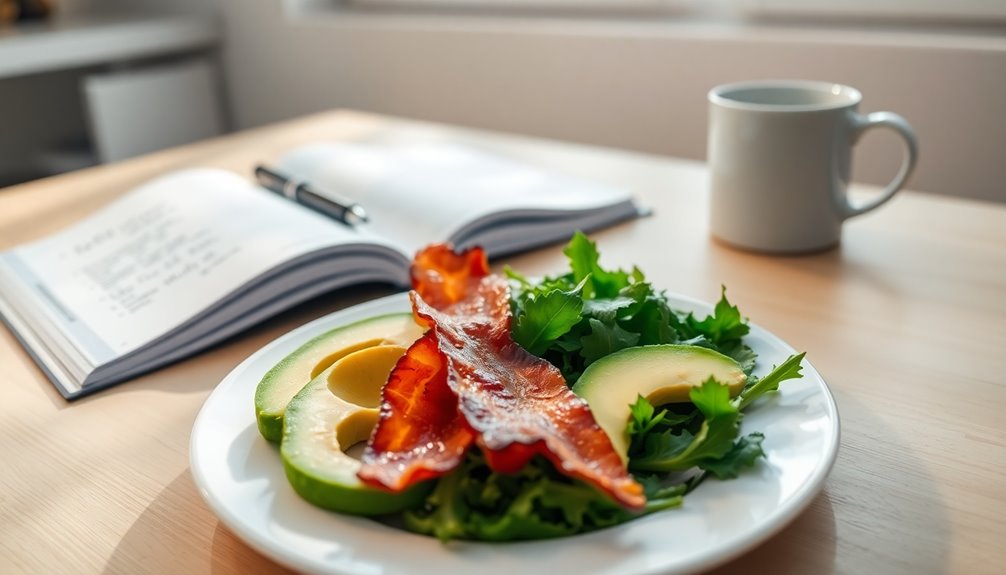
If your keto diet isn’t delivering results, hidden carbs and portion sizes might be sabotaging you. Stress and sleep quality can also hinder your progress, while tracking macros is essential for staying on track. Make sure you’re aware of any nutrient deficiencies and assess whether your goals are still realistic. By examining these factors, you can uncover what’s stalling your success and make effective adjustments to reignite your keto journey. More insights await you to enhance your approach.
Hidden Carbs: Are They Sabotaging Your Keto Journey?

Have you ever wondered if hidden carbs are sneaking into your meals and sabotaging your keto journey? You might be surprised by the hidden ingredients in your favorite foods.
Secret sugars can lurk in sauces, dressings, and even “healthy” snacks, making it tough to stay on track. When dining out, watch for packaging pitfalls; many restaurants use cooking methods that add carbs without you realizing it.
Boost your label literacy by checking ingredient labels for anything suspicious. Don’t forget about food swaps—replace high-carb options with keto-friendly alternatives to keep your meals low-carb. Additionally, being mindful of insulin sensitivity can help you better understand how hidden carbs affect your progress.
Finally, practice portion control to guarantee you’re not overindulging in those sneaky snacks. Staying vigilant will help you conquer hidden carbs and enjoy your keto lifestyle!
Portion Sizes: Are You Eating More Than You Think?

How often do you really pay attention to portion sizes on your keto journey? If you’re not practicing portion control, you might be consuming more calories than you realize.
Mindful eating starts with understanding serving sizes and developing plate awareness. Many people fall into the trap of portion distortion, where what seems like a normal amount isn’t actually aligned with keto guidelines.
Try food journaling to keep track of what you eat; this can help you spot unhealthy snacking habits. Incorporate visual measurement techniques to gauge appropriate portions. Additionally, portion control is essential in preventing blood sugar spikes and maintaining stable energy levels.
Stress and Hormones: How Do They Impact Your Weight Loss?

Stress can greatly impact your weight loss journey, often through the influence of hormones like cortisol.
When you’re under pressure, your body may retain fat, making it harder to shed those extra pounds. Understanding insulin sensitivity is crucial, as stress can exacerbate insulin resistance, further complicating weight loss efforts on the keto diet.
Let’s explore how managing stress effectively can support your goals on the keto diet.
Stress Hormones and Weight
While it’s easy to focus on diet and exercise when trying to lose weight, your body’s stress hormones can greatly impact your progress. High cortisol levels, often a result of chronic stress, can disrupt hormonal balance and lead to adrenal fatigue. This may trigger emotional eating, where you turn to comfort foods instead of sticking to your keto plan.
Additionally, stress affects thyroid function, which plays an essential role in your metabolism. To combat this, prioritize stress management techniques like meditation or yoga.
Remember that lifestyle factors, such as sleep and social support, also influence your ability to adapt metabolically. By addressing these stress-related issues, you can enhance your weight loss journey and achieve better results.
Cortisol’s Role Explained
Cortisol, often dubbed the “stress hormone,” plays an essential role in your weight loss journey, especially when you’re following a keto diet. High cortisol levels can lead to increased emotional eating, making it harder to stick to your dietary plan.
Effective cortisol management is vital for hormone balance and overall adrenal health. When you’re stressed, sleep stress can increase cortisol production, disrupting your weight loss efforts.
Implementing lifestyle changes focused on stress reduction can greatly improve your results. Consider incorporating relaxation techniques, regular exercise, and a balanced diet to mitigate the dietary impacts of stress.
Managing Stress Effectively
Managing stress is key to maintaining a balanced hormonal environment, which directly impacts your weight loss efforts on the keto diet. Incorporating mindfulness practices into your daily routine can notably enhance your stress management.
Consider relaxation techniques like breathing exercises or meditation to help you unwind. The meditation benefits extend beyond relaxation; they can improve focus and emotional resilience.
By making lifestyle adjustments, such as prioritizing self-care routines, you’ll reduce the chances of emotional eating triggered by stress. Establishing effective coping strategies will empower you to handle daily challenges more efficiently.
Tracking Your Macros: Are You Doing It Correctly?
How confident are you that you’re tracking your macros accurately? Many people overlook vital aspects of macro tracking, leading to stalled results.
Many struggle with accurate macro tracking, often missing key details that can stall their progress.
To improve your accuracy, consider these tips:
- Use Food Scales: Weigh your portions instead of guesstimating. This helps in maintaining portion control and avoiding common mistakes.
- Daily Logs: Keep a detailed log of your meals. This can reveal patterns and help you adjust your carb cycling strategy effectively.
- App Recommendations: Utilize tracking tools like MyFitnessPal or Cronometer to simplify your meal prep and guarantee you’re hitting your macro goals. Additionally, consider incorporating low-carb sugar substitutes to help maintain your sweet cravings without derailing your diet.
With these accuracy tips, you can enhance your macro tracking and get back on track with your keto journey!
Ketosis: Are You Really in It?
Tracking your macros is a great first step, but it’s equally important to know if you’re actually in ketosis. Many people fall for ketosis misconceptions, believing it’s all about the number on the scale.
Instead, focus on ketosis signs like increased energy and reduced hunger. Common ketosis symptoms can include bad breath and digestive changes.
While ketosis benefits include weight loss and improved mental clarity, you should also be aware of ketosis drawbacks, such as fatigue during adaptation. The Keto Diet promotes fat burning, which is essential for achieving and maintaining ketosis.
To confirm ketosis duration, consider ketosis testing methods like breath or urine strips.
Remember, maintaining ketosis can present challenges, so stay informed and avoid ketosis myths that can derail your progress.
Stay committed, and you’ll reap the rewards of your efforts.
Alcohol Consumption: Is It Affecting Your Progress?
Does alcohol consumption derail your progress on the keto diet? It can, especially if you’re not mindful of what you’re drinking. Here are three key factors to evaluate:
- Alcohol Types: Opt for spirits like vodka or whiskey over sugary cocktails. Those cocktail mixers can skyrocket your calorie counts and kick you out of ketosis.
- Drinking Frequency: Regularly indulging can lead to binge drinking, which not only affects your hydration levels but also sabotages your weight loss efforts.
- Social Occasions: It’s tempting to drink more during social events, but those extra calories can add up quickly. Plus, hangover effects can make you less motivated to stick to your diet. Ketosis is a metabolic state where the body burns fat for fuel, making it essential to avoid anything that could disrupt this process.
Stay aware, and you can enjoy socializing without compromising your keto journey!
Meal Timing: Could It Be Making a Difference?
Could meal timing actually influence your success on the keto diet? Absolutely! Your meal frequency and timing strategies can greatly impact your metabolic rate and insulin response.
Consider implementing intermittent fasting or specific eating windows to help manage hunger signals and optimize digestion timing. Thoughtful meal preparation and nutrient timing can also enhance your food choices, keeping you satisfied and on track. Additionally, effective meal planning can help you stay within your desired macronutrient ratios, making it easier to adhere to your keto goals.
Pay attention to your snacking patterns and mealtime rituals; these habits can either support or sabotage your progress. Remember, hydration levels play an essential role too.
Exercise Routine: Is It Supporting Your Keto Goals?
How effectively is your exercise routine aligning with your keto goals? To maximize your results, consider these key factors:
- Exercise Intensity: Are you pushing yourself enough during workouts? Higher intensity can boost fat loss and support ketosis.
- Workout Variety: Incorporate strength training, cardio balance, and mobility exercises. This not only prevents boredom but also challenges your body in new ways.
- Recovery Periods: Don’t underestimate rest! Adequate recovery is essential for muscle growth and overall performance. Additionally, enhanced recovery from the keto diet can help reduce inflammation and improve your overall workout results.
Utilize fitness tracking to monitor your progress and stay motivated. If needed, seek coaching support to refine your routine.
A positive gym environment and group motivation can also keep you focused on your keto goals. Adapt your routine as necessary for peak results!
Sleep Quality: Are You Getting Enough Rest?
Are you prioritizing sleep as part of your keto journey? Sleep quality can greatly impact your results. A poor sleep environment—think noise and light—can disrupt your sleep duration and lead to sleep deprivation.
Focus on good sleep hygiene by establishing a calming bedtime routine. Incorporate relaxation techniques, like meditation or gentle stretching, to prepare your mind and body for rest.
Consider using sleep tracking apps to monitor your patterns and identify areas for improvement. Aim for consistent sleep quality, as it affects everything from cravings to energy levels. Additionally, hydration and its importance can also influence your sleep quality, making it crucial to stay hydrated throughout the day.
When you prioritize restful nights, you’ll find it easier to stick to your keto plan and achieve the results you desire. Don’t overlook the power of a good night’s sleep!
Nutrient Deficiencies: Are You Missing Key Vitamins?
As you follow the keto diet, you mightn’t realize you’re missing out on essential vitamins. These nutrient deficiencies can impact your weight loss and overall well-being. Let’s explore common gaps and some effective supplementation strategies to keep you on track. Additionally, maintaining healthy triglyceride levels is crucial for optimizing your lipid profile and overall health.
Common Nutrient Deficiencies
While the keto diet can be effective for weight loss and overall health, it often leads to common nutrient deficiencies that you mightn’t be aware of. These deficiencies can impact your nutrient absorption and overall well-being.
Here are three key areas to watch:
- Electrolytes: Low sodium, potassium, and magnesium can disrupt mineral balance, causing fatigue and cramps.
- B Vitamins: Essential for energy and mood regulation, these vitamins may be lacking if you’re not tracking food sources properly.
- Vitamin D: Often overlooked, it plays a significant role in immune function and calcium absorption.
To guarantee you’re meeting dietary guidelines, consider meal planning and explore different supplement types.
Pay attention to health symptoms that might indicate deficiencies and adjust your nutrient timing accordingly.
Impact on Weight Loss
Nutrient deficiencies can greatly impact your weight loss journey on the keto diet. If you’re hitting keto plateaus, it might be time to assess your food quality and hydration levels.
Missing key vitamins can disrupt metabolism factors and lead to unwanted weight fluctuations. Additionally, emotional eating can arise if your body craves nutrients it’s lacking.
Focus on meal prep to guarantee you’re consuming a balanced variety of foods that support long-term sustainability. Also, consider any food sensitivities that might be affecting your body composition negatively.
Supplementation Strategies to Consider
If you suspect you’re missing key vitamins on the keto diet, it’s time to explore effective supplementation strategies. Addressing vitamin deficiencies can enhance your results and improve overall well-being. Here are three key strategies to evaluate:
1. Supplement Types: Focus on magnesium, potassium, and sodium to maintain electrolyte balance.
Herbal supplements like ashwagandha can support stress management.
2. Dosage Recommendations: Follow guidelines for each vitamin, but consult a healthcare provider for personalized advice.
3. Timing Strategies: Take fat-soluble vitamins with meals for better absorption.
Reflect on using nutrient synergy to boost effectiveness, like pairing vitamin D with K2.
Reassessing Your Goals: Is Your Target Still Realistic?
Have you taken a moment to evaluate your goals on the keto diet? It’s essential to guarantee they align with your current lifestyle and fitness goals.
Sometimes, motivation shifts or mindset changes can lead to unrealistic expectations. Consider making goal adjustments that reflect your progress and achievements.
Are you tracking your progress effectively? Engaging with accountability partners can provide support and keep you on track.
If your targets feel overwhelming, reassess them to guarantee they’re realistic. Aligning your goals with your lifestyle will foster a more sustainable approach.
Conclusion
In your keto journey, think of it like tuning a guitar. If one string’s off, the whole melody suffers. Just like a musician checks for hidden notes, you need to scrutinize your hidden carbs and portion sizes. Remember, even a slight adjustment can bring harmony back to your weight loss goals. Stay patient, keep experimenting, and don’t hesitate to reassess your strategy—sometimes, it’s the smallest tweaks that create the biggest impact. Keep strumming towards success!