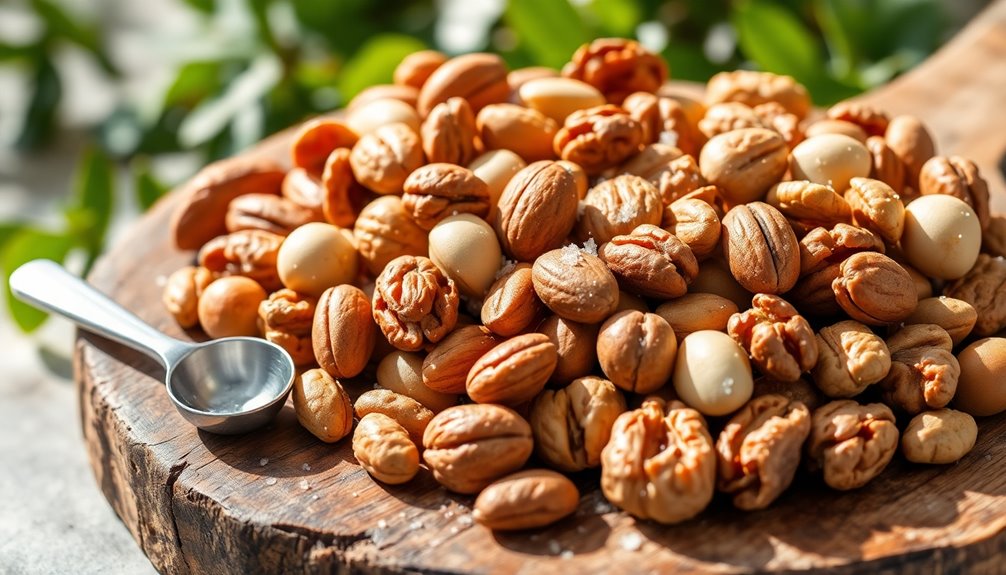
Nuts are great for your keto diet, but portion control is key. Stick to about 1 ounce of low-carb nuts like almonds, macadamias, or pecans each day to stay on track. Although they’re packed with healthy fats, overconsuming can stall your progress and lead to unwanted cravings. If you’re noticing weight gain or digestive issues, it might be time to reassess your nut intake. Continue exploring the benefits and alternatives for a balanced keto plan.
Why Nuts Are a Great Fit for Keto
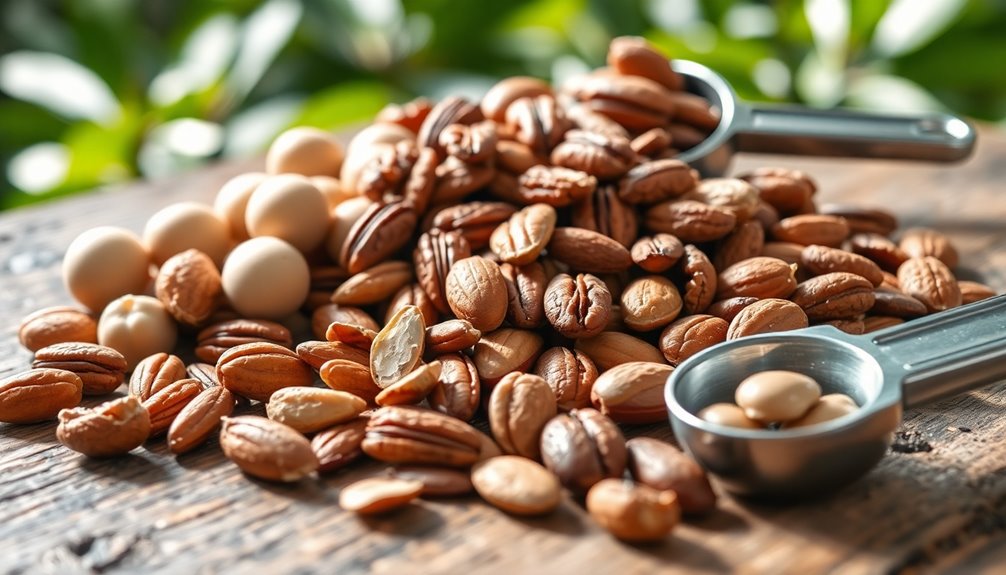
When you’re following a keto diet, nuts can be a fantastic choice for snacking or adding to meals. They’re packed with healthy fats, making them a perfect fit for your low-carb lifestyle.
Nut benefits include not only their ability to keep you feeling full but also their rich nutrient profile. You’ll find essential vitamins, minerals, and antioxidants that support overall health.
Nuts not only satisfy your hunger but also provide essential nutrients that promote overall health and well-being.
Plus, the fiber in nuts helps with digestion and can stabilize blood sugar levels. By incorporating a variety of nuts into your diet, you can enjoy different flavors and textures while reaping the benefits of their healthy fats.
Just remember to watch your portion sizes to stay on track with your keto goals. Additionally, nut-based sauces or dressings can enhance your meals while providing a delicious way to include healthy fats.
Top Keto-Friendly Nuts You Should Try
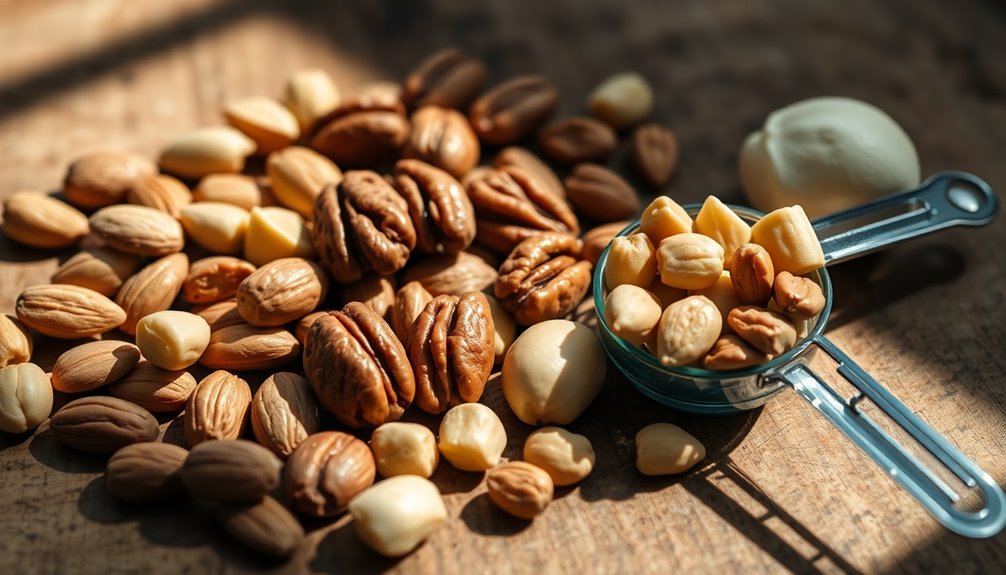
Which nuts are the best for your keto journey? Almonds and macadamia nuts top the list due to their low carb content and healthy fats. You can enjoy almond butter as a delicious spread or add walnuts to your salads for a crunch. If you have nut allergies, consider seeds like sunflower or pumpkin for similar benefits. When exploring nut varieties, pay attention to their origins; some may offer unique flavors. Store your nuts in airtight containers to maintain freshness. Pair them with cheese for a satisfying snack or use them in nut recipes like keto-friendly granola. The benefits of nuts extend beyond taste, supporting heart health and providing essential nutrients for your keto lifestyle, including healthy fats that contribute to overall well-being.
Understanding Carbs in Different Nuts
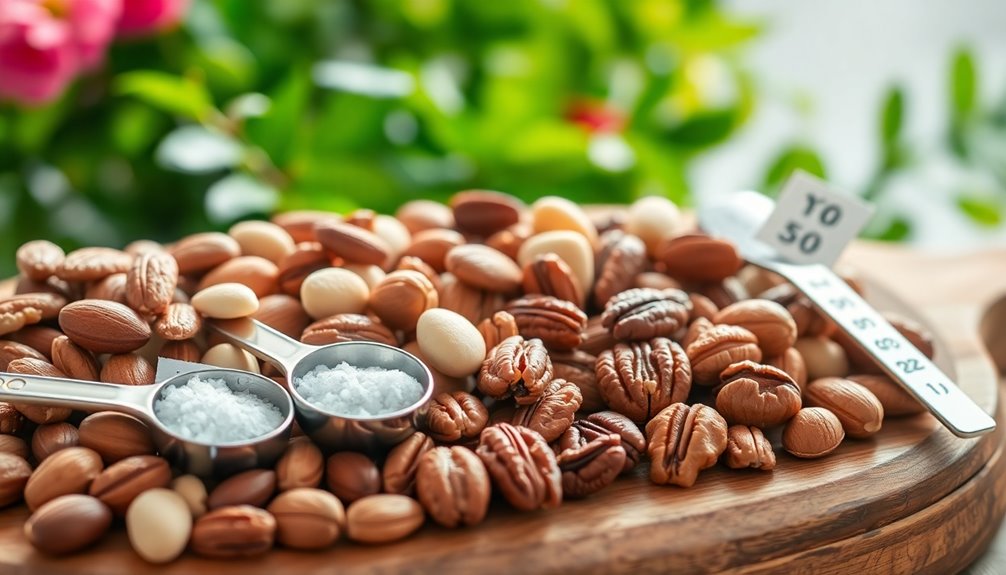
When you’re on a keto diet, understanding the carb content in nuts is essential for staying within your limits.
Some nuts are naturally lower in carbs, making them better choices for your snacking needs.
Let’s compare the carb content of various nuts and highlight the low-carb options that fit your keto lifestyle. Additionally, choosing nuts that are packed with healthy fats can help maintain stable blood sugar levels while satisfying your cravings.
Carb Content Comparison
Understanding the carb content in different nuts is essential for anyone following a keto diet. Each nut has a unique nut carb ratio, which can greatly impact your daily carb intake.
For instance, almonds contain about 2.9 grams of net carbs per ounce, while cashews pack around 8.4 grams—quite a difference! When determining your nut serving sizes, you’ll want to keep these ratios in mind.
A small handful of walnuts (about one ounce) offers just 2 grams of net carbs, making them a better choice for keto.
Low-Carb Nut Options
Several nuts stand out as low-carb options for those on a keto diet. Almonds, macadamia nuts, and pecans are among the best choices, offering you healthy fats while keeping carbs low. Each serving provides significant nut benefits, including heart health support and improved metabolic function.
However, be cautious if you have nut allergies; even small amounts can trigger reactions. It’s wise to introduce new nuts gradually and monitor how your body responds.
Incorporating these low-carb nuts into your diet can enhance your meals and snacks, making it easier to stay within your carb limits.
Remember to enjoy them in moderation to maximize their health benefits while adhering to your keto goals.
How Much Nut Fat Is Too Much on Keto?
When you’re on a keto diet, knowing how much fat from nuts is too much can be tricky.
It’s essential to take into account your recommended daily fat intake and the variety of nuts you choose. Balancing these factors will help you stay on track with your keto goals. Additionally, understanding the nutritional benefits of nuts can guide your choices and portion sizes effectively.
Recommended Daily Fat Intake
While nuts can be a delicious and nutritious part of your keto diet, it’s essential to monitor your daily fat intake to avoid exceeding your macro goals. The recommended fat intake on a keto diet typically ranges from 70% to 80% of your total calories.
Here are some key points to take into account:
- Portion Control: Limit nut servings to about 1 ounce per day.
- Quality Matters: Choose high-fat, low-carb nuts like macadamias or pecans.
- Track Your Intake: Use apps to keep an eye on your fat macros.
- Balance with Other Fats: Incorporate healthy fats from oils and avocados to diversify your sources.
Nut Variety Considerations
Choosing the right variety of nuts is key to staying within your fat limits on a keto diet. Different nuts offer unique benefits and drawbacks. For instance, almonds are low in carbs but might trigger nut allergies in some.
When sourcing nuts, opt for fresh, high-quality options to maximize flavor and nutrition. Proper preparation, like roasting or soaking, can enhance taste and digestibility. Store your nuts in airtight containers to maintain freshness.
Pair nuts with keto-friendly foods, like cheese or avocado, for added flavor and nutrition. Explore various nut recipes to keep your meals interesting while managing your intake.
The Role of Fiber in Nuts and Ketosis
Here’s how fiber supports your keto journey:
- Digestion: It aids in digestion, preventing constipation often associated with low-carb diets.
- Satiety: Fiber promotes feelings of fullness, helping you manage cravings and portion control.
- Blood Sugar: It helps regulate blood sugar levels, preventing spikes that can disrupt ketosis.
- Gut Health: Fiber feeds beneficial gut bacteria, enhancing your overall health.
- Additionally, nuts like almonds provide a significant amount of fiber, which can further support your keto goals.
Portion Sizes: Finding Your Ideal Nut Intake
Maintaining a healthy fiber intake is important, but finding the right portion size for nuts can make a significant difference in your keto journey.
To stay within your carb limits, focus on nut serving sizes—typically about a quarter cup or 1 ounce. This amount provides healthy fats without overloading on carbs.
Focus on nut serving sizes—about a quarter cup or 1 ounce—to enjoy healthy fats while keeping carbs in check.
When you snack, practice mindful munching; pay attention to how many nuts you grab. It’s easy to go overboard when munching straight from the bag.
Consider measuring out portions ahead of time, so you stick to your ideal intake. Remember, nuts are nutrient-dense, so a little goes a long way. Additionally, portion control helps to balance your intake with other food groups for a well-rounded diet.
The Best Ways to Incorporate Nuts Into Your Meals
Incorporating nuts into your meals is easy and delicious. You can whip up nut-based snacks, toss them in salads, or spread nut butter on your favorite foods. Additionally, adding healthy fat options like almond butter or fat bombs can enhance both flavor and nutrition in your dishes.
Nut-Based Snack Ideas
When you’re looking to elevate your keto meals, nut-based snacks can be a delicious and satisfying option.
These nut snack ideas not only keep you full but also add great flavor to your day. Here are some tasty combinations to try:
- Almond Butter and Celery: Spread almond butter on celery sticks for a crunchy, protein-packed treat.
- Mixed Nuts and Cheese: Pair your favorite nuts with cheese cubes for a savory snack.
- Spiced Walnuts: Toss walnuts with a hint of paprika and sea salt for a flavorful crunch.
- Nut Trail Mix: Combine macadamia nuts, pumpkin seeds, and dark chocolate for a sweet and salty mix.
Experiment with these nut flavor combinations to find your favorites!
Salads Topped With Nuts
Adding nuts to your salads not only enhances their flavor but also boosts their nutritional value. You can use a variety of nuts as salad toppings, such as walnuts, almonds, or pecans, to add crunch and healthy fats.
Try tossing a handful into your favorite green salad for a satisfying texture.
Additionally, consider making nut dressings by blending nuts with olive oil, vinegar, and herbs for a creamy, flavorful alternative to traditional dressings. This way, you’re not just adding nuts for texture but infusing your dish with rich flavors.
Experiment with different combinations to find what you love best. Remember, moderation is key; a small amount can go a long way in elevating your salads while keeping them keto-friendly.
Nut Butters and Spreads
- Almond Butter: Perfect on celery sticks or in smoothies.
- Peanut Butter: Great for low-carb pancakes or mixed into yogurt.
- Cashew Butter: Use as a creamy sauce for stir-fries.
- Hazelnut Spread: A keto-friendly treat for desserts or as a dip for berries.
Nut-Based Snacks: Healthy Options for Keto
If you’re looking for a satisfying snack that fits perfectly into your keto lifestyle, nut-based options are a fantastic choice. Nuts offer incredible health benefits, packed with healthy fats, protein, and fiber.
You can enjoy a variety of snacks like raw almonds, walnuts, or macadamia nuts, all while keeping your carb count low. For a bit more flavor, consider roasting them with spices or enjoying nut clusters.
If you crave something crunchy, try nut-based crackers or cheese crisps made with almond flour. The snack variety is endless, ensuring you never get bored.
Just be mindful of portion sizes, as nuts are calorie-dense, but they can definitely satisfy your cravings while aligning with your keto goals. Additionally, incorporating healthy fats into your diet can enhance satiety and overall health.
Common Misconceptions About Nuts on Keto
While many people embrace nuts as a staple in their keto diet, there are several misconceptions that can lead to confusion. Here are some common ones you should be aware of:
- All Nuts Are Keto-Friendly: Not all nuts are low in carbs; some, like cashews, can sabotage your goals.
- Portion Control Isn’t Necessary: Nuts are calorie-dense, so it’s easy to overeat if you don’t monitor your portions. For instance, almonds are low in carbohydrates and can be a great option when consumed in moderation.
- Nut Allergies Are Rare: If you have a nut allergy, always consult a healthcare professional before adding nuts to your diet.
- Nuts Don’t Impact Weight Loss: While they’re healthy, excessive consumption can stall your weight loss efforts.
Understanding these misconceptions can help you make smarter choices on your keto journey.
How to Track Your Nut Consumption Effectively
Tracking your nut consumption is key to staying on course with your keto diet. Start with nut tracking apps to simplify calorie counting and monitor serving sizes. This helps you manage portions effectively, ensuring you don’t exceed your daily limits.
When planning meals, consider how nuts fit into your overall dietary balance and macro ratios. Choose appropriate snack choices that align with your goals, like a small handful of almonds or walnuts. Nuts like almonds and walnuts provide essential nutrients while keeping your carb intake low.
By being mindful of portion management, you can enjoy nuts without derailing your progress. Remember, meal planning is essential; incorporate nuts in moderation to enhance flavor while maintaining your keto lifestyle.
With these strategies, you’ll stay on track and make the most of your nut consumption.
Signs You’re Overdoing Nuts on Your Keto Diet?
How can you tell if you’re overdoing it with nuts on your keto diet? It’s easy to lose track, especially with those nut cravings sneaking in. Here are some signs you might need to practice portion control:
- Weight Gain: If you’re gaining weight despite sticking to your keto plan, nuts could be the culprit.
- Increased Cravings: Finding yourself reaching for more nuts than usual can indicate you’re overindulging.
- Digestive Issues: Experiencing bloating or discomfort after snacking on nuts may suggest you’ve gone too far.
- Unbalanced Macros: If nuts are taking over your daily fat intake, it’s time to reassess your portions.
Being mindful of these signs can help you maintain a healthy balance in your keto journey.
Alternative Keto Snacks to Consider
If you’re looking to switch things up on your keto diet, there are plenty of alternative snacks that can satisfy your cravings without relying solely on nuts.
Consider crunchy textures like pork rinds or roasted chickpeas as delicious snack alternatives. Incorporate protein sources such as cheese crisps or hard-boiled eggs for added nutrient density.
For quick recipes, whip up guacamole served with cucumber slices or celery sticks for a satisfying crunch. Flavor pairings, like olives with feta, can elevate your snacking experience.
With meal prep, portion control becomes easier, ensuring you enjoy healthy fats without overindulging. These options not only keep your snacks exciting but also help in maintaining your keto journey without compromising your goals.
Conclusion
Incorporating nuts into your keto diet can be a delicious and nutritious choice, but moderation is key. While they’re packed with healthy fats and fiber, it’s easy to overindulge. Pay attention to your portion sizes and track your intake to stay on track. Remember, not all nuts are created equal, so choose wisely. By balancing your nut consumption, you’ll maintain your ketosis while enjoying these crunchy treats. Keep it simple, and your keto journey will thrive!