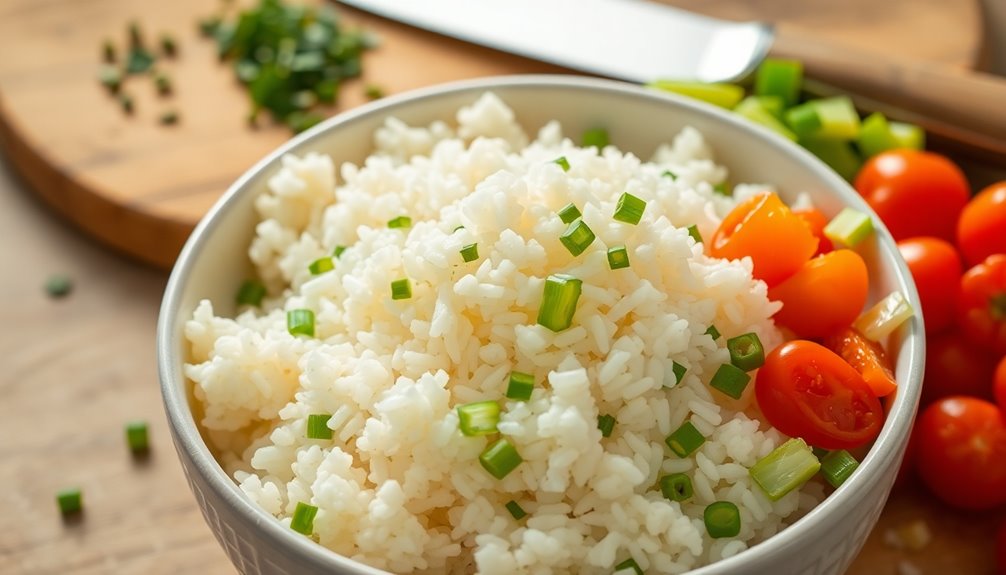
If you’re on a keto diet, traditional rice isn’t your best bet due to its high carb content. Instead, try alternatives like cauliflower rice, which mimics the texture of rice and has only 0.9 grams of net carbs per serving. Shirataki rice is another great option with zero calories, while mushroom rice adds flavor and nutrients with just 1.5 grams of net carbs. You can easily incorporate these swaps into your meals for delicious, satisfying dishes. Discover more ideas ahead!
Why Traditional Rice Isn’t Suitable for Keto
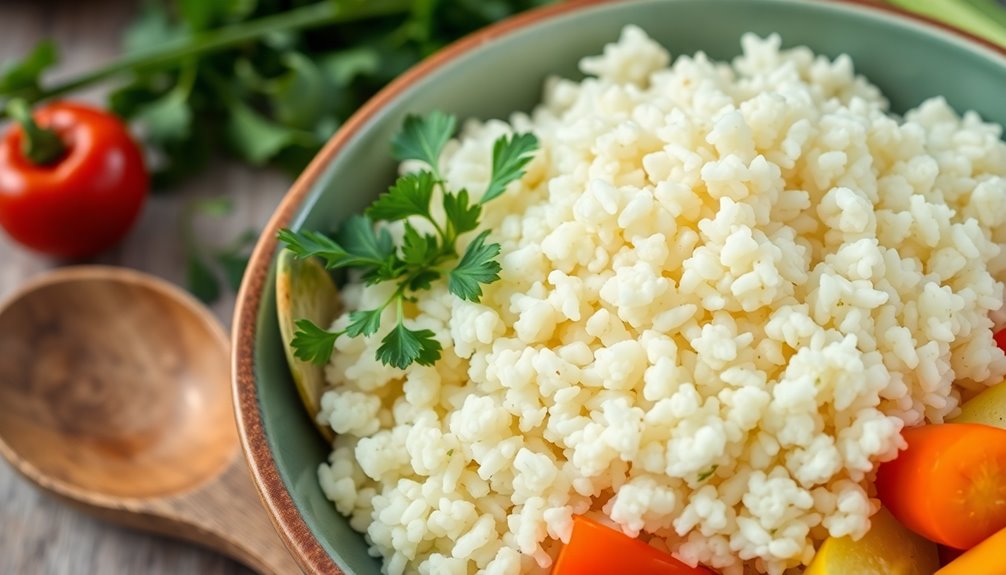
When you’re following a keto diet, traditional rice simply doesn’t fit the bill. Regular rice, whether white or brown, packs around 30 grams of carbs per serving, making it tough to stay within your low-carb limits.
Its low fiber content, only about 0.6 grams per cup, doesn’t keep you full, leading to potential overeating and spikes in blood sugar. Plus, with just 4 grams of protein per cup, rice falls short compared to keto-friendly options that help maintain muscle mass.
The high glycemic index of rice means you’ll experience rapid blood sugar increases, which can derail your efforts for stable energy and weight management. Instead, consider rice substitutes that align better with your keto goals, as reducing insulin resistance can significantly improve blood sugar control.
Top Low-Carb Rice Alternatives to Try

If you’re looking for satisfying rice alternatives that fit into your keto lifestyle, you’re in luck.
Cauliflower rice is a favorite, boasting just 0.9 grams net carbs per 50 grams cooked, and it mimics the texture of white rice perfectly.
Shirataki rice, or “miracle rice,” takes it a step further with only 0.6 grams net carbs and zero calories per 50 grams cooked, making it an ultra-low-carb option.
For a savory twist, try mushroom rice, which has 1.5 grams net carbs per 50 grams cooked.
Riced broccoli brings color and nutrients, offering approximately 15 calories and 2 grams of fiber per half-cup.
Finally, shredded cabbage is versatile, low-calorie, and packed with essential vitamins, making it a fantastic rice alternative. Incorporating keto-friendly grain alternatives can enhance your low-carb diet while providing essential nutrients.
Cauliflower Rice: The Leading Low-Carb Choice
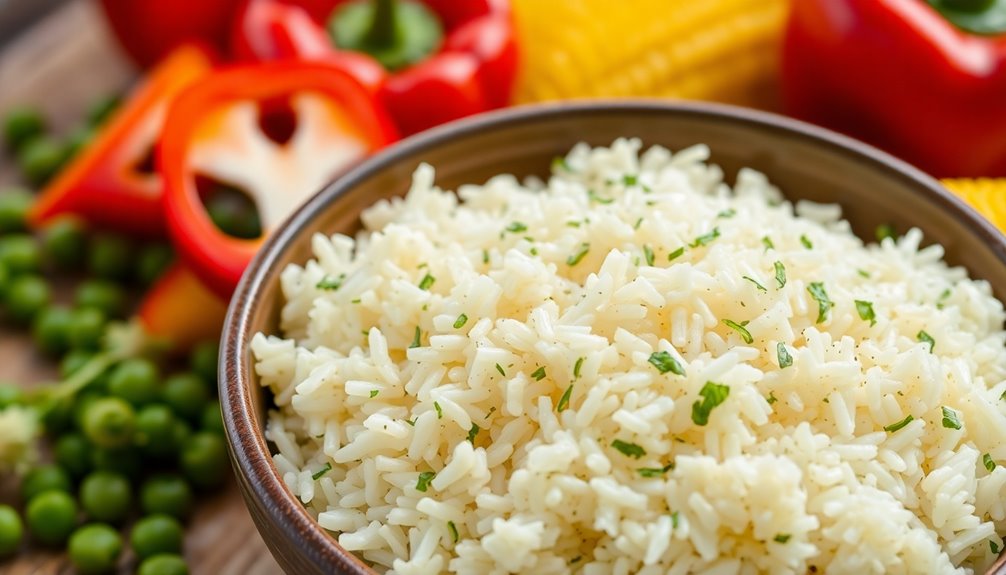
Cauliflower rice stands out as the top low-carb choice for anyone on a keto diet, effortlessly replacing traditional rice while keeping your carb count in check.
With only 0.9 grams of net carbs and 0.9 grams of protein per 50 grams cooked, it’s a fantastic low-calorie option, containing just 23 calories per 100 grams.
With only 0.9 grams of net carbs and 23 calories per 100 grams, cauliflower rice is the ultimate low-calorie keto companion.
Its appearance and texture closely resemble white rice, allowing it to absorb flavors beautifully in various dishes. You can find cauliflower rice pre-riced or easily make it at home, making it a convenient option for meal prep.
Its mild flavor makes it versatile, perfect for stir-fries, casseroles, and salads. Additionally, cauliflower is packed with essential vitamins that enhance its nutritional profile, allowing you to enjoy all your favorite dishes without the added carbs!
Shirataki Rice: A Zero-Calorie Option
Shirataki rice, often called “miracle rice,” is a fantastic zero-calorie option for your keto meals.
Packed with glucomannan fiber, it can help keep you feeling full while adding a unique texture to your dishes. Additionally, it can be a great substitute for low-carb alternatives like cauliflower rice or zucchini noodles in various recipes.
Let’s explore its nutritional benefits, how to prepare it, and some tasty recipe ideas you can try!
Nutritional Benefits Overview
When you’re looking for a low-calorie alternative to traditional rice on a keto diet, shirataki rice stands out as a remarkable choice. Made from the konjac root, it contains zero calories and just 0.6 grams of net carbs per 50-gram serving, making it a fantastic low-carb option.
Shirataki rice is rich in glucomannan fiber, which can promote feelings of fullness and support gut health, aiding in weight management. It’s also gluten-free and soy-free, catering to various dietary needs.
Its unique chewy texture allows it to absorb flavors well, enhancing the appeal in your savory dishes. With these nutritional benefits, shirataki rice can be a versatile staple on your keto journey.
Preparation Method Explained
To prepare shirataki rice effectively, start by rinsing it thoroughly under cold water to eliminate any odor. This preparation method is essential for enjoying this unique rice alternative made from konjac root.
After rinsing, boil the shirataki rice for about 1 minute to soften it, then sauté it briefly to achieve your desired texture.
With a typical serving containing virtually zero calories and only 0-3 grams of carbs, shirataki rice is perfect for low-carb keto diets. Its high fiber content helps stabilize blood sugar levels, promoting feelings of fullness.
This chewy rice substitute enhances various dishes, making it a versatile addition to your cooking instructions while keeping calories in check. Enjoy experimenting with shirataki rice!
Recipe Ideas Incorporating Rice
If you’re looking to spice up your keto meals, incorporating shirataki rice into your recipes can transform your dining experience. This low-calorie alternative, made from konjac root, has just 0.6 grams of net carbs per 50-gram serving.
It’s high in protein and rich in glucomannan fiber, promoting healthy aging and aiding digestion. The unique chewy texture of shirataki rice absorbs flavors beautifully, making it a great fit for various dishes.
Try it in low-carb fried rice or a creamy risotto for a guilt-free meal. Just remember to rinse it well and boil for a minute to achieve the perfect consistency.
Enjoy a delicious, gluten-free meal that keeps you satisfied without the carbs!
Mushroom Rice: Adding Flavor and Nutrients
Mushroom rice is a fantastic low-carb choice that packs in nutrition while delivering rich flavor.
By using techniques like cooking mushrooms in butter or oil, you can elevate your dishes and make them even more satisfying.
Plus, when you combine mushroom rice with other low-carb options, you’ll create a hearty side that feels indulgent without the carbs. Additionally, you can serve it alongside keto-friendly dishes like creamy Tuscan chicken for a complete meal.
Nutritional Benefits Overview
While exploring low-carb options on a keto diet, you’ll find mushroom rice stands out not just for its nutritional profile but also for its rich flavor.
This low-calorie alternative contains just 1.5 grams of net carbs and 1.1 grams of protein per 50-gram serving, making it an excellent choice for those watching their carb intake.
Packed with protein and fiber, mushroom rice offers numerous health benefits, including improved satiety.
Its versatility as an ingredient allows you to incorporate it into various dishes, enhancing both flavor and texture.
Pairing it with other low-carb substitutes can create a nutritious base that satisfies your cravings without compromising your dietary goals.
Enjoy the savory richness of mushroom rice while reaping its many nutritional benefits!
Flavor Enhancement Techniques
To elevate the flavor of mushroom rice, you can use simple techniques that transform this low-carb staple into a culinary delight. Start by sautéing sliced white mushrooms in butter; this intensifies their earthy flavor and makes them a fantastic addition to your dishes.
Combining mushroom rice with low-carb alternatives like cauliflower or broccoli rice creates a nutrient-dense base that enhances both taste and texture. The texture of mushroom rice closely resembles traditional rice, allowing it to absorb sauces and seasonings beautifully.
Plus, with only 1.5 grams of net carbs per serving, it’s perfect for your keto diet. Enjoy the savory goodness while reaping the health benefits of antioxidants found in mushrooms.
Lentils and Wild Rice: Nutrient-Dense Choices
Lentils and wild rice stand out as nutrient-dense choices for those traversing a keto diet.
Lentils offer 6.1 grams of net carbs and 4.5 grams of protein per 50-gram cooked serving, making them a fantastic low-carb alternative for salads and various dishes. Packed with iron and fiber, they enhance nutritional value while providing a hearty texture.
Wild rice, technically a type of grass, contains 9.8 grams of carbs and 4.5 grams of protein per serving, delivering a nutty flavor perfect for casseroles. As a complete protein source, wild rice includes all nine essential amino acids, making it ideal for plant-based diets.
Both options are high in fiber, promoting digestive health and helping you feel full longer, supporting your weight management goals. Additionally, incorporating low-carb alternatives can aid in maintaining ketosis while enjoying diverse textures in meals.
How to Incorporate These Alternatives in Your Meals
Incorporating low-carb rice alternatives into your meals can elevate both flavor and nutrition without derailing your keto diet.
Start with cauliflower rice as a versatile base for stir-fries and curries, soaking up flavors beautifully. For creamy dishes, use shirataki rice—just rinse and heat for a zero-calorie alternative.
If you crave a savory touch, mushroom rice can replace traditional rice in pilafs or serve as a hearty side. Riced broccoli adds nutrient density to salads and sides, while hearts of palm, or Palmini rice, offers a firmer texture perfect for fried rice or casseroles.
These low-calorie alternatives not only enhance your meals but also keep you on track with your keto goals. Additionally, incorporating low glycemic index options like these can further support stable blood sugar levels on your ketogenic journey.
Conclusion
So, while you might’ve thought rice was a staple in every diet, especially the keto one, it turns out you don’t need it to enjoy delicious meals. By swapping traditional rice with cauliflower, shirataki, or even mushrooms, you can still savor that comforting texture without the carbs. Ironically, these substitutes might just make your dishes more exciting than plain old rice ever could! Embrace the change, and your taste buds will thank you.