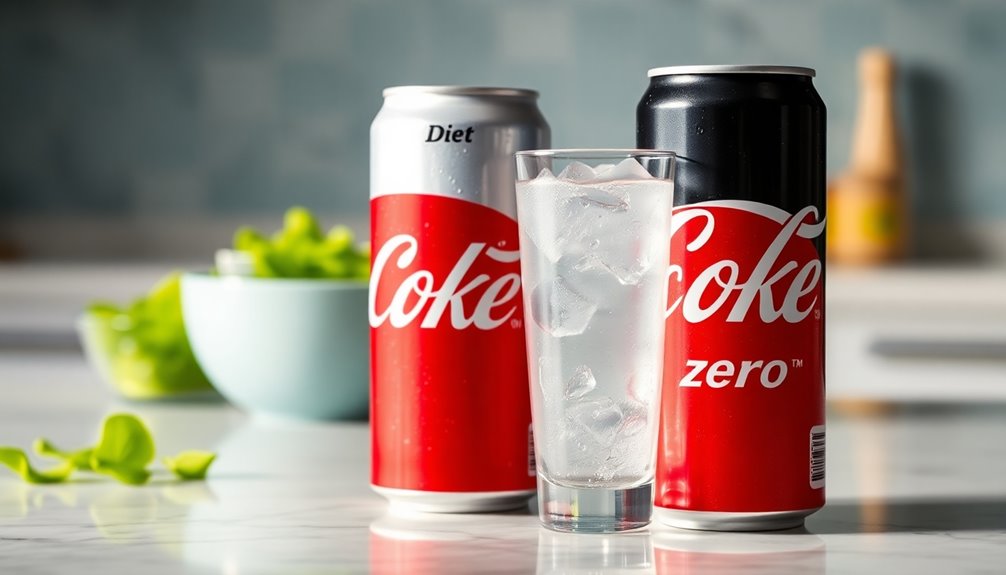
When choosing between Diet Coke and Coke Zero on your keto diet, both are calorie-free and carb-free, making them keto-friendly. Diet Coke has a unique flavor, while Coke Zero tries to mimic the classic Coke taste more closely. The sweeteners differ too: Diet Coke uses aspartame alone, whereas Coke Zero blends aspartame with acesulfame potassium. Both can impact cravings, so moderation’s key. If you’re curious about how to enjoy these drinks without compromising your diet, there’s more to discover!
What Makes Diet Coke and Coke Zero Keto-Friendly?
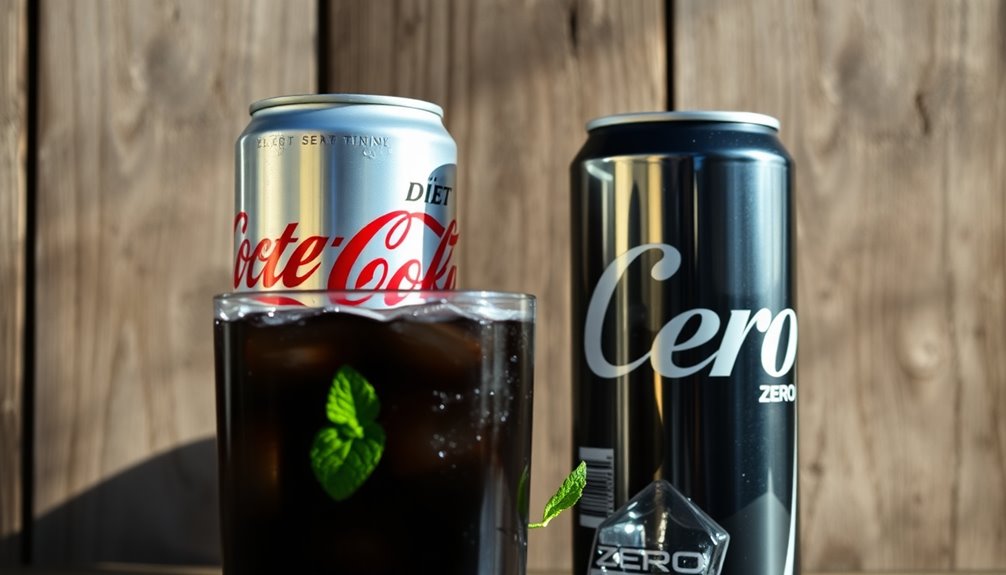
When you’re following a keto diet, finding beverages that fit your lifestyle can be a challenge. Both Diet Coke and Coke Zero are keto-friendly choices, as they contain zero calories and carbs.
Diet Coke uses artificial sweeteners like aspartame, while Coke Zero combines aspartame and acesulfame potassium, aiming to mimic the classic Coke taste more closely.
Although these drinks are carb-free, they might trigger cravings for sweetness, potentially disrupting your ketosis. You might find Coke Zero’s flavor profile more satisfying if you’re craving that classic Coke experience. Additionally, consuming beverages with artificial sweeteners may affect insulin sensitivity, so moderation is key.
However, it’s wise to view both as occasional treats rather than mainstays, as water remains the best option for hydration on a keto diet.
Taste Test: How Do Diet Coke and Coke Zero Compare?
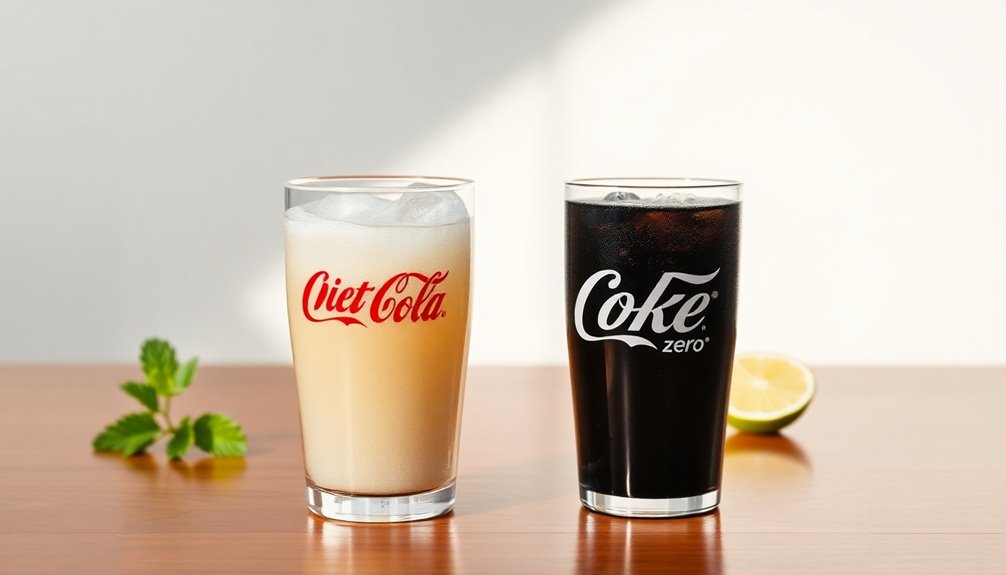
While both Diet Coke and Coke Zero are popular choices for those on a keto diet, their taste profiles set them apart.
Diet Coke has a distinct flavor that diverges from regular Coke, while Coke Zero aims to replicate that classic taste more closely.
Diet Coke offers a unique flavor experience, while Coke Zero closely mimics the classic Coke taste.
In various taste tests, Coke Zero is often perceived as sweeter and more Coke-like compared to Diet Coke, which some find invigorating due to its unique flavor.
Your preference might boil down to personal taste—some swear by Coke Zero for its familiar sweetness, while others prefer the distinctness of Diet Coke.
Both options are zero-calorie and carb-free, making them suitable choices for your keto diet. Additionally, both beverages contain zero-carbohydrate options, helping to maintain stable blood sugar levels while following a ketogenic lifestyle.
The Sweetener Debate: Aspartame vs. Aspartame and Acesulfame Potassium
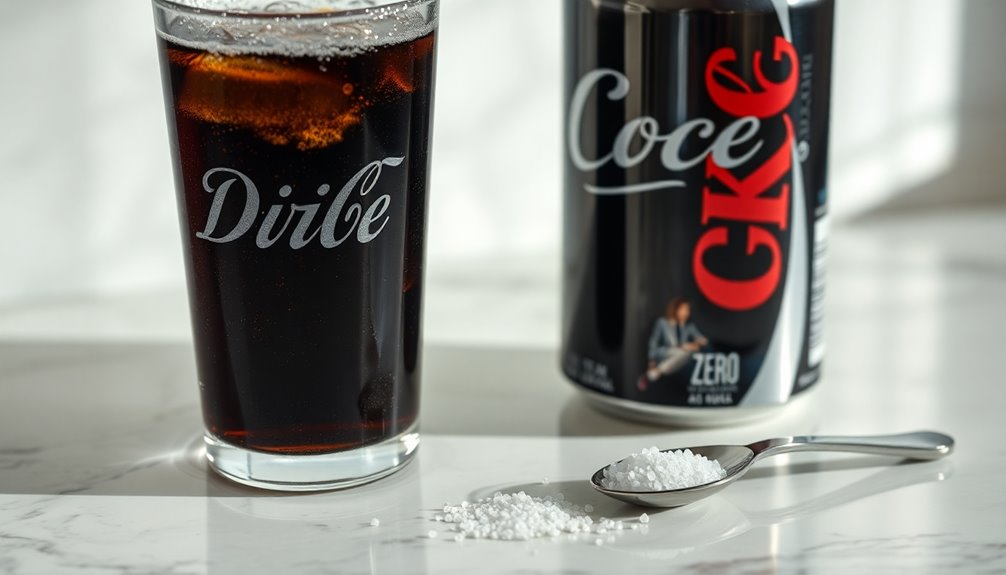
When you choose between Diet Coke and Coke Zero, you’re really weighing the differences in sweeteners.
Diet Coke relies solely on aspartame, while Coke Zero combines aspartame with acesulfame potassium for added sweetness.
Understanding these compositions can help you consider the potential health impacts and how they affect taste. Additionally, both beverages are calorie-free, making them suitable for keto diets while still satisfying your sweet cravings.
Sweetener Composition Differences
Although both Diet Coke and Coke Zero aim to offer a low-calorie soda experience, their sweetener compositions set them apart.
- Diet Coke relies solely on aspartame, which is about 200 times sweeter than sugar.
- Coke Zero uses a blend of aspartame and acesulfame potassium (Ace-K) for enhanced sweetness.
Aspartame breaks down into phenylalanine and aspartic acid, raising concerns for those with PKU.
Acesulfame potassium is calorie-free and contributes to a more balanced flavor profile, potentially offering a more satisfying taste.
The combination in Coke Zero may appeal to those seeking a classic Coke taste, while Diet Coke’s singular use of aspartame provides its own unique flavor experience.
Health Risks Overview
As you consider the health implications of sweeteners in Diet Coke and Coke Zero, it’s essential to weigh the potential risks associated with aspartame and acesulfame potassium.
Diet soda, while calorie-free, can pose health risks. Aspartame has been linked to increased depression and anxiety, while acesulfame potassium raises concerns about long-term metabolic effects.
Both sweeteners may disrupt gut bacteria, potentially leading to increased hunger and challenges in weight management. Aspartame can break down into phenylalanine, which is toxic in high doses, and acesulfame potassium has shown potential carcinogenic properties in animal studies.
For those on a keto diet, these factors could complicate your efforts to maintain metabolic regulation and manage caloric intake effectively.
Impact on Taste
While both Diet Coke and Coke Zero offer a zero-calorie alternative for those on a keto diet, their taste profiles differ markedly due to their sweetener compositions.
- Diet Coke uses aspartame, known for its distinct flavor that some love.
- Coke Zero combines aspartame with acesulfame potassium, mimicking the taste of regular Coke.
Aspartame in Diet Coke may appeal to those who prefer a unique taste, while Coke Zero’s blend can feel more familiar.
Individual taste perceptions vary, meaning you might find yourself leaning toward one over the other.
Ultimately, your preference for Diet Coke or Coke Zero may hinge on how you experience each sweetener’s impact on taste.
Choose what satisfies your cravings while sticking to your keto diet!
How Do Artificial Sweeteners Affect Your Keto Journey?
How do artificial sweeteners fit into your keto journey? While options like Diet Coke and Coke Zero have zero calories and carbs, their long-term effects on your metabolism can complicate weight loss efforts.
These artificial sweeteners might increase cravings for sweets, making it harder to stick to a low-carb lifestyle. Studies show that diet soda drinkers often consume more calories overall compared to those who drink water, which could stall your progress.
The sweet taste activates reward pathways in your brain, but lacking calories can leave you feeling less satisfied, prompting more food intake. Additionally, regular consumption has been linked to increased risks of metabolic syndrome and type 2 diabetes, undermining the fat loss and health goals of your keto diet.
Furthermore, improving insulin sensitivity is crucial for stable blood sugar levels and can be negatively impacted by frequent consumption of these drinks.
Nutritional Breakdown: Calories and Carbs in Each Drink
When it comes to calories and carbs, both Diet Coke and Coke Zero stand out as excellent choices for your keto diet.
Each drink packs zero calories and zero grams of carbs per 12-ounce serving, which means they won’t interfere with your ketosis. Additionally, these beverages can be enjoyed without affecting insulin sensitivity, making them suitable for those following a low-carb lifestyle.
Let’s break down how these beverages compare and what that means for your low-carb lifestyle.
Caloric Content Comparison
Both Diet Coke and Coke Zero offer impressive benefits for those on a keto diet, as they contain zero calories and no carbohydrates per 12-ounce serving. This makes them excellent choices for maintaining ketosis without adding extra caloric content.
Here’s a quick comparison:
- Caloric Content: Both drinks are calorie-free.
- Carbohydrate Content: Neither has any carbs, perfect for keto compliance.
- Artificial Sweeteners: Diet Coke uses aspartame, while Coke Zero combines aspartame and acesulfame potassium.
- Taste Profile: Coke Zero is designed to taste like original Coca-Cola, whereas Diet Coke has its own unique flavor.
Ultimately, both options are keto-friendly, but your personal preference for artificial sweeteners and taste will guide your choice.
Carb Count Analysis
While it’s clear that Diet Coke and Coke Zero are both calorie-free and carb-free, understanding their nutritional breakdown can help you make an informed choice.
Both drinks are low-carb options, perfect for your keto diet, as each 12-ounce can contains zero grams of carbohydrates and no sugar.
Diet Coke is sweetened with aspartame, providing a unique flavor, while Coke Zero combines aspartame and acesulfame potassium for a different taste profile.
Since neither drink impacts your carb levels, your choice may come down to personal preference.
However, it’s important to remember that both options contain artificial sweeteners, which should be consumed in moderation due to potential health concerns.
Enjoy your beverage, but be mindful of your overall intake!
The Role of Diet Soda in Ketosis: Can You Stay in Ketosis?
Can you enjoy a revitalizing diet soda without jeopardizing your ketosis? Both Diet Coke and Coke Zero contain zero calories and carbs, making them unlikely to disrupt your keto journey when consumed in moderation.
However, consider the following:
- They rely on artificial sweeteners, which may affect hunger signals.
- Excessive intake can lead to cravings for sweet flavors.
- Staying hydrated with water is essential, as diet sodas don’t provide the same benefits.
- Moderation is key to prevent any potential negative effects on metabolism.
- It’s important to monitor calorie intake to ensure you remain within your ketogenic goals.
While you can enjoy these beverages, prioritizing hydration and being mindful of your consumption helps maintain your focus on the low-carb principles of the keto diet.
Other Potential Health Risks of Diet Soda Consumption
Diet sodas might seem like a safe choice for those on a keto diet, but their long-term effects raise some red flags. The artificial sweeteners in these beverages, like aspartame, can disrupt gut bacteria and may lead to weight gain by increasing hunger and reducing satiety.
Studies suggest that diet soda drinkers consume up to 450 more calories daily compared to water drinkers, undermining your keto goals. Additionally, the sweet taste can activate reward pathways in your brain, causing cravings for more sweets and boosting overall calorie intake. Furthermore, frequent consumption of diet sodas may interfere with cholesterol levels and undermine the benefits of a keto diet.
There are also ongoing concerns about the potential carcinogenic properties of these sweeteners, highlighting significant health risks associated with frequent consumption of diet sodas. Proceed with caution!
Alternatives to Diet Soda for Keto Dieters
If you’re looking for healthier beverage options on a keto diet, there are plenty of tasty alternatives to diet soda.
Unsweetened sparkling water, herbal teas, and bone broth offer invigorating choices without the carbs.
Plus, you can sweeten your drinks naturally with options like stevia or monk fruit, keeping your ketosis intact. Another great option is to incorporate keto-friendly sugar substitutes, which can enhance the flavor of your beverages without impacting your diet.
Healthier Beverage Options
While many people reach for diet sodas to quench their thirst, there are healthier beverage options that fit perfectly within a keto lifestyle. You can enjoy a variety of drinks that offer flavor without the carbs.
Consider these alternatives:
- Unsweetened sparkling water: A revitalizing, zero-calorie option you can flavor with citrus or herbs.
- Herbal teas: Low in calories and packed with antioxidants; enjoy them without sweeteners.
- Unsweetened nut milks: Almond or coconut milk provides a low-carb base for recipes, with just 3 to 7 grams of carbs per cup.
- Bone broth: Nutritious and comforting, it’s low in carbs while offering protein and electrolytes.
These choices can be more satisfying than Coke Zero or Diet Coke, especially when you use healthier sugar substitutes!
Natural Sweetener Alternatives
Many keto dieters seek out sweet flavors without the carbs found in traditional sodas. If you’re looking for alternatives to Coke or Coke Zero, consider natural sweeteners like monk fruit and stevia. Both contain zero calories and carbs, making them excellent choices for satisfying your sweet cravings without disrupting ketosis.
Erythritol is another great option; it has minimal calories and won’t spike your blood sugar levels. Swerve, a blend of erythritol and oligosaccharides, measures cup-for-cup like sugar, making it perfect for baking.
Though coconut sugar isn’t as low in carbs, it contains inulin, which can help slow glucose absorption. These sweeteners can help you enjoy your favorite flavors while sticking to your keto diet.
Low-Carb Drink Recommendations
Looking for tasty alternatives to diet soda while sticking to your keto diet? You’ve got plenty of low-carb options that won’t compromise your health. Here are some invigorating choices:
- Sparkling Water: Zero carbs, add lemon or lime for flavor.
- Nut Milks: Unsweetened almond and coconut milks have only 3g and 7g of carbs per cup.
- Bone Broth: With about 41 calories and 0g carbs per cup, it’s nutrient-rich and comforting.
- Herbal Tea: Calorie-free and low in carbs, packed with antioxidants when enjoyed without sweeteners.
These drinks not only fit your ketogenic diet but also minimize health effects associated with sweetened drinks.
Enjoy exploring these delicious alternatives!
How to Include Diet Coke or Coke Zero in a Balanced Keto Diet
Incorporating Diet Coke or Coke Zero into your balanced keto diet can be enjoyable, as both beverages offer zero calories and carbs. You can savor them occasionally, but moderation is key to avoid potential drawbacks from artificial sweeteners.
While Coke Zero combines aspartame and acesulfame potassium, Diet Coke primarily uses aspartame, which may influence your cravings differently. Remember, these drinks can help with hydration, but they shouldn’t replace water as your primary fluid source due to caffeine’s diuretic effects. Additionally, be mindful that improvements in cholesterol levels may be impacted by your overall dietary choices, including beverage consumption.
Keep an eye on your overall intake of artificial sweeteners, as excessive consumption could disrupt your metabolism and hinder your keto diet goals. If you’re concerned about sweeteners, consider exploring stevia-based alternatives for a low-carb beverage option.
Reader Preferences: Polling the Keto Community
How do you feel about the taste of Diet Coke versus Coke Zero? In the keto community, reader preferences vary widely. Some folks swear by Coke Zero for its closer taste to original Coke, while others prefer Diet Coke’s unique flavor.
Here’s what you might want to reflect on:
- Taste Differences: Coke Zero uses a blend of artificial sweeteners, while Diet Coke primarily uses aspartame.
- Health Considerations: Both are zero-calorie and zero-carb, but concerns linger about the health impacts of artificial ingredients.
- Community Feedback: Polls show mixed preferences, with many questioning sweeteners’ safety.
- Consumer Engagement: Discussions on social media reveal varying awareness levels, influencing your choice.
Ultimately, your preference might hinge on taste, health concerns, or community feedback.
Expert Opinions on Diet Soda and Keto
The debate over Diet Coke and Coke Zero in the keto community often leads to questions about their health impacts. While both drinks have zero calories and carbs, their artificial sweeteners raise concerns.
Diet Coke primarily uses aspartame, which some studies link to increased hunger and potential metabolic issues. In contrast, Coke Zero combines aspartame and acesulfame potassium, appealing to those wanting a taste closer to original Coca-Cola.
However, both can disrupt ketosis by heightening cravings for sweet flavors, possibly leading to unintended carb consumption. Experts advise limiting artificial sweeteners, suggesting alternatives like stevia for a healthier option on your keto diet. Additionally, it’s important to consider the impact of insulin sensitivity when choosing beverages that may affect your metabolic health.
Ultimately, the choice between Diet Coke and Coke Zero may hinge on personal taste and health considerations.
Tips for Enjoying Diet Beverages Without Compromising Your Diet
While diet beverages can be tempting, enjoying them without compromising your keto diet requires a mindful approach. Here are some tips to help you navigate your choices:
- Opt for unsweetened beverages like tea or sparkling water instead of diet sodas.
- If you choose diet drinks, pick those sweetened with stevia or erythritol to minimize health risks.
- Limit diet soda to occasional treats to avoid increased cravings and support metabolic health.
- Focus on hydration with water, the best choice for maintaining hydration on a keto diet.
Final Thoughts: Choosing Between Diet Coke and Coke Zero on Keto?
When deciding between Diet Coke and Coke Zero on your keto journey, consider what matters most to you.
Both beverages have zero calories and zero carbs, making them keto-friendly. If you prefer a taste closer to the original Coke, Coke Zero might be your go-to. However, if you enjoy a distinct flavor, Diet Coke could be more appealing.
Both options use artificial sweeteners—Diet Coke primarily relies on aspartame, while Coke Zero combines aspartame with acesulfame potassium.
Keep in mind that excessive consumption of artificial sweeteners may disrupt metabolic health and increase cravings, so moderation is key.
Ultimately, while both drinks fit your keto diet, water remains the best choice for hydration and overall health.
Conclusion
So, you’re stuck between Diet Coke and Coke Zero on your keto quest? Congratulations, you’ve just made the most important decision of your day! Whether you sip on aspartame or dance with acesulfame potassium, at least you’re avoiding carbs. Who knew your biggest dilemma would be choosing a zero-calorie beverage? Just remember, while you’re sipping your soda, the real battle is resisting that slice of cake staring at you from the fridge! Cheers to keto choices!