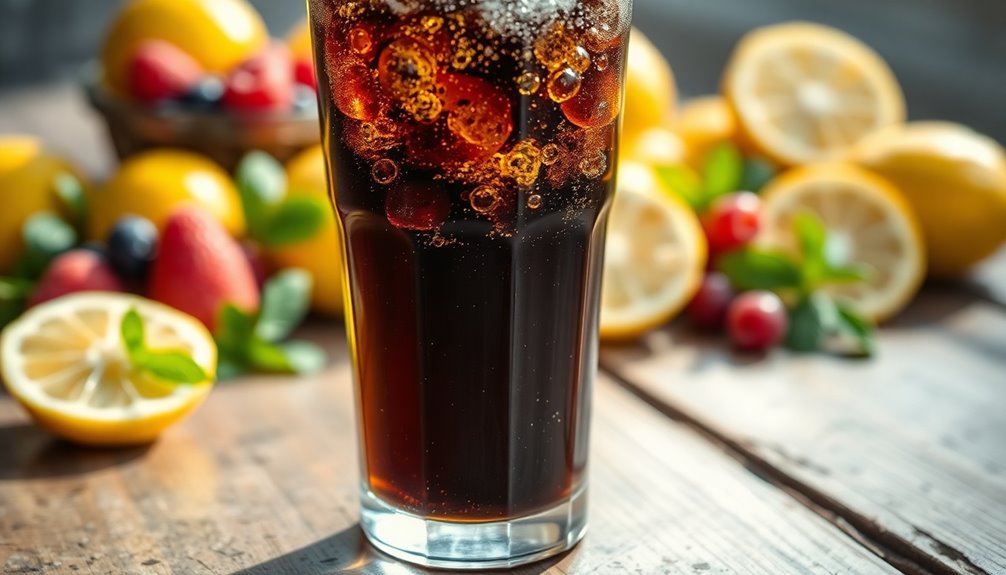
Diet soda might seem fine on keto since it has zero calories and carbs, but its artificial sweeteners can complicate your journey. They can trigger cravings and increase hunger, making it hard to maintain ketosis. Plus, long-term use of sweeteners like aspartame comes with health risks. You might want to reflect on better hydration options instead. Want to explore some alternatives and learn more about managing your beverage choices on keto?
What Is Diet Soda and How Does It Fit Into a Keto Diet?
When you’re managing a keto diet, you might wonder how diet soda fits into your plan. Diet soda offers zero calories and zero carbs, making it seem compatible with your carb count. It uses artificial sweeteners like aspartame and sucralose, which don’t spike blood sugar or ketone levels.
However, be cautious—while it won’t sabotage your carb intake, it might trigger cravings for sweet foods, potentially hindering your weight loss efforts. Long-term consumption can lead to health risks, including metabolic issues and weight gain, which counteract the benefits of a keto lifestyle. Additionally, maintaining stable blood sugar levels is crucial for achieving optimal results while on keto.
Instead, consider healthier alternatives like water, herbal teas, or unsweetened drinks to support your goals without the negative side effects of diet soda.
Understanding Artificial Sweeteners: Are They Keto-Friendly?
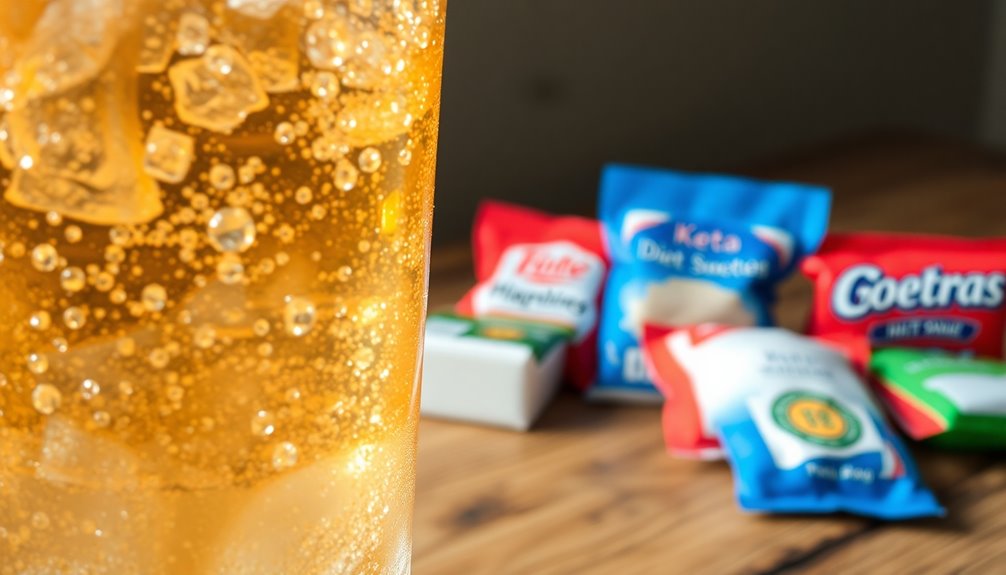
When it comes to artificial sweeteners, you’ll find a variety of options, like aspartame and erythritol, each with different effects on your body. While some sweeteners can help you maintain ketosis, others might trigger cravings or disrupt your metabolism. For instance, low-carb sugar substitutes like stevia and monk fruit extract provide sweetness without raising blood sugar levels, making them excellent choices for a keto diet. Let’s explore which types are truly keto-friendly and how they impact your diet.
Types of Artificial Sweeteners
Artificial sweeteners have become a staple for those on a keto diet, offering a way to satisfy your sweet tooth without adding calories or carbs.
These non-nutritive sweeteners, like Aspartame and Sucralose, can be 200 to 20,000 times sweeter than sugar, making them ideal for diet soda.
Natural options like Monk fruit extract also provide zero carbs, fitting perfectly into your keto lifestyle.
Sugar alcohols, such as Erythritol, are popular too, as they offer nearly zero net carbs.
However, be cautious with Maltitol; it contains digestible carbs that could disrupt your ketosis.
While many artificial sweeteners don’t affect metabolism considerably, moderation is key to avoiding potential cravings.
Impact on Ketosis Maintenance
Diet sodas may seem like a perfect fit for your keto lifestyle since they contain no calories or carbs.
However, the artificial sweeteners used in these beverages can disrupt metabolic processes essential for maintaining ketosis. While they don’t raise blood sugar levels, they may negatively impact gut health and insulin sensitivity, vital for effective ketosis.
The sweet taste can trigger cravings and increase hunger, leading to overeating and derailing your weight loss efforts. You might find that diet sodas intensify sugar cravings, making it harder to stick to your plan.
To enjoy them without jeopardizing your progress, practice moderation and stay aware of how they affect your appetite regulation and overall keto journey.
The Impact of Diet Soda on Ketosis and Metabolic Health
When you reach for a diet soda on your keto journey, it might seem harmless due to its low calories and carbs.
However, these sweeteners can trigger hunger and disrupt your metabolism, potentially leading to overeating.
As you navigate ketosis, it’s essential to evaluate how these drinks might impact your overall health and weight loss goals. Additionally, the consumption of artificial sweeteners may interfere with hormonal changes that promote appetite regulation, compounding the challenges of maintaining ketosis.
Sweeteners and Hunger Response
Although you might think diet soda is a harmless choice on keto, it can actually stir up cravings and hunger. The sweet taste of diet soda, fueled by artificial sweeteners, activates reward pathways in your brain without delivering caloric satisfaction.
This can lead to increased hunger response, pushing you to eat high-carb foods that undermine your weight loss efforts. Studies show that regular consumption may boost your daily calorie intake by up to 450 calories, jeopardizing your metabolic health.
While diet sodas don’t raise blood sugar directly, they can disrupt insulin levels and make it harder to stick to your carb limits.
Ultimately, they may counteract the benefits of your ketogenic diet, making weight loss more challenging.
Metabolic Effects on Ketosis
While you might think diet soda is a safe choice on keto, its impact on your metabolic health could derail your progress. Here are three ways diet soda might affect your journey:
- Insulin Response: Artificial sweeteners can still trigger insulin release, potentially disrupting ketosis and affecting glucose levels.
- Increased Cravings: Consuming diet soda may lead to heightened cravings for high-carb foods, making it harder to stick to your low-carb plan.
- Weight Gain: Studies show diet soda drinkers may consume up to 450 more calories daily, linking it to weight gain and metabolic syndrome.
Additionally, long-term use can negatively affect gut health, complicating your ability to maintain ketosis.
It’s crucial to reflect on these factors when choosing your beverages.
Do Artificial Sweeteners Affect Hunger and Cravings?
Artificial sweeteners might seem like a guilt-free way to satisfy your sweet tooth, but they can actually mess with your hunger and cravings.
While diet soda is calorie-free, studies show that the sweet taste from artificial sweeteners can stimulate your appetite, making it harder to control hunger. In fact, regular consumption might increase your daily calorie intake by around 450 calories, counteracting your weight loss efforts.
Plus, these sweeteners can disrupt gut bacteria, leading to metabolic issues that further complicate appetite control. Over time, you may develop a tolerance to these sweet flavors, intensifying cravings for high-carb options.
Ultimately, while they seem harmless, artificial sweeteners can create a cycle that undermines your goals. Additionally, they may interfere with insulin sensitivity, which is crucial for effective weight management and metabolic health.
Health Risks Associated With Aspartame and Other Sweeteners
Many people reach for diet sodas, thinking they’re a safe choice on a keto diet, but the health risks associated with aspartame and other artificial sweeteners can be alarming.
Here are some key concerns:
- Toxic Breakdown: Aspartame breaks down into phenylalanine and methanol, which can be harmful at high doses, potentially affecting mood and increasing diabetes risk.
- Kidney Function: Long-term use has been linked to a 30% decrease in kidney function and higher cardiovascular disease risks.
- Cravings and Metabolism: Aspartame may disrupt metabolic processes, leading to increased cravings for sugary foods, undermining your weight management efforts. Additionally, opting for natural sugar substitutes can provide a healthier alternative without the adverse effects of artificial sweeteners.
Instead of diet soda, consider healthier alternatives like monk fruit, stevia, or erythritol, which offer zero calories without the negative effects of artificial sweeteners.
Better Alternatives to Diet Soda for Keto Hydration
Diet sodas may seem like a convenient choice for hydration on a keto diet, but with their potential health risks, it’s wise to explore better options.
Sparkling water is a revitalizing, zero-carb alternative that hydrates without added sugars or artificial sweeteners.
Sparkling water offers a refreshing, zero-carb hydration option without any added sugars or artificial sweeteners.
Unsweetened tea, whether hot or iced, provides calorie-free hydration and a variety of flavors to keep things interesting.
Bone broth is another excellent choice, low in carbs and rich in nutrients, offering both hydration and electrolytes.
If you enjoy creamy beverages, unsweetened nut milks like almond or coconut are perfect for smoothies or coffee.
Finally, infused water with low-carb fruits or herbs adds flavor without compromising your keto goals, making it a delightful way to stay hydrated. Additionally, opting for low-carb sweeteners can help satisfy your sweet tooth while keeping you in ketosis.
Making Informed Choices: How to Enjoy Beverages on Keto?
While you might be tempted to reach for a diet soda when thirst strikes, making informed choices about your beverages on a keto diet is crucial.
Diet sodas may seem keto-friendly with zero calories and carbs, but they often contain artificial sweeteners that can trigger cravings and pose health risks.
To stay hydrated while minimizing potential downsides, consider these options in moderation:
- Unsweetened Tea: A revitalizing choice without hidden sugars.
- Flavored Seltzers: Look for brands without added carbs or artificial sweeteners.
- Herbal Infusions: These can satisfy your thirst without disrupting your keto goals.
Always check labels for hidden sugars or carbs to guarantee your drink aligns with your diet. Additionally, incorporating keto-friendly sweeteners can enhance your beverages without compromising your dietary goals.
Conclusion
To summarize, while diet soda can fit into your keto lifestyle, moderation is key. A study found that 25% of regular diet soda drinkers reported increased cravings for sweets, which could undermine your goals. Opting for healthier alternatives like sparkling water or herbal tea can help you stay hydrated without the potential downsides of artificial sweeteners. Ultimately, making informed choices about your beverages can keep you on track while enjoying your keto journey.