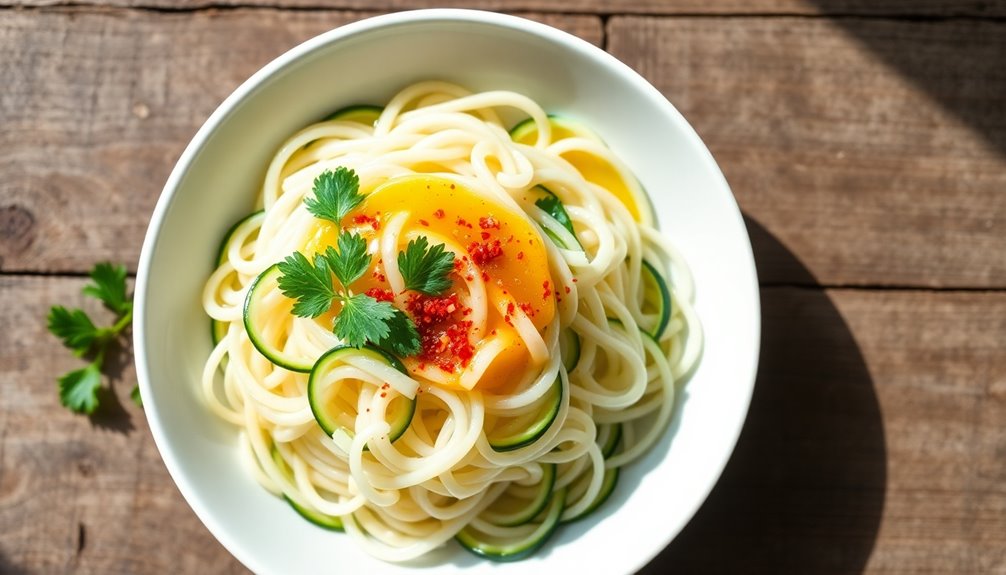
If you’re on a keto diet, low-carb noodles like shirataki and zucchini are fantastic options. Shirataki noodles are nearly calorie-free and require minimal prep. Zucchini noodles, or zoodles, are nutrient-rich and easy to make. You can roast, sauté, or spiralize them for a quick meal. Both pair well with a variety of sauces. Want to explore other great swaps and tips for making the most of these noodles? There’s plenty more to discover!
Why Choose Low-Carb Noodles for a Keto Diet
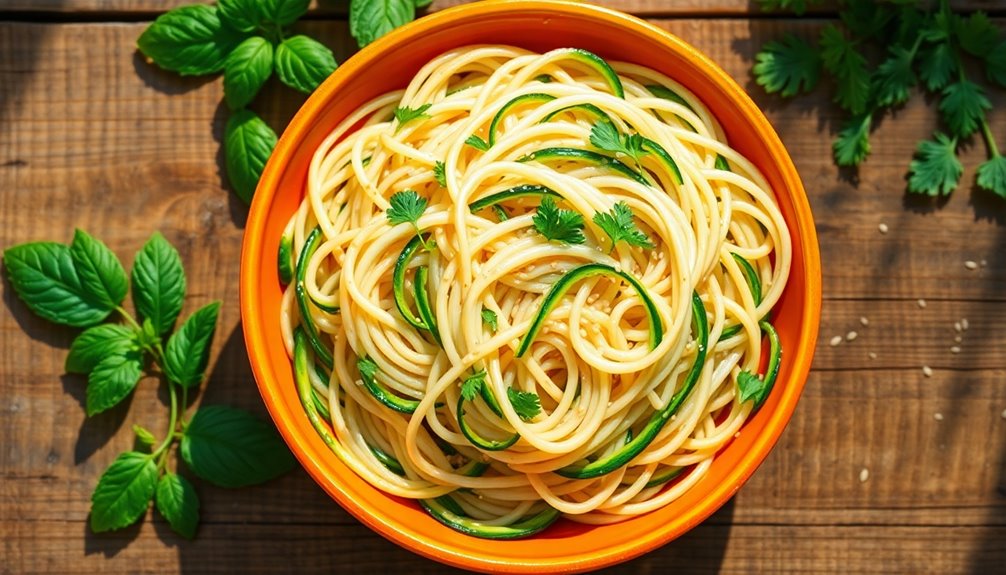
When you’re following a keto diet, choosing low-carb noodles can be a game-changer for your meals. Shirataki noodles are a fantastic option, with nearly zero calories and just 3 grams of carbs per serving. They’re perfect for keeping your carb intake within the 20-50 grams recommended for ketosis.
Zucchini noodles, or zoodles, offer another delicious alternative, providing 4 grams of carbs per 6-ounce serving while adding essential nutrients to your plate. Both types of low-carb noodles are incredibly versatile, soaking up sauces and flavors beautifully. Additionally, incorporating high-fiber options can enhance digestion and promote fullness.
The Benefits of Shirataki Noodles
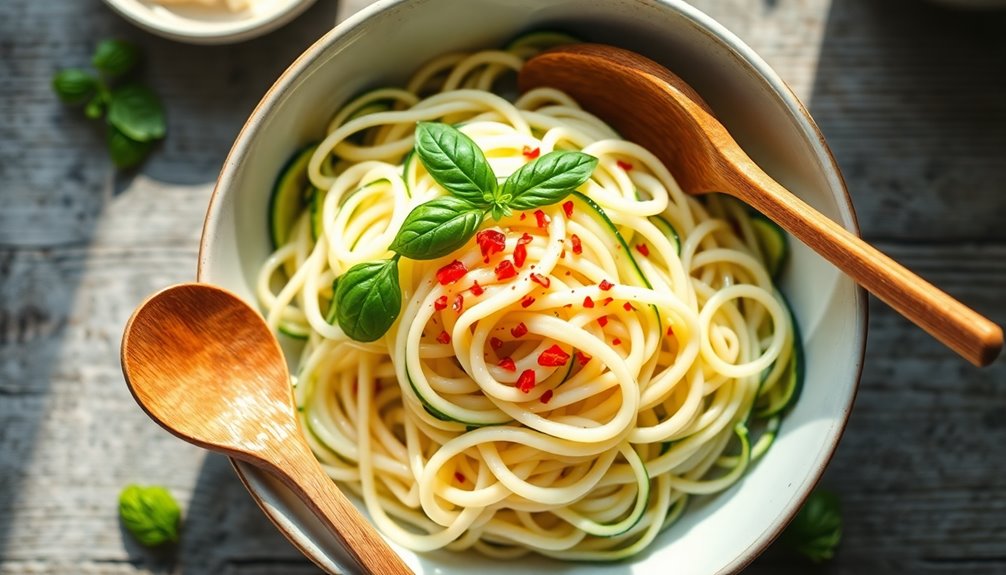
Shirataki noodles offer a fantastic nutritional profile, making them a staple for your keto meals. With minimal prep and a chewy texture that absorbs flavors, you can easily incorporate them into various dishes. Additionally, they are virtually carb-free, making them an excellent choice for maintaining ketosis. Let’s explore their benefits, from cooking tips to versatile recipe ideas that fit your low-carb lifestyle.
Nutritional Profile Insights
If you’re searching for a low-calorie pasta alternative, Shirataki noodles are a fantastic option. Made from glucomannan fiber extracted from the konjac root, these noodles pack just 5 calories and 3 grams of total carbohydrates per 4-ounce serving, making them ideal for your low-carb diet.
Their high fiber content promotes satiety and supports digestive health, which is a real benefit when you’re on keto. Plus, Shirataki noodles have a chewy texture that mimics traditional pasta, absorbing flavors from sauces beautifully.
They’re gluten-free too, catering to those with gluten sensitivities. With minimal preparation—just rinse and sauté—you can easily incorporate these noodles into your meals while enjoying their impressive nutritional value.
Cooking and Preparation Tips
Incorporating Shirataki noodles into your meals is simple and rewarding. These low-carb noodles, made from konjac root, contain only 3 grams of carbohydrates per 4-ounce serving, making them perfect for keto diets.
To get the best texture and flavor, rinse and drain the noodles thoroughly before sautéing them briefly. This step reduces moisture and enhances chewiness, giving your dishes a satisfying bite.
While Shirataki noodles are low in calories and protein, pairing them with protein-rich ingredients can create a balanced meal. They absorb sauces and flavors well, making them versatile for stir-fries, soups, and pasta dishes.
Keep these cooking tips in mind to elevate your Shirataki noodle experience!
Versatile Recipe Ideas
Whether you’re craving a comforting bowl of noodles or a quick stir-fry, Shirataki noodles can easily fit into your meal plans. With only 3 grams of carbohydrates and 5 calories per serving, they’re perfect for maintaining a low-carb lifestyle.
Their chewy texture makes them a versatile choice for various dishes, letting you enjoy:
- Creamy Alfredo with sautéed veggies
- Spicy Asian stir-fry with your favorite protein
- Tangy noodle bowls topped with fresh herbs
To get the best out of Shirataki noodles, rinse them well and sauté briefly for improved texture.
They absorb flavors beautifully, enhancing your meals while keeping you full and satisfied. Immerse yourself in these versatile recipe ideas and enjoy guilt-free noodle dishes!
How to Prepare Shirataki Noodles for Best Results
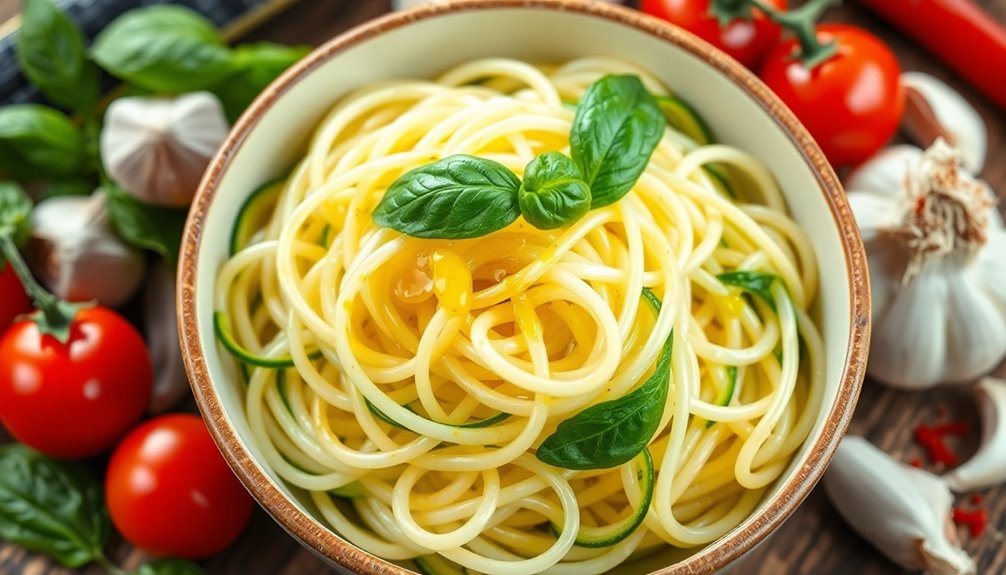
Preparing shirataki noodles properly can make all the difference in your keto meals. Start by rinsing the shirataki noodles thoroughly under cold water for about 1-2 minutes. This step removes any residual odor from the packaging and improves their flavor.
After rinsing, drain the noodles well and pat them dry with paper towels to eliminate excess moisture, which can lead to a gummy texture. For the best results, sauté the rinsed noodles in a non-stick pan over medium heat for 5-7 minutes to enhance their chewiness. Since shirataki noodles have a bland flavor, don’t hesitate to add bold sauces or seasonings. Additionally, incorporating different cooking methods can help you find the preparation style that suits your low-carb dishes best!
Exploring the Versatility of Zucchini Noodles
Zucchini noodles, or zoodles, offer great nutritional benefits while keeping your carb count low. When you master the right cooking techniques, you can enjoy their perfect texture without sogginess. Plus, with various sauces and flavor pairings, zoodles can easily adapt to your favorite dishes. Incorporating leafy greens into your meals alongside zoodles can enhance health benefits while maintaining low carb intake.
Nutritional Benefits of Zoodles
Here are a few reasons to love zoodles:
- Packed with essential vitamins like vitamin C and potassium
- Rich in antioxidants that promote overall health
- Versatile enough to pair with any sauce, from marinara to pesto
Embracing zoodles in your diet not only satisfies your pasta cravings but also supports your health goals.
Give them a try for a tasty, low-carb meal!
Cooking Techniques for Zoodles
When you want a quick, healthy meal, cooking zoodles can be a game-changer. These zucchini noodles are a fantastic low-carb alternative, offering just about 4 grams of carbs per 6-ounce serving.
To maintain their firm texture, use effective cooking techniques. Sautéing them briefly is ideal; this prevents sogginess while preserving their natural crunch. Alternatively, try them raw in salads for a rejuvenating twist.
Before cooking, sprinkle a little salt over your zoodles to draw out excess moisture, enhancing the overall quality. With their versatility, zoodles can easily adapt to various dishes.
Flavor Pairings and Sauces
Cooking zoodles opens up a world of flavor possibilities, making them an exciting base for various sauces. Zucchini noodles adapt beautifully to many flavors, allowing you to enjoy your favorite pasta sauces without the carbs. Their mild taste absorbs seasonings well, enhancing your dishes without overpowering them.
- Pair zoodles with vibrant pesto for a fresh twist.
- Marinara sauce adds a classic touch that’s low in calories.
- Creamy Alfredo brings rich satisfaction while keeping it low-carb.
To keep your zoodles from getting soggy, sauté them briefly or serve them cold in salads.
Combine your zoodles with high-protein options like grilled chicken or shrimp for a delicious, nutritious meal that fits perfectly into your low-carb pasta plans.
Tips for Cooking Perfect Zoodles Every Time
To achieve perfectly cooked zoodles every time, start by lightly salting them and letting them sit for 10-15 minutes. This step draws out excess moisture, preventing sogginess.
Use a spiralizer for uniform, spaghetti-like strands, and opt for medium-sized zucchini for the ideal thickness.
When cooking, sauté zoodles in a non-stick pan with a little olive oil over medium heat for just 2-3 minutes to maintain their firmness and avoid overcooking.
Pair your zoodles with robust sauces like marinara or pesto to enhance their flavor without overwhelming their natural taste.
For added texture, toss in a small amount of grated cheese or nutritional yeast just before serving. Incorporating leafy greens into your meal can further boost its nutritional value.
Enjoy these delicious low-carb pasta alternatives!
Discovering Hearts of Palm Noodles
If you’re searching for a unique low-carb pasta alternative, hearts of palm noodles might just be your new favorite. Made from the tender cores of palm trees, these noodles offer a mild flavor and a firm texture that mimics traditional pasta.
With only 15–25 calories and 4–5 grams of total carbohydrates per 100-gram serving, they fit perfectly into your keto diet.
- Ready-to-eat, no cooking required
- Gluten-free and versatile for various dishes
- Ideal for Mediterranean-style salads or paired with proteins
Their ability to absorb flavors makes them a fantastic option for any meal.
Plus, their slight vegetal taste enhances cold dishes, providing a satisfying alternative to wheat-based pasta.
Give hearts of palm noodles a try!
Creative Ways to Use Hearts of Palm in Recipes
While exploring creative ways to use hearts of palm noodles, you’ll find that their unique texture opens up a world of culinary possibilities.
These low-carb noodles provide a firm, al dente bite, making them perfect for a variety of dishes. Toss them in a lemon-garlic shrimp pasta recipe for a revitalizing twist or add them to a creamy pesto salad for a nutritious meal.
Since they’re ready-to-eat, you can easily incorporate them into cold pasta salads for a quick lunch. Just remember to rinse them thoroughly to reduce any briny taste.
Their mild flavor absorbs sauces beautifully, so feel free to experiment with hearty sauces in stir-fried dishes or pasta salads for a satisfying, guilt-free meal. Additionally, these noodles are virtually carb-free, making them an excellent choice for those following a keto diet.
The Unique Texture and Flavor of Spaghetti Squash
When you cook spaghetti squash, it transforms into strands that closely resemble traditional pasta, offering a unique texture for your meals. Its natural sweetness and mild flavor make it perfect for a variety of sauces, while also providing valuable nutrients. Let’s explore the cooking methods, flavor profile, and nutritional benefits that make spaghetti squash a standout choice for your keto diet, including its low-carb vegetable options that complement its use in various dishes.
Cooking Methods Explained
Spaghetti squash stands out as a unique alternative to traditional pasta, thanks to its ability to form spaghetti-like strands when cooked. This nutrient-dense vegetable is low in calories, with approximately 42 calories per cup, making it easy to incorporate into your low-carb meals.
Here are some popular cooking methods to try:
- Baking: This method brings out the best flavor and texture.
- Boiling: A quick option, though it may slightly alter the taste.
- Microwaving: Fast and convenient for busy days.
Once cooked, you can easily scrape out the flesh with a fork to create long, noodle-like strands that pair well with your favorite sauces.
Enjoy the versatility as you make low-carb dishes!
Flavor Profile Overview
After exploring various cooking methods, it’s clear that the way you prepare spaghetti squash can enhance its unique characteristics.
This low-carb alternative to pasta separates into long, spaghetti-like strands, making it perfect for a variety of dishes. Each cup contains about 7 grams of total carbohydrates, making it a nutrient-dense choice rich in fiber and vitamins.
The flavor profile is subtly sweet and nutty, which pairs wonderfully with sauces and toppings. You’ll love its unique texture—softer than traditional pasta but still providing a satisfying bite.
Whether you bake, boil, or sauté, you can easily adjust the texture to suit your preferences, making spaghetti squash a versatile addition to your keto diet.
Nutritional Benefits Highlighted
While exploring low-carb options, you’ll find that spaghetti squash stands out not only for its unique texture but also for its impressive nutritional profile. This winter squash separates into spaghetti-like strands, providing a satisfying alternative to traditional pasta options.
With only about 7 grams of carbohydrates per cup, it’s a perfect fit for your keto diet.
- Rich in fiber, vitamins, and minerals
- Subtle, slightly sweet flavor that pairs well with sauces
- Minimal processing makes it ideal for clean eating
When cooked properly, spaghetti squash becomes a hearty base for various dishes, allowing for creative, low-carb culinary adaptations.
Enjoy its versatility while keeping your carb intake in check!
Cooking Methods for Spaghetti Squash Noodles
When you’re ready to enjoy a healthy pasta alternative, cooking spaghetti squash is a simple and rewarding process.
Start by cutting the squash in half lengthwise and scooping out the seeds. You can roast it cut-side down in the oven at 400°F for about 30-40 minutes until it’s tender.
Alternatively, if you’re short on time, microwave the whole squash for 10-12 minutes, rotating halfway through for even cooking.
Once cooked, use a fork to scrape the flesh into spaghetti-like strands.
With its slightly sweet and nutty flavor, spaghetti squash pairs beautifully with various sauces, making it a fantastic choice for low-carb meals. Additionally, it provides a low-calorie alternative to traditional pasta, helping you maintain your keto lifestyle.
Enjoy a nutritious dish that fits seamlessly into your keto lifestyle!
Other Vegetable-Based Pasta Alternatives
If you’re looking for unique vegetable options to replace traditional pasta, you’ve got some tasty choices.
Zucchini noodles, spaghetti squash, and hearts of palm noodles not only cut carbs but also boost your nutrient intake. Additionally, incorporating cauliflower rice can provide a versatile base for various dishes, enhancing both flavor and nutrition.
Let’s explore how these alternatives can elevate your keto meals while keeping them delicious and satisfying.
Unique Vegetable Options
As you explore unique vegetable options for your keto diet, you’ll find that there are several creative alternatives to traditional pasta. Here are a few you might enjoy:
- Spaghetti Squash: When cooked, it forms spaghetti-like strands, making it a fantastic low-carb choice.
- Eggplant Noodles: Sliced thinly, eggplant holds its shape well and offers a neutral flavor that pairs nicely with sauces.
- Palmini Noodles: Made from hearts of palm, these noodles are low in carbs and calories, perfect for various pasta dishes.
Don’t forget about cabbage and kelp noodles, too!
Each option provides a unique texture and flavor, allowing you to enjoy your favorite dishes while sticking to your keto goals.
Nutrient-Rich Swaps
Many vegetable-based pasta alternatives not only satisfy your cravings but also pack a nutritional punch.
Zucchini Noodles, or “zoodles,” contain just 4 grams of carbs per 6-ounce serving and are rich in vitamins and minerals.
Spaghetti Squash offers a unique texture with about 7 grams of carbs per cup, along with fiber and essential nutrients to keep you full.
Hearts of Palm Noodles are another fantastic option, boasting roughly 4 grams of carbs and a delightful flavor reminiscent of artichokes.
If you’re looking for even more variety, consider eggplant noodles for layered dishes or cabbage noodles for stir-fries.
These nutrient-rich swaps make it easy to enjoy your favorite pasta dishes while staying on track with your keto diet.
High-Protein and Meat-Based Noodle Swaps
When you’re on a keto diet, finding high-protein noodle swaps can transform your meals without sacrificing flavor. Consider these delicious options:
- Ham pasta sheets: Perfect for layered dishes, they’re low-carb and add a savory punch.
- Egg-based noodles: Thin omelets mimic fettuccine, making them versatile for various sauces.
- Deli ham slices: Choose options without added sugars for a quick, nutritious substitute in your recipes.
You can also try homemade egg and ricotta noodles for a customizable, protein-rich alternative. Additionally, incorporating low-carb options into your meal planning can enhance your keto experience.
Meat-based options, like zucchini lasagna or stuffed peppers, not only provide texture but also keep your meals satisfying and low-carb.
Packaged Low-Carb Pasta Options to Consider
Finding tasty low-carb pasta options can be a game-changer for your keto diet. Shirataki noodles, made from konjac root, offer almost zero calories and just 3 grams of carbs per 4-ounce serving, making them a go-to choice.
If you’re looking for something with a firmer texture, consider hearts of palm pasta, which has about 15-25 calories and 4-5 grams of carbs per 100 grams.
For a protein boost, try edamame pasta; it typically contains around 7 grams of net carbs per serving while packing in more protein than traditional pasta.
Each of these options provides a delicious base for your favorite keto meals, keeping your carb count low without sacrificing flavor.
Choosing the Right Sauce for Your Low-Carb Noodles
- Rich marinara or creamy Alfredo for a deliciously satisfying experience.
- A thicker sauce, like peanut or sesame, works best with shirataki to avoid a slippery texture.
- Light, fresh sauces like pesto or lemon-garlic dressing complement zoodles beautifully.
Don’t forget, using protein-rich sauces like meat or cheesy cream can help balance the low protein content of your low-carb noodles, turning your meal into a flavor-packed delight!
Tips for Making Homemade Low-Carb Pasta
Creating homemade low-carb pasta is easier than you might think, especially when you focus on the right ingredients. Start with almond flour or coconut flour, and don’t forget to add eggs—they’ll bind everything together and give your pasta a chewy texture.
Roll out the dough thinly to create different shapes like fettuccine or lasagna sheets, making your meals versatile and fun. Keep an eye on cooking times, as low-carb pasta cooks faster than traditional varieties; you want to avoid overcooking.
For storage tips, place your homemade low-carb pasta in the refrigerator for up to a week. If you want to keep it longer, freezing is a great option, ensuring you always have a healthy meal ready to go!
Final Thoughts on Low-Carb Noodle Swaps
Homemade low-carb pasta opens the door to a variety of delicious noodle options, but you might also want to explore some easy substitutes available in stores.
Explore convenient store-bought alternatives to homemade low-carb pasta for delicious, keto-friendly noodle options.
These alternatives can help you stay on track with your keto diet while satisfying your noodle cravings.
- Shirataki noodles: Almost zero calories and just 3 grams of carbs per serving.
- Zucchini noodles (zoodles): Fresh and nutrient-rich, with only 4 grams of carbs per 6-ounce serving.
- Hearts of palm noodles: Mild flavor and firm texture, offering about 4 grams of carbs and 15-25 calories per 3-ounce serving.
Each of these options pairs perfectly with bold sauces, enhancing flavors while keeping your meals keto-friendly.
Enjoy experimenting with these low-carb noodle swaps!
Conclusion
Incorporating low-carb noodles into your keto diet isn’t just a healthy swap; it can be delicious too! Some might think these alternatives lack flavor, but with the right sauces and seasonings, they can elevate your meals. Whether you choose shirataki or zoodles, you won’t miss traditional pasta. Embrace the versatility of these options, and you’ll discover that sticking to your keto goals can be both satisfying and enjoyable. Enjoy your culinary adventure!