Beef jerky on keto diet plans can be a practical snack, but only some products fit well. Plain beef jerky with little or no added sugar is usually high in protein and low in carbohydrates, while flavored or sweetened versions can add enough carbs to cut into a strict daily limit. The best approach is to read the label, compare it with your carb and fat targets, and talk with a healthcare provider if you have heart, kidney, or blood sugar concerns.
Key Takeaways
- On a ketogenic diet, people usually eat only 20 to 50 grams of carbohydrate per day, so the carb count of a snack like beef jerky matters (healthdirect’s overview of the ketogenic diet).
- Plain beef jerky is generally low in carbohydrates, but many flavored and glazed products add sugar, so the ingredient list and nutrition label decide whether a specific brand fits.
- The classical ketogenic diet is a 4:1 diet, with 4 grams of fat for every 1 gram of protein and carbohydrate combined, which means jerky’s protein must be balanced against the fat you eat elsewhere in the day.
- Limited research suggests the ketogenic diet can adversely affect blood cholesterol and lipid levels, so fattier or saturated-fat-heavy jerky deserves attention.
- The long-term safety of the ketogenic diet remains unclear, so talk with a primary care provider before making jerky a regular habit on keto.
Is Beef Jerky on Keto Diet Okay?
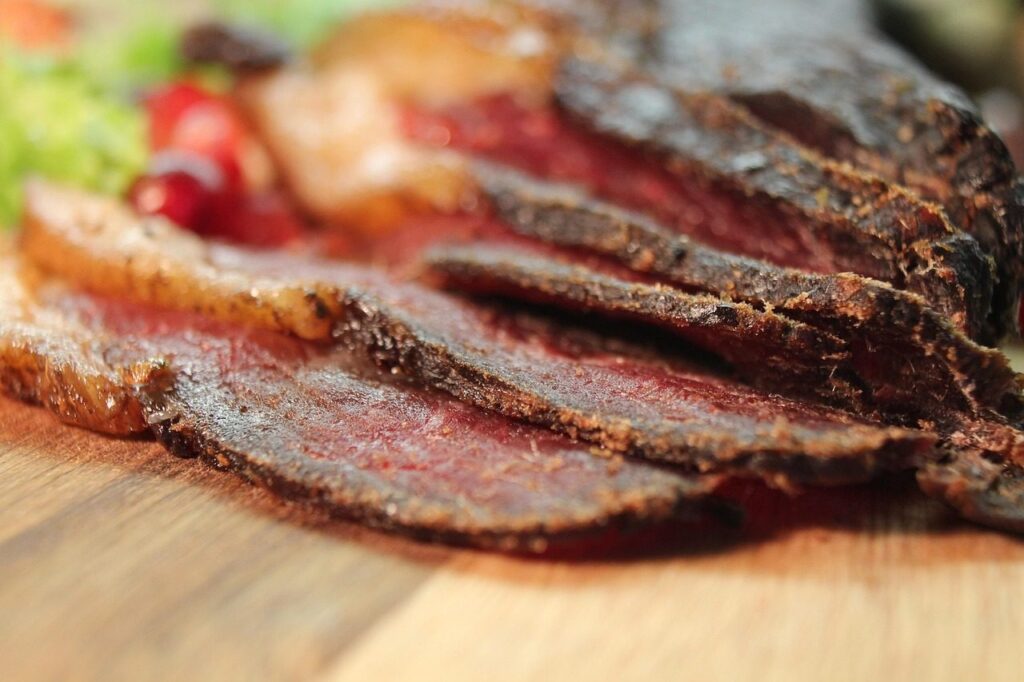
Beef jerky can be keto-friendly if the specific product is low in carbohydrates and added sugars and fits within your daily macros. Whole-muscle, plain jerky is the easiest version to fit, because it contains mostly protein with little carbohydrate. Sweet, teriyaki-style, or honey-glazed varieties are more likely to push a snack over your limit.
Keto is a very low-carbohydrate way of eating, so the margin for error is smaller than on a standard diet. Healthdirect notes that people on a ketogenic diet usually eat only 20 to 50 grams of carbohydrate per day, so a few grams from a snack can be a meaningful share of the total (healthdirect’s overview of the ketogenic diet). Your own target may be lower or higher depending on your goals and how your body responds.
Jerky is also convenient, shelf-stable, and easy to carry, which is why many people reach for it between meals. Convenience is not the same as suitability, though. A snack can be easy to pack and still be a poor fit for your macros if you eat too much of it or choose a flavored product.
What the Keto Diet Requires
The ketogenic diet is a high-fat, very low-carbohydrate eating pattern designed to shift the body toward using fat and ketones for fuel. A ketogenic diet is a way of eating that restricts carbohydrates enough to change how the body produces energy. Different versions exist, so the right amount of jerky depends on which version you follow.
The University of Florida IFAS Extension describes the classical ketogenic diet as a 4:1 diet, providing 4 grams of fat for every 1 gram of protein and carbohydrate combined (University of Florida IFAS fact sheet on the classical ketogenic diet). Because protein counts against the ratio, a high-protein snack like jerky needs to be paired with enough fat across the day. Modified versions, such as those based on macro percentages, use different ratios, so check which framework you are using.
Why Protein Matters on Keto
Protein is necessary for health, but on a classical 4:1 plan it counts toward the ratio along with carbohydrate. That means a large portion of jerky can shift your balance even when the carbs are low. If you use a calculator to set your targets, enter your jerky as part of your daily protein total rather than treating it as a free snack. You can use our keto macro calculator to estimate your daily protein and fat goals before you add jerky to your plan.
How to Read a Jerky Label for Keto
To judge whether a jerky product fits keto, check total carbohydrates, fiber, sugars, sodium, and saturated fat per serving. Labels list values per serving, and jerky servings can be small, so weigh how much you actually plan to eat. Many people also track net carbs, which subtract fiber from total carbohydrates, though the exact method varies by source.
| Label item | What to look for on keto | Why it matters |
|---|---|---|
| Total carbohydrates | Low per serving, with a clear match to your daily limit | Healthdirect cites 20 to 50 grams of daily carbohydrate on keto, so small amounts add up |
| Sugars and added sugars | Ideally none or very little | Sweet glazes and marinades are a common source of hidden carbs |
| Fiber | Note the amount if you count net carbs | Fiber subtraction changes the net carb number, but labeling rules and methods vary |
| Total and saturated fat | Compare with your daily fat and saturated fat targets | Keto plans can be high in fat, and UF/IFAS notes they often encourage saturated fats linked to cardiovascular risk |
| Sodium | Check the per-serving amount against your overall daily limit | Cured and seasoned meats often rely on salt, which can add up quickly |
| Ingredient list | Beef and simple seasonings near the top | Shorter lists usually mean fewer added sugars, starches, and fillers |
Ingredients often tell you more than the front of the package. Words like sugar, cane sugar, honey, maple, corn syrup, dextrose, maltodextrin, and fruit juice signal added carbohydrate. If these appear early in the list, the product is likely to carry more carbs than a plain jerky.
Do Carbs in Jerky Add Up?
Yes, carbohydrates in jerky can add up, especially when you eat several servings or choose a glazed product. A snack that looks low-carb on a single serving can become a significant part of your daily total if you eat from the bag. Weighing or measuring your portion helps you stay accurate.
The biggest carb sources in jerky tend to be sugar-based marinades, glazes, and sauces. Plain, unglazed jerky is the most predictable choice. If you enjoy flavored varieties, log them in your tracker the same way you would log any other food, rather than estimating from memory.
Hidden Sugars in Marinades
Sweet marinades can add carbohydrate even when the front of the package says low-carb or keto. Some brands use sugar-free sweeteners, while others use sugar or sugar substitutes that behave differently in the body. Read the full ingredient list instead of relying on marketing claims. If you are unsure how a product fits your plan, a registered dietitian can help you interpret the label.
Fat and Cholesterol Concerns With Jerky
Beef jerky is lean in some cases and fattier in others, so the fat content depends on the cut and processing. Keto diets emphasize fat, which makes the type and amount of fat in your snacks important. The research on keto and cholesterol is not settled, so treat this as a reason for caution rather than a final verdict.
The UC Davis Department of Nutrition notes that limited research suggests the ketogenic diet can adversely affect blood cholesterol and lipid levels, which is relevant when you choose fatty jerky (UC Davis guidance on the ketogenic diet and blood lipids). The evidence base is limited, so individual responses vary. People with existing heart disease, high cholesterol, or a family history of early heart disease should discuss their diet with a clinician before making major changes.
Because the classical ketogenic diet encourages saturated fat, the saturated fat content of your jerky matters too. UF/IFAS notes that saturated fats are linked to cardiovascular risk (University of Florida IFAS fact sheet on the classical ketogenic diet). Choosing leaner jerky or pairing it with unsaturated fats, such as those in nuts, avocado, or olive oil, can be a practical way to balance your snack.

Sodium and Processed Meat Considerations
Jerky is a processed meat, and sodium is often high because salt helps preserve and season it. Keto dieters sometimes eat more salt early on because the diet can change fluid balance, but that does not mean extra sodium is always needed. Check the sodium on each label and keep your total in mind across the day.
Processed meat is also a topic of ongoing public health discussion. The strongest concerns involve frequent intake of processed meat over a long time, not an occasional serving. If you eat jerky often, consider rotating brands, choosing lower-sodium options, and keeping portions reasonable rather than making it your main protein source.
How to Choose Keto-Friendly Jerky
To choose keto-friendly jerky, start with plain beef and check the carb, sugar, fat, and sodium values before you buy. Follow these steps when you compare products in the store or online.
- Pick a product where beef is the first ingredient, and avoid long lists of sweeteners, starches, and fillers.
- Look for 0 grams of added sugar or as close to it as possible, and confirm that no sugar-based ingredient appears near the top of the list.
- Check total carbohydrates and, if you count net carbs, subtract fiber to get a more precise number for your tracker.
- Compare saturated fat and sodium per serving with your own daily limits and any limits your clinician has given you.
- Weigh a single serving and log it in your tracker before you eat it, so you know what you are actually consuming.
- Keep a backup plan for days when you are short on protein or fat, such as cheese, eggs, or nuts, so jerky does not become the default.
Snack Alternatives to Consider
If jerky does not fit your numbers or your health profile, other low-carb snacks may work better. Our guide to affordable keto snack alternatives covers options that are easy to find and budget-friendly. Pork rinds are another crunchy choice, and our article on pork rinds on keto explains how to think about their carbs and fat.
Who Should Talk to a Professional First
People with certain health conditions, or those taking medications, should talk with a clinician before starting keto or adding jerky regularly. The University of Arkansas Cooperative Extension Service notes that the safety and long-term effects of the ketogenic diet remain unclear, and it advises talking with a primary care provider before adopting it (University of Arkansas Cooperative Extension overview of the keto diet).
Ask a doctor or registered dietitian about your kidney function, cholesterol, blood pressure, blood sugar, and any diabetes medications, since these can change how a low-carb diet should be managed. Pregnant or breastfeeding people should also get individualized advice before making major dietary changes. A professional can help you decide whether jerky belongs in your plan and how much is reasonable.
Frequently Asked Questions
Is regular beef jerky keto?
Plain beef jerky is often a reasonable keto snack because it is mostly protein with little carbohydrate. However, many regular or flavored products contain added sugars, so you still need to read the label. Check total carbs, sugars, and the ingredient list before you assume a product fits.
How many carbs are in beef jerky?
The carb count varies widely by brand, flavor, and serving size, so no single number applies to all jerky. Check the nutrition label for the specific product and weigh your portion if you want accuracy. If you follow a strict daily limit, count the jerky the same way you count any other snack.
Can beef jerky raise cholesterol on keto?
Jerky itself has not been shown to raise cholesterol in a direct way, but the ketogenic diet may adversely affect blood lipids according to limited research. Fattier or saturated-fat-heavy jerky may add to that concern, so choosing leaner options can help. If you have high cholesterol or heart risk, ask your clinician how to monitor your lipid levels on keto.
Is beef jerky a good keto snack for weight loss?
Beef jerky can be filling because it is high in protein, which may help some people manage hunger between meals. Weight outcomes depend on total calories, adherence, and overall diet quality, not on one snack alone. A registered dietitian can help you build a plan that fits your needs.
Should I talk to my doctor before eating jerky on keto?
Yes, especially if you have kidney disease, heart disease, high cholesterol, high blood pressure, diabetes, or take medications. The University of Arkansas Cooperative Extension Service advises talking with a primary care provider before adopting the ketogenic diet. A clinician can tell you whether jerky fits your health needs and how often it is reasonable.
Conclusion
Beef jerky on keto diet plans can work when you choose plain, low-sugar products and count them within your daily carb, protein, fat, and sodium targets. Read labels carefully, weigh your portions, and treat jerky as one option among several rather than a default snack. Because the long-term effects of keto are still unclear, speak with a healthcare provider before making jerky a regular part of your routine.

This article is for informational purposes only and is not medical advice. Talk to your doctor or a registered dietitian before changing your diet, especially if you have a medical condition or take medication. Read our medical disclaimer and editorial policy.