
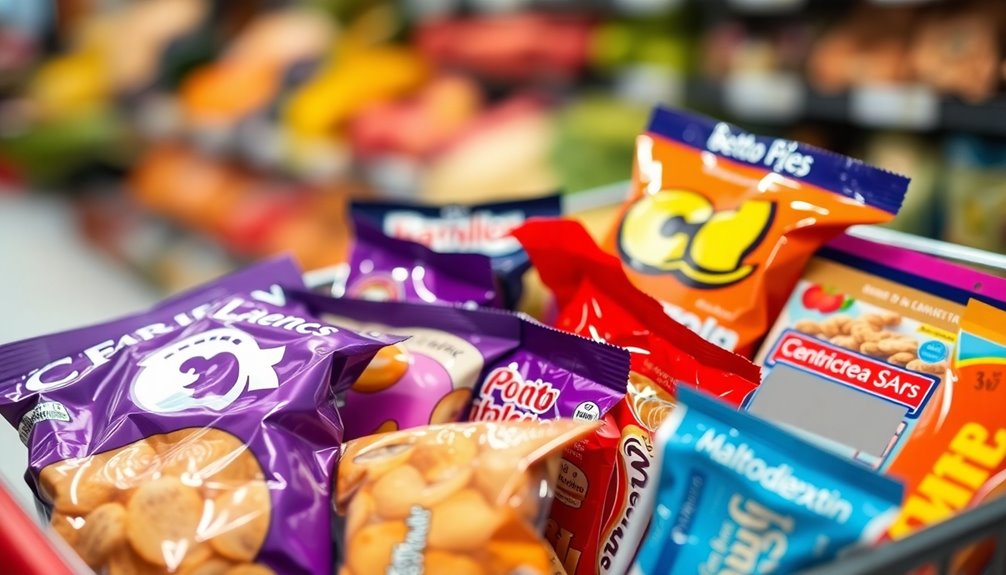
When following a keto diet, watch for sneaky ingredients like hidden sugars in sauces and snacks, as they can derail your progress. Low-fat products often pack unhealthy fillers that raise carb counts. Artificial sweeteners aren’t all keto-friendly, with some like maltodextrin spiking blood sugar. Be cautious with processed foods, flavored yogurts, and gluten-free grains, as they can also contain hidden carbs. There’s plenty more to uncover about maintaining your keto goals effectively!
Hidden Sugars: What to Look For

When you’re following a keto diet, hidden sugars can sneak into your food and derail your progress. Always check ingredient labels for sneaky sugars disguised as sugar alternatives.
Many products boast health claims but may still contain carbs that affect your ketosis. Pay attention to portion sizes; even a small amount can add up.
When meal planning, consider cooking tips that promote food swaps, like using almond flour instead of regular flour.
For snack ideas, opt for whole foods instead of processed items that might hide sugars.
Don’t fall for label myths—just because it says “sugar-free” doesn’t mean it’s keto-friendly. Stay informed about your dietary preferences, and you’ll navigate hidden sugars more effectively. Additionally, be cautious of products containing sugar alcohols that can impact your blood sugar levels.
The Truth About Artificial Sweeteners

Artificial sweeteners might seem like a guilt-free way to satisfy your cravings, but not all are created equal.
You need to know the common types, how they affect your ketosis, and where hidden carbs might lurk.
Let’s break down what you should really watch out for. Additionally, some sweeteners like erythritol’s antioxidant properties can be beneficial, but others may disrupt your keto journey.
Common Types Identified
Though many people turn to artificial sweeteners as a low-calorie alternative to sugar, not all of them are suitable for a keto diet. Some can interfere with your ketogenic lifestyle by misleading you into keto myths about their carb content.
When you check ingredient labels, look for sweeteners like maltodextrin and dextrose, which can spike blood sugar levels. Portion control is essential here; even low-calorie sweeteners can affect your meal planning if consumed excessively.
Consider nutrient density when choosing snack alternatives, and opt for natural options like stevia or erythritol. By improving your food awareness and understanding different cooking methods, you can maintain diet sustainability while keeping your keto goals in check.
Impact on Ketosis
While you might think that all artificial sweeteners are harmless in a keto diet, many can hinder your ketosis efforts.
Some sweeteners can spike your insulin response, disrupting your metabolic state and making ketosis maintenance more challenging. This can affect your energy levels and appetite control, leading to cravings that throw off your dietary balance.
Even if you’re practicing fat adaptation and keeping your carbohydrate limits in check, certain sweeteners might still kick you out of nutritional ketosis.
Meal timing also matters; consuming these sweeteners at the wrong time can negatively impact your progress.
To truly support your keto journey, it’s essential to choose sweeteners wisely and stay aware of their potential effects on your body.
Hidden Carbohydrate Sources
Many people overlook that some artificial sweeteners can contain hidden carbohydrates, which can sneak into your keto diet and disrupt your progress.
When you’re meal planning and dining out, it’s essential to scrutinize nutritional labels and ingredient lists. Don’t just rely on the term “sugar-free”; check for food additives that might pack in carbs.
- Sugar alcohols like maltitol can spike your carb intake.
- Certain brands of stevia have added fillers that can add up.
- Even “natural” sweeteners may vary in carbohydrate types.
Processed Foods: Why They Can Derail Your Diet

When you’re trying to stick to a keto diet, processed foods can easily sneak in and sabotage your efforts. During grocery shopping, it’s essential to focus on label reading; many items hide carbs in unexpected ingredients.
Meal prep can help you avoid these pitfalls, allowing you to control portions and make smart food substitutions. Prioritize ingredient sourcing by opting for whole foods that align with your diet.
In your pantry organization, keep processed items out of reach to minimize temptation. When dining out, be mindful of recipe modifications to guarantee your meal stays keto-friendly. Mastering cooking techniques can also help you create satisfying dishes that won’t derail your goals. Additionally, being aware of healthy fats can further support your efforts in maintaining a keto lifestyle. Stay vigilant, and you’ll maintain your keto lifestyle effectively.
Low-Fat Products: Are They Really Keto-Friendly?
Processed foods often hide carbs and unhealthy ingredients, making it easy to stray from your keto goals.
Low-fat products might seem harmless, but they often fall victim to low fat myths, misleading you into thinking they’re keto-friendly. These items can contain hidden sugars and unnecessary fillers that spike your carb intake.
Consider these points for ingredient transparency:
- Hidden sugars: Low-fat versions often compensate for flavor with added sugars.
- High-carb fillers: Ingredients like starches and thickeners can sneak in, raising carb counts.
- Nutrient loss: Removing fat can strip away essential nutrients, leaving you with empty calories.
Additionally, many low-fat products can lead to increased blood sugar levels, which counteracts the benefits of a ketogenic lifestyle.
Stay vigilant and read labels carefully to guarantee you’re sticking to your keto diet effectively.
Common Sauces and Condiments to Avoid
While it might be tempting to slather your meals with a variety of sauces and condiments, many of them can derail your keto journey.
Watch out for sugar alternatives in ketchup and barbecue sauce, as they often sneak in carbs. Always read condiment labels; you might find sauce ingredients loaded with hidden preservatives and flavor enhancers.
Be cautious with cooking oils in marinades, which can add unnecessary carbs. Certain vinegar types, like balsamic, can also contain sugars.
Spice blends might seem harmless, but some come with added sugars. Dressing choices can be deceptive, too—opt for oil and vinegar instead. Additionally, many store-bought options lack the healthy fats found in homemade versions like ranch dressing or mayonnaise.
Dairy Products: Which Ones Are Sneaky Carbs?
Here are a few to watch out for:
- Flavored yogurt choices: Many contain added sugars that spike carb counts.
- Certain cheese varieties: Processed cheeses often hide carbs and fillers.
- Milk substitutes: Some almond or oat milks are sweetened, leading to unexpected carbs.
Opt for full-fat, low-carb options like heavy cream or plain Greek yogurt.
If you’re considering dairy alternatives, make sure they’re unsweetened and check labels carefully.
Stick with lactose-free options when possible, and be cautious with butter substitutes that might include hidden ingredients. Additionally, understanding how the ketogenic diet stabilizes blood sugar levels can help you make better dairy choices.
Grains and Grain-Based Ingredients: A Hidden Threat
Many people underestimate the impact of grains and grain-based ingredients on a keto diet, believing they can enjoy them in moderation.
Whole grain alternatives, often marketed as healthy, can still spike your carb intake. Gluten free grains like quinoa and millet, while popular, aren’t always keto-friendly.
Whole grain alternatives, despite their healthy marketing, can significantly increase your carb intake, making them less keto-friendly than you think.
Even seemingly innocent grain-based snacks can contain hidden carbs. Ancient grains and oat-based products may sound wholesome, but they can derail your efforts.
Rice substitutes often carry similar pitfalls, and pseudo grains aren’t exempt either. Be cautious of corn derivatives lurking in processed foods.
Always check grain labeling to avoid surprises. Opt for grain free options to stay aligned with your keto goals and maintain ketosis effectively. Additionally, consider incorporating low-carb alternatives like cauliflower rice or zucchini noodles to help reduce your overall carb intake.
Starchy Vegetables: Which Ones Will Break Ketosis?
What starchy vegetables should you steer clear of to stay in ketosis? If you’re serious about maintaining your keto lifestyle, watch out for these:
- Potatoes
- Corn
- Peas
While these veggies have nutrient density, they can quickly kick you out of ketosis. Instead, consider vegetable alternatives like cauliflower or zucchini, which fit better into your meal planning. If you choose starchy options, use portion control and smart cooking methods to minimize impact. Seasonal choices can also play a role; fresh produce often offers better fiber sources. For recipe modifications, think about vegetable preparation techniques—like roasting or sautéing—so you can enjoy flavors without sabotaging your diet. This is crucial since reduced carbohydrate intake helps regulate blood sugar levels. Stay informed and make strategic choices!
Snack Foods: What to Watch Out For
When you’re snacking, it’s essential to watch out for hidden sugars and unhealthy fats that can derail your keto goals.
Many packaged snacks might seem innocent but can pack a surprising amount of carbs.
Always read labels carefully to keep your diet on track. Consider opting for snacks sweetened with keto-friendly sweeteners to avoid unnecessary sugar intake.
Hidden Sugars
Have you ever checked the labels on your favorite snack foods? You might be surprised at the hidden sugars lurking inside. Many products use natural sweeteners or sugar alternatives that can still spike your carb intake.
Look out for these sneaky ingredients:
- Agave nectar
- Cane sugar
- High fructose corn syrup
These food additives often mask themselves under vague terms, leading to health misconceptions. Ingredient transparency is essential; always read nutrition labels closely.
Even if a snack fits your dietary guidelines, those hidden sugars can derail your keto goals. Be mindful of cooking methods and portion control, and remember that flavor enhancers can sometimes hide extra sugar.
Stay informed to keep your keto journey on track!
Unhealthy Fats
Unhealthy fats can sneak into your favorite snack foods, undermining your keto efforts. When you check ingredient labels, look out for questionable cooking oils like vegetable or canola oil; these are often unhealthy fat sources. They can increase health risks such as heart disease.
During meal planning, prioritize snacks with healthy fats, like avocados or nuts, and consider food swaps to keep your dietary balance in check. Be mindful of cooking methods too; frying can introduce unhealthy fats.
Portion control is important, as even healthy snacks can lead to excess calories if overdone. Boost your nutrition education to make informed choices, ensuring your snacks support your keto journey rather than derail it.
Alcoholic Beverages: Which Are Keto No-Gos?
Steering through the world of alcoholic beverages can be tricky on a ketogenic diet. You’ll want to watch out for options that can derail your progress. While some drinks fit the bill, others don’t.
Here are a few to avoid:
- Mixed drinks with sugary mixers
- Sweet wine varieties
- High-carb craft beers
Instead, consider low-carb beers, spirits selection, and keto cocktails made with sugar-free options. Additionally, some low-carb options from restaurants like KFC can help you stay on track while enjoying your meal.
Remember that alcohol metabolism can impact your weight loss, so drinking in moderation is key. If you’re craving something sweet, explore carb-free cocktails or alcohol alternatives that won’t kick you out of ketosis.
Staying informed makes managing your choices easier while still enjoying a drink now and then!
Meal Replacement Bars: Do They Fit the Keto Bill?
Maneuvering the landscape of meal replacement bars on a ketogenic diet can be just as challenging as choosing the right alcoholic drink. You need to scrutinize meal bar ingredients carefully.
Start with a thorough nutritional label analysis—look for high-quality protein sources, low carbs, and healthy fats. Beware of sneaky flavor enhancers and fillers that can sabotage your energy levels.
Analyze nutritional labels carefully—prioritize high-quality proteins, low carbs, and healthy fats while avoiding hidden fillers that can derail your energy.
Pay attention to ingredient sourcing; whole food ingredients are typically better. Portion sizes matter too; a bar that seems keto-friendly might pack in hidden carbs.
Stay informed and develop consumer awareness about marketing tactics that might mislead you. Ultimately, align your choices with your dietary preferences to guarantee those bars truly fit the keto bill.
Pre-Packaged Foods: Reading Labels for Success
When you’re shopping for pre-packaged foods, you need to be savvy about reading labels.
Look out for hidden sugars, unhealthy fats, and scrutinize the carb content closely.
These factors can make or break your keto journey, so it’s essential to stay informed.
Hidden Sugars Detection
How do you know if a pre-packaged food contains hidden sugars? Start by reading the ingredient label carefully. Many products sneak in sugar through various forms, making it easy to exceed your carb limit without realizing it.
- Look for sugar alcohols like erythritol or xylitol, which can still impact your body.
- Be wary of natural sweeteners such as agave nectar or processed honey that might appear healthy but can spike your sugar intake.
- Watch out for dried fruits, high fructose corn syrup, and even maple syrup or cane sugar, all of which can derail your keto goals.
Stay vigilant, and you’ll navigate the aisles more successfully!
Unhealthy Fats Awareness
As you sift through pre-packaged foods, it’s essential to recognize unhealthy fats that can sabotage your health goals.
Look for healthy fat sources, like avocados and nuts, instead of processed oils that can disrupt fat balance. Pay attention to fat quality; unsaturated fats are preferable, while trans fats can wreak havoc on your health.
Don’t fall for fat misconceptions—dietary fat plays a significant role in fat digestion and can help curb fat cravings when chosen wisely. Incorporate omega-3 benefits into your diet through sources like fish or flaxseeds.
When selecting cooking oils, opt for those rich in healthy fats to support your overall well-being and keep your keto journey on track.
Carb Content Scrutiny
Recognizing unhealthy fats is just one part of maintaining a balanced diet; you also need to scrutinize carbohydrate content in pre-packaged foods.
Many products marketed as “keto-friendly” can still contain sneaky carbs that disrupt your ketosis. It’s essential to read labels carefully to avoid common ketosis misconceptions.
Here are some things to look for:
- Hidden sugars: Check for ingredients like maltodextrin or dextrose.
- Serving sizes: What seems low in carbs mightn’t be if you consume more than one serving.
- Total carbs vs. net carbs: Don’t be fooled by misleading labeling; focus on net carbs, especially if you’re carb cycling.
Stay vigilant and informed to maintain your keto lifestyle effectively!
Gluten-Free Doesn’t Mean Keto: Why It Matters
While many people associate gluten-free products with healthy eating, it’s essential to understand that gluten-free doesn’t automatically mean keto-friendly.
Many gluten misconceptions lead consumers to believe that they can indulge in these products without consequence. In reality, gluten-free items often contain high amounts of starches and sugars that can spike your carb intake.
Marketers cleverly use keto marketing to promote these products, creating a false sense of security. Just because something is labeled gluten-free doesn’t mean it aligns with your keto goals.
Always check the ingredient list and carb count to guarantee you’re making choices that support your low-carb lifestyle. Stay informed and don’t let misleading labels derail your keto journey!
Understanding Net Carbs vs. Total Carbs in Products
Understanding the difference between net carbs and total carbs is essential for anyone on a keto diet. When you’re reading labels, it’s crucial to grasp how net carb calculation works.
Net carbs are total carbs minus dietary fiber and sugar alcohols, which can have minimal total carb impact. To make informed choices about keto-friendly foods, keep these points in mind:
- Always check serving size awareness to avoid overestimating your intake.
- Be cautious of hidden sugars in ingredient lists that can affect your carb count.
- Consider your meal planning strategy, especially if you’re carb cycling.
Conclusion
Steering a keto diet can feel like a minefield, but staying informed is your best shield. By watching out for hidden sugars, sneaky additives, and misleading labels, you can keep your goals on track. Remember, just because something’s labeled “low-fat” or “gluten-free” doesn’t mean it’s keto-friendly. Equip yourself with knowledge, and you’ll be well-prepared to dodge those dietary pitfalls and enjoy the vibrant, healthy life you’re aiming for!